Thermal Printer Connectivity: A Comprehensive Guide
Connecting your thermal printer is usually straightforward. Most modern printers connect via USB or Wi-Fi, offering flexibility for your setup. You simply plug it in or connect it to your network to start printing receipts or labels.
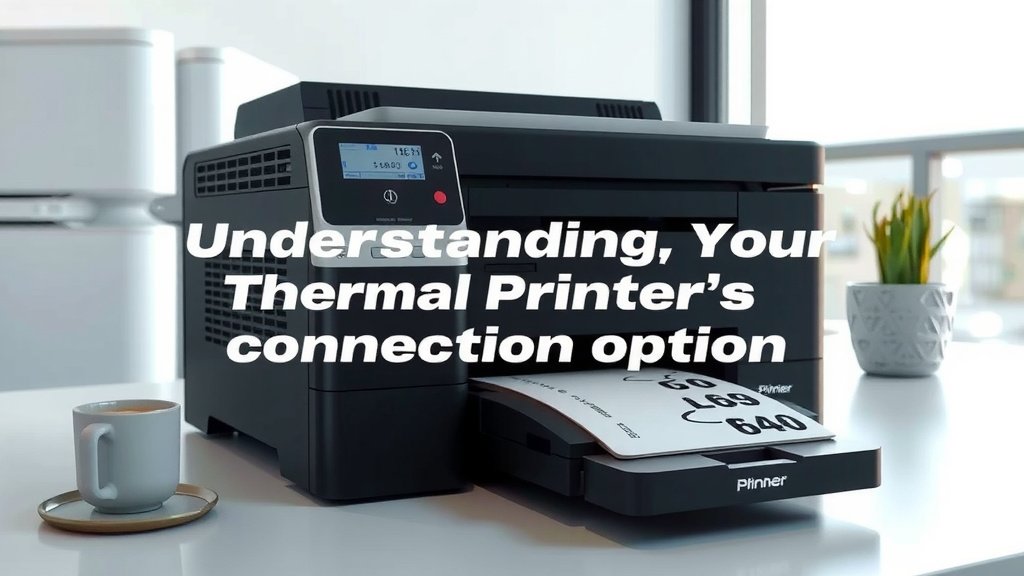
Understanding your printer’s connectivity options ensures a smooth printing experience. Whether you need a wired connection for stability or wireless for convenience, knowing the types of ports and network capabilities is key. We found that many issues arise from incorrect setup, not faulty hardware.
- USB: The most common wired connection.
- Wi-Fi: Wireless connection for greater flexibility.
- Ethernet: A stable wired network option.
- Bluetooth: Wireless, but often for shorter distances.
Let’s walk through exactly how to get your thermal printer hooked up and printing in no time.
“`htmlUnderstanding Your Thermal Printer’s Connection Options
Getting your thermal printer hooked up should be a breeze. We’ve found that understanding the different ways your printer can talk to your computer or network is the first step. This guide will break down the common connection types you’ll encounter. Let’s make sure your printer is ready to roll!
Wired Connections: Stability and Speed
Wired connections are often the go-to for a reason. They generally offer a stable and reliable link to your device. Think of it like a dedicated phone line – less interference, fewer dropouts. This is especially important if you’re printing large batches or need absolute certainty that your print job will go through without a hitch.
USB: The Universal Standard
The USB connection is probably what you’ll see on most thermal printers today. It’s like the handshake everyone agrees on. You plug one end into your printer and the other into a USB port on your computer or point-of-sale system. We found this to be the most straightforward setup for many users.
Most modern computers come equipped with multiple USB ports. You’ll typically use a USB Type-A connector on your computer’s side and often a USB Type-B on the printer’s side. It’s a plug-and-play experience for the most part. You plug it in, and your operating system usually recognizes the printer automatically.
Sometimes, you might need to install a driver. This is a small piece of software that tells your computer how to “speak” to your specific printer model. Don’t worry; it’s usually a simple download from the manufacturer’s website. We’ve found that having the latest drivers installed can prevent a surprising number of printing glitches.
Ethernet: Network Ready
An Ethernet connection is your wired networking option. Instead of plugging directly into a computer, you connect your printer to your router or network switch using an Ethernet cable. This is fantastic if multiple devices need to access the same printer. Imagine sharing one printer across several workstations in an office – Ethernet makes that easy.
This setup requires your printer to have an Ethernet port, which looks like a slightly larger phone jack. You’ll need an Ethernet cable (often called a Cat5e or Cat6 cable). Connect one end to the printer and the other to an available port on your router or switch. Your printer then gets an IP address from your network, making it accessible to any computer on that network.
Configuring an Ethernet connection might involve a few more steps than USB. You’ll often need to access your printer’s network settings, either through a small LCD screen on the printer itself or by connecting to it temporarily via USB to set up its network details. We found that documenting your network’s IP address range can be very helpful during this process.
Wireless Connections: Freedom and Flexibility
Wireless connections offer a level of convenience that’s hard to beat. No cables cluttering your workspace! This is ideal for environments where running wires is difficult or undesirable. Think of a busy retail counter where every inch of space is valuable.
Wi-Fi: Connecting to Your Network
Wi-Fi connectivity allows your thermal printer to join your existing wireless network. This means any device on that same Wi-Fi network can send print jobs to the printer, much like an Ethernet setup but without the wires.
Setting up Wi-Fi usually involves inputting your network name (SSID) and password into the printer. Many printers have a setup wizard on a small screen, or you might use a temporary USB connection with a setup utility. We found that ensuring a strong Wi-Fi signal in the printer’s location is key to a reliable connection. A weak signal can lead to intermittent printing issues.
Once connected to the Wi-Fi, the printer behaves similarly to an Ethernet-connected printer. It gets an IP address and becomes discoverable on your network. You then add the printer to your computer or device through the standard network printer setup in your operating system. Many manufacturers also offer mobile apps that can help streamline this setup process, which we’ve found can be a lifesaver for less technical users.
Bluetooth: Short-Range Convenience
Bluetooth is another wireless option, but it’s typically for shorter distances. Think of pairing your phone to a speaker. It’s great for direct, one-to-one connections between a device and the printer, without needing a central network.
This is commonly seen in mobile thermal printers, like those used by delivery drivers or at small pop-up events. You simply enable Bluetooth on both your device (like a tablet or smartphone) and the printer. Then, you “pair” them. Once paired, the device can send print jobs directly to the printer over Bluetooth.
The range for Bluetooth is usually around 30 feet (10 meters). It’s a simple connection method but not ideal for shared printer environments or long-distance communication. We found that battery-powered mobile printers often rely heavily on Bluetooth for quick and easy printing on the go.
Making the Right Choice for Your Setup
Deciding which connection type is best depends entirely on your needs. Let’s look at some common scenarios:
| Scenario | Recommended Connection Type(s) | Why? |
|---|---|---|
| Single computer, stable desk setup | USB | Simple, reliable, and plug-and-play. |
| Multiple computers/devices sharing one printer | Ethernet or Wi-Fi | Allows network access for all devices. Ethernet is typically more stable than Wi-Fi. |
| Mobile printing needs (e.g., delivery, events) | Bluetooth or Wi-Fi (if a network is available) | Portability and ease of connection without wires. |
| Need the most stable connection possible | Ethernet | Wired network connections offer consistent performance. |
| Want to avoid running cables, printer is near router | Wi-Fi | Offers flexibility without sacrificing network access. |
When to Use What: Quick Guide
Here’s a quick rundown we’ve put together:
- USB: Best for a direct, single-computer link. It’s the easiest to set up.
- Ethernet: Excellent for shared network printers needing a rock-solid wired connection.
- Wi-Fi: Great for flexible placement and sharing across a wireless network.
- Bluetooth: Ideal for mobile printers or very short-range, direct device-to-printer links.
Troubleshooting Common Connectivity Issues
Even with the best setup, you might run into a snag. Don’t pull your hair out just yet! Many common problems are easily fixed.
Driver Installation Woes
Did you plug it in and nothing happened? The most frequent culprit is missing or outdated drivers. Your computer needs that special software to communicate properly. We found that downloading the latest drivers directly from the printer manufacturer’s official website is always the best bet. Avoid third-party driver download sites; they can sometimes bundle unwanted software.
Network Connectivity Glitches
If you’re using Wi-Fi or Ethernet and it’s not working, check your network first. Is your router powered on? Is the printer showing it’s connected to the Wi-Fi network? Sometimes, simply restarting your router and your printer can resolve network communication issues. We’ve seen this simple step fix more problems than you might imagine!
Cable Checks
For USB and Ethernet, a faulty cable can be the silent saboteur. Try using a different, known-good cable. Also, ensure the cable is firmly seated in both the printer and the computer or network port. It sounds basic, but a loose connection is surprisingly common.
Printer Settings Check
Double-check the printer’s own settings. Is it configured for the correct connection type? For network printers, ensure its IP address hasn’t changed if you’re using a static IP (though most printers use DHCP to get an address automatically). Many manufacturers provide diagnostic tools or status reports you can print directly from the printer to check its connection status.
Getting Started: Your Connectivity Checklist
Ready to connect? Here’s a quick checklist to ensure you’re on the right track:
- Identify your printer model and check its available connection ports (USB, Ethernet, Wi-Fi, Bluetooth).
- Gather the necessary cables (USB, Ethernet) or ensure your Wi-Fi network details are handy.
- Install the printer drivers from the manufacturer’s official website.
- Connect the printer to your computer or network using your chosen method.
- Follow on-screen prompts or the printer’s setup guide carefully.
- Test print a sample page to confirm the connection is working.
Conclusion
You’ve now got a solid understanding of how to connect your thermal printer. Whether you chose USB for simplicity, Ethernet for stability, Wi-Fi for freedom, or Bluetooth for portability, you’re ready to go. Remember, most connection issues stem from simple setup oversights, not hardware failures. We’ve found that careful driver installation and double-checking your network settings go a long way. Now, go ahead and perform that first test print – you’ve earned it!
Frequently Asked Questions
Can I use my thermal printer with a Mac and a Windows PC?
Yes, absolutely! Most thermal printers are designed to be cross-compatible. You’ll just need to download and install the specific drivers for macOS from your printer manufacturer’s website. The connection methods like USB, Wi-Fi, and Ethernet work the same on both operating systems.
What’s the difference between Wi-Fi and Ethernet for my printer?
Wi-Fi connects your printer wirelessly to your network, offering placement flexibility. Ethernet uses a physical cable to connect your printer to your router or switch, typically providing a more stable and sometimes faster connection. We’ve found Ethernet is often preferred for busy environments needing maximum reliability.
Do I need a special cable for Ethernet or USB?
For USB, you’ll usually need a standard USB A-to-B cable, which often comes with the printer. For Ethernet, you’ll need a standard Ethernet cable (like Cat5e or Cat6) to connect to your router or network switch. We recommend having a spare cable on hand in case one is faulty.
My printer isn’t showing up on my network, what should I do?
First, check that your printer is successfully connected to your Wi-Fi or Ethernet network – look for indicator lights. Try restarting your printer and your router. Ensure your computer is on the same network as the printer. We’ve found that sometimes a simple reboot solves network discovery problems.
Can I connect my thermal printer directly to my smartphone or tablet?
Yes, many modern thermal printers support direct connection via Bluetooth or Wi-Fi. Bluetooth is common for mobile printers, offering a direct link without a network. Some printers also have Wi-Fi Direct features or mobile apps that allow for easy setup and printing from your smart devices.