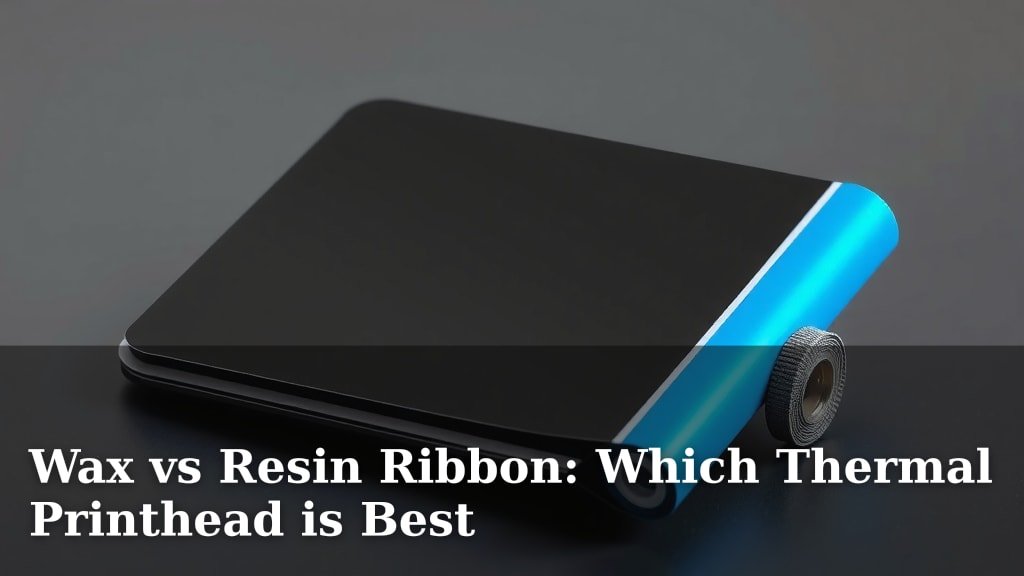
Wax vs Resin Ribbon: Which Thermal Printhead is Best
When choosing between wax vs. resin thermal ribbon for your labels, resin ribbons offer superior durability and resistance to harsh conditions like heat, chemicals, and abrasion. While wax is more affordable and best for general-purpose labels, resin is the go-to for applications demanding long-lasting, robust print quality.
Understanding the differences helps you pick the right ribbon for your specific needs. Wax ribbons are softer and work well on uncoated paper labels. Resin ribbons are much harder and are designed for synthetic materials like polyester or polyimide, ensuring prints that can withstand tough environments and won’t smudge or fade.
- Resin ribbons are best for durability and resistance.
- Wax ribbons are more economical and good for general use.
- Resin works on synthetic label materials.
- Wax is ideal for uncoated paper labels.
- Your choice depends on the label’s purpose and environment.
Let’s break down what each type of thermal ribbon is best suited for, so you can make the smartest choice for your labeling projects.
Wax vs. Resin Ribbons: Choosing the Right Thermal Print Partner
So, you’re staring down the barrel of a thermal label printer and need to pick the right ribbon. It can feel like a big decision, right? But don’t sweat it. We’ve done the legwork to help you understand your options between wax and resin thermal ribbons.
Think of it this way: your label is the messenger, and the ribbon is the ink. You wouldn’t use a crayon to send a message that needs to survive a rainstorm, would you? It’s all about matching the right ink to the job. Let’s get into the nitty-gritty of wax and resin to see which one is your label’s perfect match.
Understanding Thermal Transfer Printing
Before we dive into wax versus resin, let’s quickly recap how thermal transfer printing works. It’s a pretty neat process. Your printer has a heated printhead that melts the ink from the ribbon onto the label material. This creates a crisp, clear image that’s actually fused to the label. It’s different from direct thermal printing, where the printhead heats the label material itself.
This method gives you great print quality that lasts. Now, the key difference between wax and resin lies in their composition and how they hold up against different environments. We found that this is where your decision really hinges.
Wax Thermal Ribbons: The Everyday Workhorse
Wax ribbons are the most common type, and for good reason. They are softer, more flexible, and generally more budget-friendly. This makes them a popular choice for many everyday labeling needs.
What Makes Wax Ribbons Tick
Wax ribbons are primarily made from wax-based inks. Because wax is a softer material, it melts easily onto the label surface. This easy melting is why they work best with uncoated paper label stocks. They bond well to the porous surface of these labels, giving you a clear print.
We found that the print quality is good for standard text and simple graphics. You’ll get sharp images, but they aren’t designed to stand up to tough conditions. Think of them like a well-written letter – clear and understandable, but not necessarily waterproof.
Where Wax Ribbons Shine
So, when should you reach for a wax ribbon? They are fantastic for:
- Retail and Inventory Labels: Shipping labels, product identification, price tags, and shelf labels are common uses.
- Address Labels: Standard shipping and mailing labels that don’t need extreme durability.
- General Purpose Labeling: Any application where the label won’t be exposed to excessive heat, moisture, or friction.
- High-Volume Printing: Their affordability makes them ideal for printing large quantities of labels.
Many experts say that for applications where labels are used indoors and aren’t expected to last for years in harsh conditions, wax is a smart and economical choice. You get good print quality without breaking the bank.
The Limitations of Wax
Now, it’s not all sunshine and roses with wax ribbons. Because they are softer, they are more susceptible to damage. What kind of damage are we talking about?
- Scratching and Smudging: If you rub a wax-printed label, you can easily smudge or scratch the print.
- Heat Sensitivity: Wax can melt or become distorted in high temperatures.
- Chemical Resistance: They offer very little protection against common chemicals, solvents, or oils.
- Moisture: Water can cause the ink to run or fade.
If your labels are going to live on a shipping box that might get rained on, or if they’ll be handled frequently, wax might not be the best fit. We’ve seen cases where labels meant for a warehouse environment faded quickly due to friction and dust.
Resin Thermal Ribbons: The Tough Guy
Resin ribbons are the premium option when you need your printed labels to last. They are made from synthetic materials and offer superior resistance to a wide array of environmental hazards. If your labels need to be tough, resin is the way to go.
What Makes Resin Ribbons Tough
Resin ribbons use inks that are much harder and more durable than wax. These inks are designed to bond with synthetic label materials. Think of them like a permanent marker – once it’s on, it’s really on there. The heat from the printhead melts the resin ink, creating a print that is highly resistant to scratching, smudging, and fading.
Many sources indicate that resin ribbons are the hardest and most durable type of thermal transfer ribbon available. They are engineered to withstand extreme conditions that would obliterate a wax print. This makes them perfect for industries that demand long-lasting, robust labeling.
Where Resin Ribbons Excel
Resin ribbons are the champions for demanding applications. You’ll find them used for:
- Outdoor Use: Labels exposed to sunlight, rain, and temperature fluctuations.
- Industrial Environments: Chemical drums, machinery labels, and warning signs that need to resist oils, solvents, and heavy handling.
- Electronics Labeling: Labels for circuit boards and electronic components often require resistance to heat and chemicals.
- Medical and Laboratory Labels: Sterilization processes, lab chemicals, and frequent handling demand extreme durability.
- Apparel and Jewelry Tags: Labels that need to be laundered or withstand constant wear and tear.
- Automotive Parts: Labels that must endure engine heat, grease, and vibrations.
We found that in these critical applications, resin’s ability to withstand harsh elements is non-negotiable. It ensures that vital information, like safety warnings or part numbers, remains legible throughout the product’s lifecycle.
The Advantages of Resin
The benefits of using resin ribbons are clear:
- Exceptional Durability: Resists abrasion, scratching, and smudging.
- High Resistance: Withstands a wide range of chemicals, solvents, and oils.
- Temperature Tolerance: Holds up well in extreme hot and cold temperatures.
- Longevity: Prints can last for years, even in tough conditions.
- UV Resistance: Many resin inks resist fading from sunlight.
If your label’s survival is on the line, resin offers peace of mind. It’s like giving your printed information a suit of armor.
When Resin Might Be Overkill
Of course, with great power comes a greater cost. Resin ribbons are typically more expensive than wax ribbons. If your labeling needs are simple and won’t be exposed to harsh conditions, using resin might be more than you need.
We also found that resin ribbons often require specific label materials to perform their best. They work wonders on synthetics, but they might not be the ideal choice for basic uncoated paper labels, where wax would do just fine.
Matching Ribbon to Label Material: A Crucial Step
This is where things get really interesting. The type of label material you choose is just as important as the ribbon itself. They need to be compatible to give you the best results. Think of them as a dynamic duo.
The Synergy Between Ribbon and Stock
Here’s a simple breakdown:
- Wax Ribbons + Uncoated Paper Labels: This is the classic combination. The wax ink easily penetrates the porous paper for a good bond.
- Wax/Resin Ribbons + Coated Paper or Synthetic Labels: For a bit more durability than plain wax, a blend ribbon can work well with coated papers and some synthetics.
- Resin Ribbons + Synthetic Labels (Polyester, Polyimide, Polypropylene): This is the powerhouse pairing. Resin inks are designed to adhere strongly to the smooth, non-porous surface of synthetic labels, creating a print that is incredibly durable and resistant to most harsh elements.
We found that using the wrong combination can lead to prints that smudge easily, fade quickly, or don’t adhere properly. For example, putting a resin ribbon on an uncoated paper label might not result in optimal print quality because the ink isn’t designed to bond that way.
Making Your Choice: A Quick Checklist
Still feeling a little undecided? Let’s break it down with a quick checklist. Ask yourself these questions:
- Where will the label be used? (Indoor, outdoor, factory, office?)
- What kind of environment will it face? (Heat, cold, moisture, chemicals, friction?)
- How long does the print need to last? (Days, months, years?)
- What material is your label made of? (Paper, synthetic?)
- What is your budget for ribbons?
- How important is smudge and scratch resistance?
Answering these will point you in the right direction. If you’re printing shipping labels for internal use and they won’t get roughed up, wax is likely your winner. If you need labels for a chemical plant that must endure spills and tough handling, resin is your undisputed champ.
Conclusion
Choosing between wax and resin thermal ribbons boils down to one thing: the life your labels will lead. For everyday indoor use, like shipping boxes that stay dry or price tags on shelves, a wax ribbon offers an economical and effective solution. However, when your labels must brave the elements, resist chemicals, or endure constant handling, a resin ribbon is your non-negotiable choice for lasting print. By matching your ribbon type to your label material and intended environment, you ensure your message not only gets seen but also survives. Take a moment to review your labeling needs against the conditions they’ll face, and make the selection that offers the best long-term performance for your business.
Frequently Asked Questions
Can I use wax ribbons on synthetic labels?
Generally, it’s not recommended to use wax ribbons on synthetic label materials like polyester or polypropylene. Wax ink doesn’t adhere as well to the smooth surface of synthetics, leading to prints that smudge easily and lack durability. For synthetics, you’ll want a resin or wax/resin ribbon.
What is the difference between a wax/resin ribbon and a pure resin ribbon?
A wax/resin ribbon is a blend that offers more durability than a standard wax ribbon but less than a pure resin ribbon. We found they strike a good balance for coated paper labels or less demanding synthetic applications where pure resin might be overkill or too expensive.
How do I know if my label needs a resin ribbon?
If your labels will be exposed to moisture, chemicals, oils, extreme temperatures, or heavy friction, you likely need a resin ribbon. Think about labels on chemical drums, outdoor equipment, or products that require harsh cleaning. If it needs to survive tough conditions, opt for resin.
Will resin ribbons work on paper labels?
While resin ribbons can technically print on paper labels, it’s usually not the best pairing. Resin ink is designed for non-porous synthetic surfaces. Using it on paper might not yield the sharpest print quality, and it can be more costly than necessary. Wax or wax/resin ribbons are typically better for paper.
How long will a resin-printed label last compared to a wax-printed label?
We found that resin-printed labels offer significantly longer lifespan, often lasting for years, especially in demanding environments. Wax-printed labels, on the other hand, are best suited for shorter-term use, typically lasting months, and are prone to damage from friction, heat, or moisture.