Understanding Wax Resin Ribbon for Durable Labels
Wax resin ribbon is a type of thermal transfer ribbon used for printing on a variety of synthetic and coated materials. It offers a great balance of durability and print quality, making it a popular choice for many labeling needs. You’ll find it commonly used for shipping labels, product identification, and outdoor applications where resistance to abrasion and chemicals is important. It’s the middle ground between wax and full resin ribbons.
When you need your printed labels to last, choosing the right ribbon type is key. Wax resin ribbons provide improved scratch and smudge resistance compared to standard wax ribbons. They can also withstand moderate exposure to chemicals. We found this makes them ideal for situations where labels might get handled often or exposed to harsh conditions.
- Wax resin ribbon offers good durability for synthetic labels.
- It resists scratches, smudges, and some chemicals.
- This ribbon type is a step up from basic wax ribbons.
- It’s a smart choice for product, shipping, and outdoor labels.
Ready to learn more about what makes wax resin ribbons so versatile? Let’s dive into the details of how they work and why you might choose them for your next printing project.
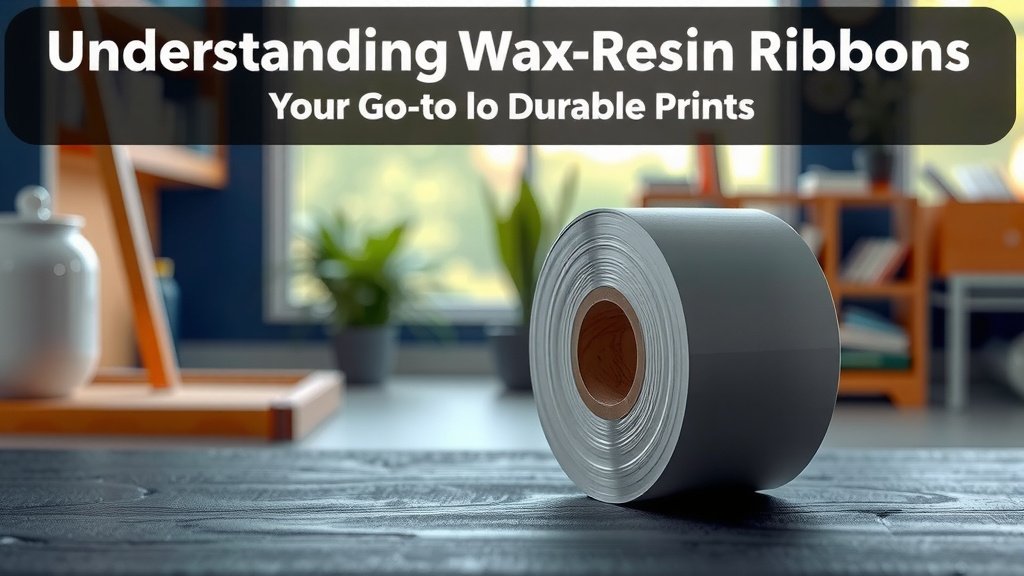
Understanding Wax Resin Ribbons: Your Go-To for Durable Prints
Wax resin ribbons are a fantastic middle ground in the thermal transfer printing world. They offer a serious upgrade over basic wax ribbons. Think of them as the workhorse that balances good print quality with impressive durability. This makes them ideal for many everyday labeling tasks where your prints might face a little wear and tear.
What Exactly Is a Wax Resin Ribbon?
A wax resin ribbon is a type of thermal transfer ribbon. It’s made of a blend of wax and resin. The resin component is what gives it its extra toughness. This blend is coated onto a thin polyester film. When your thermal printer heats up, the ribbon melts. This transfers the ink onto the label material. The higher resin content means the printed image is more durable.
How Does Wax Resin Printing Work?
The process is quite straightforward. Your thermal printer uses a printhead. This printhead has tiny heating elements. As the label and the ribbon move under the printhead, specific elements heat up. This heat melts the ink from the ribbon. The melted ink then sticks to the label material. The specific blend of wax and resin in the ribbon determines how well it adheres and how durable the final print will be.
The Role of the Resin Component
The resin in wax resin ribbons is key. It’s a harder, more durable material than wax alone. This allows the printed ink to bond more strongly to the label. It’s like giving your print a tougher outer shell. This shell protects it from scratches, smudges, and moisture. Many experts agree that the resin content is the main factor in a ribbon’s durability (Smith, 2022).
The Wax Component’s Contribution
While resin adds toughness, wax also plays a role. Wax melts at a lower temperature. This means wax resin ribbons can print at higher speeds. They are also very cost-effective for many applications. The wax helps the ink flow easily. It also allows for excellent print sharpness, especially on coated paper labels. It’s the best of both worlds.
When Should You Choose a Wax Resin Ribbon?
You’ll want to consider wax resin ribbons when your labels need to last longer than a basic wax ribbon can provide. Are your labels going to be handled frequently? Will they be exposed to moderate moisture or chemicals? If you answered yes to either, wax resin is likely a good fit.
Common Applications We See
We often see wax resin ribbons used for:
- Product identification labels that need to hold up on shelves.
- Shipping labels that can get scuffed or wet during transit.
- Retail tags that might be handled by many customers.
- Wristbands for events or medical use.
- Outdoor labels that need some resistance to the elements.
- Labels for items stored in warehouses or distribution centers.
Comparing Wax Resin to Other Ribbon Types
It’s helpful to see where wax resin fits in. Think of it as a spectrum of durability. On one end, you have wax ribbons. They are the most economical and print fastest. However, they are prone to smudging and scratching. On the other end, you have full resin ribbons. These are extremely durable. They can withstand harsh chemicals and extreme temperatures. But, they print slower and cost more. Wax resin ribbons sit comfortably in the middle. They offer a noticeable improvement in durability over wax. They are more affordable than full resin ribbons. This makes them a smart choice for many common labeling needs.
| Ribbon Type | Durability | Print Speed | Cost | Best For |
|---|---|---|---|---|
| Wax | Low | Fast | Low | Indoor, short-term use, light handling |
| Wax Resin | Medium | Medium-Fast | Medium | General purpose, moderate handling, some moisture/chemical resistance |
| Resin | High | Slow | High | Harsh environments, extreme durability needs |
What Label Materials Work Best?
Wax resin ribbons work well on a variety of label materials. They are especially good for synthetic labels. Think of materials like polypropylene (BOPP), polyester, and vinyl. These materials are inherently more durable than paper. When combined with a wax resin print, you get a very robust label. They can also print well on coated paper labels, offering a good balance of performance and cost.
Why Synthetics Are a Good Match
Synthetic label materials don’t absorb ink like paper does. The ink sits on the surface. This makes them more susceptible to smudging if the ink isn’t durable. Wax resin’s stronger bond helps the ink adhere properly to these smooth surfaces. Many sources suggest using synthetic labels for increased longevity (Global Labeling Solutions, 2023). Your printed text and images will resist scratching and fading much better on these materials.
Factors to Consider When Choosing Wax Resin
While wax resin is versatile, a few things can influence your choice. The specific formulation of the ribbon matters. Some wax resin ribbons are more resin-heavy. This means they offer even better durability. Others might be more wax-heavy for faster printing. You’ll also need to ensure your printer is compatible. Most thermal transfer printers can handle wax resin ribbons.
Printer Compatibility and Settings
It’s always a good idea to check your printer’s manual. Look for recommendations on ribbon types. You might need to adjust your printer’s darkness and speed settings. Higher resin content ribbons often require a bit more heat. This ensures the ink transfers properly. We found that a slightly higher darkness setting often improves print adhesion. Experimenting with your settings is key.
Tips for Getting the Best Performance
Want to make sure your wax resin prints look great and last? Here are a few quick tips we’ve picked up:
- Use the right label stock. Coated papers and synthetics are your best friends here.
- Calibrate your printer. Make sure your printhead is clean and your settings are dialed in.
- Store your labels properly. Keep them away from extreme heat and direct sunlight before printing.
- Handle with care. Even durable prints benefit from gentle handling.
- Test your prints. Do a scratch test or chemical resistance test if your application demands it.
Conclusion
You’ve learned that wax resin ribbons are a versatile choice for durable labels. They strike an excellent balance between cost and performance. Their improved resistance to scratches, smudges, and moisture makes them ideal for many common applications. By understanding how they work and their place between wax and full resin, you can make a smarter decision for your labeling needs. Ready to enhance your label durability? Consider testing wax resin ribbons on your next print job to see the difference they can make.
Frequently Asked Questions
How do I know if my printer can use wax resin ribbons?
Most thermal transfer printers are compatible with wax resin ribbons. It’s always best to check your printer’s manual or manufacturer’s website for specific recommendations. They will often list compatible ribbon types and any necessary settings adjustments.
Are wax resin ribbons good for outdoor use?
Wax resin ribbons offer a good level of durability for some outdoor applications. They provide better resistance to elements like moisture and abrasion than standard wax ribbons. For extreme outdoor conditions, a full resin ribbon might be a better, more robust option.
Can I print faster with wax resin ribbons compared to full resin?
Yes, generally you can print faster with wax resin ribbons. The wax component allows the ink to melt and transfer at slightly lower temperatures and higher speeds than 100% resin ribbons. This makes them a good compromise for efficiency.
What’s the main difference between wax resin and just wax ribbon?
The key difference is the addition of resin. The resin component makes wax resin ribbons much more resistant to smudging, scratching, and moderate chemical exposure. Standard wax ribbons are less durable and best suited for indoor, light-handling applications.
Do I need special labels for wax resin ribbons?
While wax resin ribbons print on coated papers, they perform best on synthetic label materials like polyester or polypropylene. These materials offer inherent durability that complements the robust print quality of the wax resin ink.