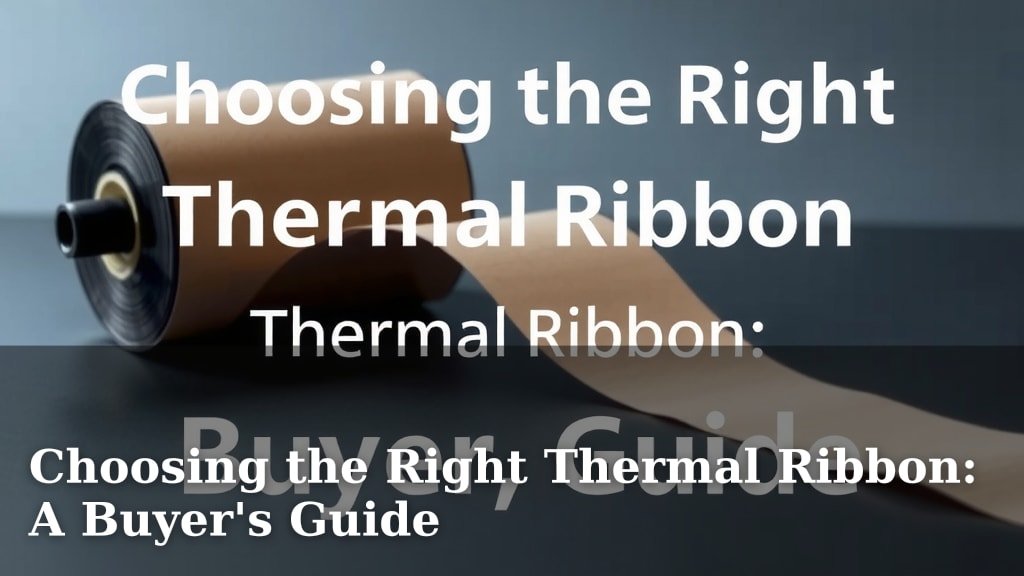
Choosing the Right Thermal Ribbon: A Buyer’s Guide
Choosing the right thermal ribbon depends on your printer and what you’re printing on. For general use on paper labels, wax ribbons are often a good starting point. If you need more durability for harsher environments or specific materials like synthetic labels, you’ll want to look at resin or wax/resin blends.
We found that understanding the basic types of ribbon—wax, wax/resin, and resin—is key. Each offers different levels of durability and is designed for specific label stocks. Getting this match right means your labels will last and be easy to read for as long as you need them.
- Match ribbon to your label material (paper, synthetic).
- Consider print durability needs (smudge-proof, chemical resistance).
- Wax is for general, indoor use.
- Resin is for harsh conditions and synthetic labels.
- Wax/resin is a good all-around compromise.
Let’s walk through how to pick the perfect thermal ribbon for your specific printing needs.
Selecting the Right Thermal Ribbon for Your Needs
Picking the correct thermal ribbon is like choosing the right tool for a job. You need the one that fits the material and the task. We’ve found that understanding the three main types is the first step. These are wax, wax/resin, and resin ribbons. Each one offers different strengths for your printing projects.
Understanding the Three Main Ribbon Types
Think of these ribbons as different levels of protection for your printed text. They vary in how well they resist smudges, scratches, and environmental factors. Your choice will depend on where the label will be used and what it needs to withstand.
1. Wax Ribbons: The Everyday Workhorse
Wax ribbons are the most common and cost-effective. They work best on coated paper labels. Wax ribbons use a softer ink that transfers well onto porous surfaces. This makes them ideal for general-purpose printing in controlled environments. Many experts recommend wax for applications where durability isn’t the top priority. For example, shipping labels or product identification tags used indoors are perfect candidates. You’ll get good print quality for basic needs. Remember, wax is sensitive to heat and abrasion. It’s not built for rough handling or outdoor exposure.
2. Wax/Resin Ribbons: The Balanced Choice
When you need a bit more toughness than wax can offer, wax/resin ribbons are a fantastic middle ground. These ribbons blend wax with a harder resin component. This combination provides significantly improved scratch and smudge resistance. They are a great option for semi-durable labels. Think about applications like chemical drum labeling or outdoor inventory tags. Wax/resin works well on both paper and synthetic label materials. Many find this type offers a good balance between cost and performance. It’s a popular choice for many businesses. The print quality is sharp, and the durability is a step up from pure wax.
3. Resin Ribbons: The Toughest Option
Resin ribbons are the most durable of the three. They are designed for the most demanding applications. The ink in resin ribbons is highly resistant to chemicals, extreme temperatures, and abrasion. These ribbons are typically used with synthetic label materials like polyester or polypropylene. This pairing creates labels that can withstand harsh industrial environments. You’ll see them used for circuit board labels, automotive parts, and outdoor signage. If your labels need to survive in tough conditions, resin is likely your best bet. The print is exceptionally sharp and long-lasting. However, resin ribbons are generally the most expensive. They also require higher print temperatures from your thermal printer.
Matching Ribbon to Your Label Material is Key
The material of your label plays a huge role in how well the ribbon adheres and performs. You can’t just pick any ribbon and expect great results. We found that understanding your label stock is as important as knowing the ribbon types.
Paper Labels:
These are the most common and budget-friendly labels. They are great for everyday use. For paper labels, wax ribbons are usually the best match. They transfer easily and provide good print quality at a low cost. You can also use wax/resin ribbons on paper labels if you need more durability than wax alone can provide. However, using a resin ribbon on plain paper is generally not recommended. The resin is too hard and won’t bond properly, leading to poor print quality and easy smudging. It’s like trying to paint a delicate watercolor on a rough brick wall – it just doesn’t work well.
Synthetic Labels:
Synthetic labels, such as polyester, polypropylene, or vinyl, are much more durable than paper. They resist tearing, moisture, and chemicals. Because they are less porous, they require a ribbon that can adhere strongly. This is where resin ribbons shine. They are specifically designed to bond with these smooth, tough surfaces. Wax/resin ribbons can also work on some synthetic materials, offering a good compromise. However, pure wax ribbons typically do not perform well on synthetics. They lack the necessary adhesion and will likely rub off easily. So, if you’re using synthetic labels, focus on resin or wax/resin options.
Consider the Durability Requirements of Your Application
Now, let’s talk about what your labels need to endure. The environment and handling they will face will guide your ribbon choice. Think about how long the label needs to last and what conditions it will be in.
Indoor, Light-Duty Applications:
If your labels are for indoor use and won’t experience much handling or exposure to the elements, wax ribbons are often sufficient. This includes things like general office labels, file folders, or retail product tags that stay on a shelf. The cost savings with wax can be significant for large print volumes. We found that for these low-stress environments, wax provides a perfectly acceptable print and lifespan. It’s the most economical choice.
Moderate Durability Needs:
For labels that might get handled more frequently or face some minor exposure to moisture or light abrasion, a wax/resin ribbon is a good upgrade. These are suitable for shipping labels that might get wet during transit or product labels that are handled by customers. Many companies choose wax/resin for its versatility. It offers a noticeable improvement in durability without the higher cost of pure resin. It’s a solid all-around performer for many common business needs.
Harsh Environments and High Durability:
When labels must withstand extreme conditions, you absolutely need resin ribbons. This applies to labels used in manufacturing, laboratories, automotive settings, or outdoors. Think about labels on machine parts that get hot or greasy, or tags on chemical containers. They need to remain legible and intact. Resin ribbons ensure the print can resist everything from solvents and oils to UV exposure and high heat. This level of durability comes at a higher price, but it’s essential for critical applications where information must not be lost.
Key Factors for Your Decision: A Quick Checklist
To make sure you’re on the right track, consider these points before you buy. It’s easy to get overwhelmed, but these questions should help you narrow it down.
- What material are your labels made of? (Paper, synthetic, etc.)
- Where will the labels be stored and used? (Indoor, outdoor, controlled environment?)
- What kind of wear and tear will they face? (Handling, moisture, chemicals, heat?)
- How long do the printed labels need to be readable?
- What is your budget per label?
- What print quality do you require? (Basic text, graphics, fine print?)
Understanding Printer Compatibility
While not always the primary factor, it’s worth noting that your thermal printer itself plays a role. Different printers are designed to handle different ribbon types. Most industrial and commercial printers can handle all three ribbon types. However, some smaller desktop printers might have limitations. Always check your printer’s manual or specifications to ensure compatibility. This avoids any frustration down the line. You want to make sure your chosen ribbon will work smoothly with your equipment.
When in Doubt, Test!
The best way to be absolutely sure is to test. If you’re unsure whether a wax, wax/resin, or resin ribbon will work best for your specific label material and application, try samples. Many ribbon suppliers offer sample rolls. You can print test labels and then put them through your expected usage conditions. This hands-on approach is incredibly helpful. It confirms print quality and durability in the real world. We found that this simple step can save you a lot of potential headaches and wasted resources.
A Comparison Table for Quick Reference
Here’s a quick summary to help you compare the ribbon types at a glance:
| Ribbon Type | Best For Label Material | Durability Level | Resistance | Typical Use Cases | Cost |
|---|---|---|---|---|---|
| Wax | Coated Paper | Low | Smudges (Moderate), Scratches (Low), Water (Poor) | Shipping, Retail Tags (Indoor), General Office | Low |
| Wax/Resin | Coated Paper, Some Synthetics | Medium | Smudges (Good), Scratches (Good), Water (Good) | Apparel Tags, Drum Labels, Outdoor Inventory | Medium |
| Resin | Synthetic (Polyester, Polypropylene) | High | Smudges (Excellent), Scratches (Excellent), Water (Excellent), Chemicals (Excellent), Heat (Excellent) | Automotive, Electronics, Industrial, Harsh Environments | High |

Conclusion
You’ve learned the essentials for choosing your thermal ribbon. Remember, it’s all about matching the ribbon to your label material and your application’s demands. Think about whether you need the everyday reliability of wax, the balanced toughness of wax/resin, or the extreme durability of resin. Don’t forget to check printer compatibility and test if you’re unsure. By considering these factors, you’ll ensure your printed labels are clear, lasting, and perfectly suited for their job. Your next step is to identify your label type and intended use, then confidently select the right ribbon.
Frequently Asked Questions
What happens if I use the wrong type of thermal ribbon?
Using the wrong thermal ribbon can lead to poor print quality, smudging, or labels that fade quickly. For instance, using a wax ribbon on synthetic labels might not adhere well, causing the print to rub off easily. Conversely, a resin ribbon on paper might not transfer properly if the printer isn’t set to a high enough temperature.
How do I know if my printer is compatible with a specific ribbon?
Most commercial and industrial thermal printers are designed to handle all three ribbon types (wax, wax/resin, and resin). However, it’s always best to consult your printer’s manual or manufacturer specifications. This will confirm its capabilities and any specific requirements for ribbon core size or type.
Can I use a resin ribbon on paper labels if I need extra durability?
While you might think this is a good idea, it’s generally not recommended. Resin ribbons are formulated for smooth, non-porous synthetic materials. On paper, they may not bond properly, leading to blotchy prints or poor adhesion. A wax/resin ribbon is usually a better choice for adding durability to paper labels.
How do I determine the right ribbon size (width and length)?
The ribbon width should be slightly wider than your label width to ensure full coverage and prevent printhead damage. Ribbon length depends on your print volume and label size; longer ribbons mean fewer changes but can be more expensive upfront. Always check your printer’s specifications for supported ribbon lengths and core sizes.
Is it worth spending more on resin ribbons for everyday indoor use?
For typical indoor applications like shipping labels or basic retail tags, wax or wax/resin ribbons are usually sufficient and more cost-effective. Resin ribbons offer superior durability needed for harsh environments, chemicals, or extreme conditions. Unless your indoor labels face unusual wear and tear, the extra cost of resin likely isn’t necessary.