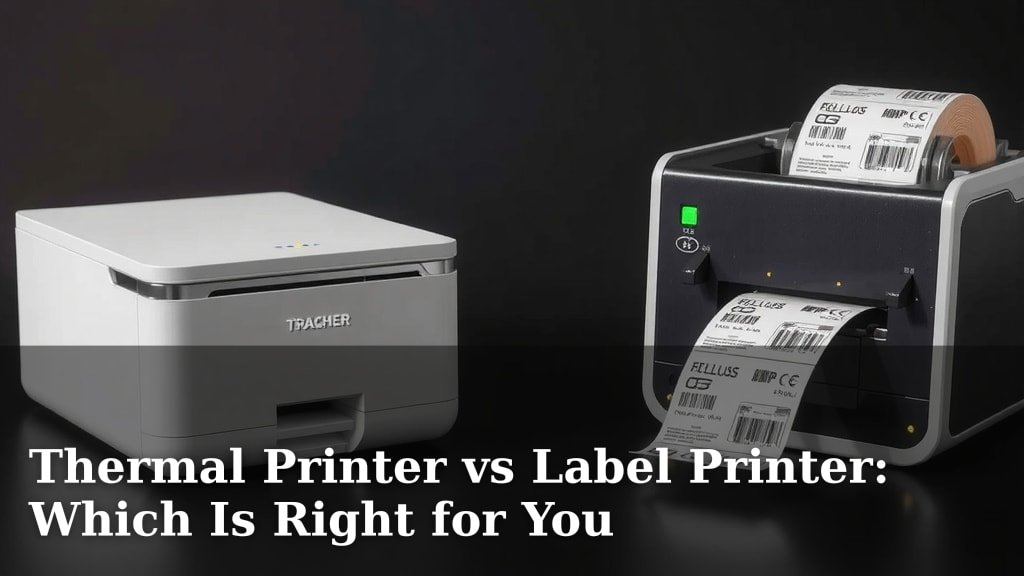
Thermal Printer vs Label Printer: Which Is Right for You
When deciding between a thermal printer vs label printer, know that they’re often the same thing, but the terms are used differently. A thermal printer uses heat to print, while a label printer is designed to print on specialized label media. Most label printers actually use thermal technology to get the job done.
You might be wondering which is best for your needs. We found that thermal printers excel at creating receipts and barcodes quickly. Label printers, on the other hand, are fantastic for organizing items with clear, durable labels. Both rely on heat-sensitive technology for their printing magic.
- Thermal printers use heat to print.
- Label printers print on specialized media.
- Many label printers are thermal printers.
- Thermal transfer vs. direct thermal is a key difference.
Let’s dive into the differences and similarities to help you pick the right one for your projects.
“`htmlUnderstanding Thermal Printers and Label Printers
So, you’re trying to figure out the difference between a thermal printer and a label printer. It’s a common question, and honestly, it can be a little confusing because there’s a lot of overlap! Think of it like this: all squares are rectangles, but not all rectangles are squares. Similarly, many label printers are thermal printers, but not all thermal printers are strictly label printers.
The core technology is often the same. Both rely on heat to create images or text. Where they differ is in their intended use and the media they print on. Let’s break down what makes each unique and where they shine. You’ll quickly see how they work together and how one can be a type of the other.
How Thermal Printers Work: A Quick Heat-Up
A thermal printer is any printer that uses heat to produce an image. This heat is applied to specially coated paper or ribbon. It’s a pretty neat process that results in clear, crisp output. Because it relies on heat, you won’t find any ink cartridges or toner to worry about. This is a big advantage for many users.
The magic happens with a print head. This print head has tiny heating elements that warm up specific spots. When these heated spots touch the special paper, they turn black. It’s like a tiny, controlled burn that forms your text and images. This technology is favored for its speed and simplicity.
The Two Main Types of Thermal Printing
Within the thermal printing world, there are two main methods: direct thermal and thermal transfer. Understanding these is key to knowing which type of printer you might need.
Direct Thermal Printing: Simplicity at Its Core
Direct thermal printing is the simplest form. It uses heat-sensitive paper. The print head heats up, and where it touches the paper, the coating turns black. This is why you don’t need any ink or ribbon. It’s all about the paper reacting to heat. This method is often used for things like receipts and shipping labels.
The main benefit here is the lack of consumables beyond the paper itself. No ink to run out, no ribbons to replace. However, the print quality isn’t as durable. Direct thermal prints can fade over time, especially when exposed to sunlight or heat. Think about those faded receipts you sometimes find – that’s direct thermal at work.
Thermal Transfer Printing: Durability and Detail
Thermal transfer printing, on the other hand, uses a ribbon. This ribbon is coated with ink. The print head heats up, melting the ink from the ribbon onto the label material. This creates a much more durable and long-lasting image. It’s like ironing ink onto your media.
This method is ideal for applications where the printed information needs to withstand harsh conditions. We’re talking about barcodes that need to be scanned for years, or labels on products that might get wet or scratched. While it requires both labels and ribbons, the output is significantly more robust. Many barcode labels and durable product identification labels use this method.
What Exactly is a Label Printer?
A label printer is, quite simply, a printer designed to print on label media. This media comes in various shapes, sizes, and materials. Label printers are built to handle these specialized rolls or sheets of labels. They are often compact and designed for desktop use, but larger industrial versions exist too.
The term “label printer” often refers to the specific task it performs: creating labels. Whether it uses direct thermal technology or thermal transfer technology, its primary job is to print labels. So, when someone says “label printer,” they usually mean a device that outputs information onto adhesive-backed labels for organization, identification, or branding.
The Overlap: Label Printers ARE Often Thermal Printers
Here’s where the confusion often comes in. Most modern label printers use thermal printing technology. They leverage either direct thermal or thermal transfer methods to put ink onto labels. So, when you buy a label printer, there’s a very high chance you’re buying a thermal printer specifically optimized for label media.
Think of it as a specialization. A thermal printer is the general category. A label printer is a specific type of thermal printer that has features geared towards printing on label stock. This could include auto-cutting, support for various label sizes, and software designed for label design.
Key Differences and Similarities at a Glance
To make things crystal clear, let’s put some of the main points side-by-side. This should help you visualize where each term fits.
| Feature | Direct Thermal Printer | Thermal Transfer Printer | General Label Printer |
|---|---|---|---|
| Printing Method | Heat sensitive paper | Ink ribbon + heat | Can be direct thermal or thermal transfer |
| Consumables | Paper only | Labels + ribbons | Depends on internal technology |
| Durability | Less durable (fades) | Highly durable | Depends on internal technology |
| Common Uses | Receipts, shipping labels, temporary tags | Barcodes, product labels, durable asset tags | Organization, shipping, product identification, name tags |
| Ink/Toner | No | No (uses ribbon ink) | No |
When to Choose Which Type of Thermal/Label Printer
Your decision really hinges on what you need to print and how long it needs to last. Are you printing quick receipts for a checkout counter? Or are you creating durable labels for inventory that will sit on shelves for years?
For Speed and Simplicity: Direct Thermal
If your main goal is to print things like shipping labels quickly, or temporary price tags, direct thermal is often the way to go. It’s straightforward: load the special paper, hit print, and you’re done. Many small businesses find this incredibly efficient for day-to-day operations. Plus, not having to buy ink or ribbons saves money and hassle. Just remember its tendency to fade.
For Longevity and Toughness: Thermal Transfer
When durability is non-negotiable, you’ll want thermal transfer. This is your go-to for printing barcodes that need to scan reliably over time, labels for outdoor equipment, or anything that might face wear and tear. The investment in ribbons pays off in the long run with prints that stand up to the elements. Many industrial settings and product manufacturers rely on this for clear, lasting identification.
For General Organization: A Versatile Label Printer
If you’re just looking to get your home or office organized, a versatile label printer is your best friend. These are often compact desktop units. They might use direct thermal for quick labels, or offer thermal transfer for more durable options. Think about organizing spice racks, filing cabinets, or cables. For these tasks, the ease of printing custom-sized labels is often the biggest win.
Making the Final Decision: A Quick Checklist
Before you click “buy,” run through this quick checklist. It will help ensure you’re getting the right tool for your needs.
- Do you need labels to last for years or withstand harsh conditions? (If yes, lean towards thermal transfer.)
- Are you primarily printing receipts or temporary shipping labels? (If yes, direct thermal might be perfect.)
- Do you want to avoid buying ink or ribbons? (If yes, direct thermal is your friend.)
- Is print durability more important than the lowest upfront cost? (If yes, consider thermal transfer.)
- Do you need to print on a variety of label materials like plastic or metal? (If yes, thermal transfer is generally better.)
- Is the print quality prone to fading or smudging a major concern? (If yes, avoid direct thermal for long-term use.)
Conclusion
So, you’ve learned that while “thermal printer” and “label printer” are often used interchangeably, they describe different aspects of the same technology. A thermal printer uses heat, and most label printers utilize this method. Your choice boils down to your specific needs: direct thermal for speed and simplicity with receipts or temporary labels, and thermal transfer for durable, long-lasting prints on items that need to endure. By considering print longevity and usage, you can confidently select the right printer for your projects and get organized efficiently.
Frequently Asked Questions
Can I use a direct thermal printer for shipping labels if they might sit in a warehouse for months?
We found that direct thermal prints can fade over time, especially when exposed to heat or sunlight. For shipping labels that need to be scannable for extended periods or stored in varying conditions, thermal transfer printing is a more reliable choice. It offers superior durability against fading and environmental factors.
What’s the main difference in consumables between direct thermal and thermal transfer printers?
Direct thermal printers only require special heat-sensitive paper, meaning there are no ink cartridges or ribbons to buy. Thermal transfer printers, on the other hand, need both the label media and an ink ribbon. This makes direct thermal simpler and cheaper in terms of ongoing supplies.
Are label printers always thermal printers?
Most modern label printers are indeed thermal printers. They use either direct thermal or thermal transfer technology to print onto label stock. However, there are some older or specialized label printers that might use other methods like inkjet or laser, but these are less common for typical label printing tasks.
How can I tell if my current printer is direct thermal or thermal transfer?
A good clue is if you’ve never had to replace an ink ribbon. If your printer only uses special paper and you haven’t bought any ribbons, it’s likely a direct thermal printer. If you use ribbons along with your labels, you have a thermal transfer printer.
Is a thermal printer suitable for printing product barcodes that need to last?
For product barcodes that require longevity and resistance to scuffing or fading, thermal transfer printing is your best bet. Direct thermal printing might suffice for temporary barcodes, but the print quality degrades over time, potentially affecting scan accuracy.