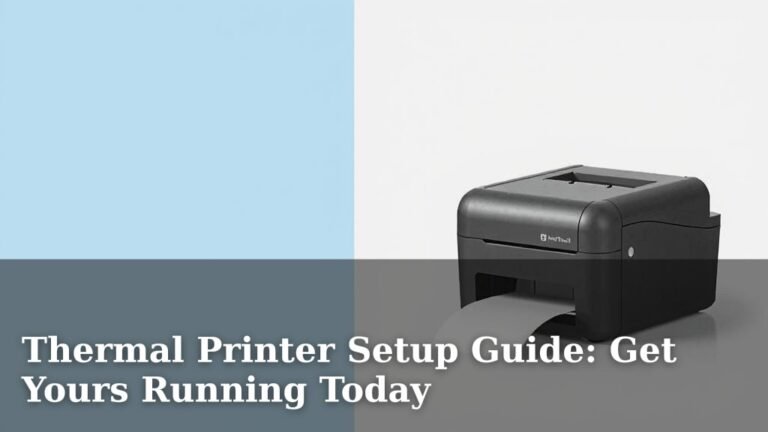

Thermal Paper Sizes: Your Complete Guide
Choosing the right thermal paper size is important for your receipt printer. You’ll want to match the paper width to your printer’s specifications for clear, readable receipts. Common sizes include 80mm and 57mm, which are widely used in retail and hospitality.
Understanding these dimensions ensures your transactions are recorded accurately and efficiently. Getting the size wrong can lead to jams or unreadable text, causing frustration for both you and your customers. We’ll help you find the perfect fit for your needs.
- Common thermal paper widths are 80mm and 57mm.
- 80mm is standard for most point-of-sale systems.
- 57mm is often used for smaller, portable receipt printers.
- Always check your printer’s manual for the exact width it supports.
- The core size also matters for how much paper fits on a roll.
Let’s walk through the different thermal paper sizes and how to pick the best one for your business.
HTML content begins here.Understanding Your Thermal Paper Width Options
Picking the right thermal paper size is key for smooth operations. You want a paper width that fits your printer perfectly. This ensures your receipts print clearly. It also prevents frustrating paper jams. Let’s break down the most common widths you’ll encounter.
The Standard 80mm Thermal Paper Roll
When you think of thermal paper, the 80mm width likely comes to mind first. This is the go-to size for most businesses. It’s incredibly common in point-of-sale (POS) systems. You’ll see it in grocery stores, restaurants, and retail shops.
An 80mm roll offers a good amount of space. It allows for clear printing of itemized lists. You can also easily include your business logo. Plus, there’s room for important details like return policies or loyalty program information. Many experts agree that this width provides a balanced display of information (National Retail Federation).
Why 80mm is So Popular
Its popularity stems from its versatility. Most modern POS printers are designed to accept 80mm rolls. This means if you’re buying a new printer, it will probably use this size. This standardization makes it easy to find replacement rolls. You aren’t locked into one specific supplier. It’s a truly dependable choice for high-volume environments.
What to Look for in 80mm Rolls
Beyond the width, consider the roll diameter and core size. A larger diameter means fewer roll changes. Think about how often you currently change rolls. If it’s a lot, a larger diameter might save you time. The core size affects how much paper fits on the roll. A smaller core usually means more paper.
The Compact 57mm Thermal Paper Roll
Next up is the 57mm thermal paper roll. This is a smaller, more compact option. It’s often used with portable receipt printers. You might see these in food trucks or for mobile service providers. They’re great when space is limited.
While smaller, 57mm paper is still very functional. It’s perfect for straightforward transactions. Think quick sales or appointments where detailed lists aren’t necessary. The text might be slightly smaller, but it remains perfectly readable.
Where 57mm Shines
These rolls are ideal for businesses that need mobility. Imagine a technician writing up an invoice on-site. Or a small cafe taking orders at the tables. The smaller footprint of the printer and paper means less clutter. It’s about efficiency in a more constrained space. Many users find it to be a convenient size for on-the-go sales.
Considerations for 57mm Rolls
Because the width is narrower, you’ll have less space for text and graphics. You might need to adjust your print settings. This ensures everything fits legibly. Also, like with 80mm rolls, pay attention to the diameter and core size. These factors still influence how often you’ll need to replace the roll.
Other Less Common Thermal Paper Sizes
While 80mm and 57mm dominate the market, you might encounter other sizes. These are typically for specialized equipment. You could find rolls that are 44mm or even 110mm wide.
A 44mm roll is often used in older or very specific handheld devices. Think of some older parking ticket machines or certain types of ticket printers. They offer even less printing space than 57mm. On the other hand, 110mm rolls are much wider. They might be used in large format label printers or specialized industrial applications.
When to Consider Non-Standard Sizes
Generally, you’ll only need these less common sizes if your equipment specifically requires them. If you have an older printer or a unique device, check its manual. It will clearly state the required paper width. For most modern businesses, sticking to 80mm or 57mm is usually the simplest approach. It ensures a wide availability of supplies.
Key Factors Beyond Just Width
Once you know the width, there are a few other things to consider. These can impact your printing experience and the amount of paper you get. Getting these right means fewer headaches down the line.
Understanding Paper Roll Diameter
The diameter of a thermal paper roll refers to its overall size. It’s measured from one edge of the paper roll to the other through the center. Think of it like the size of a pizza. A larger diameter means more paper on the roll. This translates to fewer interruptions for roll changes.
Common diameters for 80mm rolls are 80mm and sometimes up to 100mm. For 57mm rolls, you might see diameters around 40mm or 50mm. Your printer might have a maximum diameter it can accommodate. Check your printer’s specifications. This is a critical piece of information.
Impact on Printer Fit
A roll that’s too large in diameter might not fit into the printer’s paper compartment. This is especially true for smaller, portable printers. Measure the available space inside your printer before ordering larger diameter rolls. You don’t want to buy a giant roll only to find it won’t fit!
The Importance of the Paper Roll Core
The core is the cardboard tube in the center of the roll. Paper is wound around this core. The size of the core affects how much paper can fit onto the roll for a given diameter. Smaller cores generally allow for more paper length. This is because they take up less space in the middle.
Common core sizes are 12mm (0.5 inches) or 25mm (1 inch). Many standard POS printers use a 12mm core. Some industrial printers might use a larger 25mm core. If your printer requires a specific core size, make sure you order accordingly. Using the wrong core size can lead to the paper not feeding correctly.
Coreless vs. Cored Rolls
You might also see “coreless” thermal paper rolls. These are designed to be more environmentally friendly. They reduce waste since there’s no cardboard core to discard. However, they might be slightly more fragile. They also use a different mechanism for loading into the printer. Many experts suggest coreless options for sustainability (Environmental Protection Agency).
How to Choose the Right Thermal Paper Size for You
Now that you know the options, let’s make a decision. It’s not as complicated as it might seem at first. Follow these simple steps.
Step 1: Consult Your Printer’s Manual
This is the absolute most important step. Your printer manufacturer knows best. The manual will tell you the exact paper width your printer can use. It will also specify the maximum roll diameter it can handle. Don’t guess or assume. Always refer to the official documentation.
Step 2: Identify Your Business Needs
Think about what you print. Do you need to list many items? Do you include coupons or marketing messages? For detailed receipts, 80mm is generally superior. If you just need a simple transaction confirmation, 57mm might be sufficient.
Consider your printer type. Is it a large, stationary POS printer? Or is it a small, portable device? This will naturally guide you toward the appropriate size. Portable printers are almost always designed for 57mm rolls. Stationary units typically use 80mm.
Step 3: Check Your Current Paper Rolls
Take a look at the rolls you are currently using. If they work well, measure them! You can measure the width directly. You can also check the packaging for specifications. This is a quick way to confirm what works for your system. It’s a **practical** approach.
Step 4: Factor in Roll Longevity and Cost
Larger diameter rolls mean you buy and change paper less often. This can save time and potentially reduce labor costs. However, larger rolls often have a higher upfront cost. You need to balance this with the frequency of replacement. Many businesses find that the cost savings from fewer changes outweigh the initial price difference.
Quick Checklist for Choosing Your Paper
- Confirm Printer Width: Always check your manual.
- Assess Information Needs: How much detail do you print?
- Consider Printer Type: Stationary or portable?
- Measure Available Space: Especially for roll diameter.
- Check Core Size: Does your printer have a specific requirement?
- Think About Frequency: How often do you want to change rolls?
Conclusion
You’ve learned that choosing the right thermal paper size is more than just picking a roll. It’s about ensuring your printer runs smoothly and your receipts are clear. We covered the popular 80mm and 57mm sizes, plus other important factors like diameter and core size. Understanding these details prevents frustration and keeps your business operations efficient. Your next step is simple: grab your printer’s manual and confirm the exact specifications. This small step will ensure you always buy the perfect paper for your needs.
Frequently Asked Questions
What happens if I use the wrong thermal paper size?
Using the wrong size thermal paper can cause jams in your printer. It might also result in unreadable print or skewed text on your receipts. This can frustrate both you and your customers, leading to delays.
Can I use an 80mm paper roll in a printer designed for 57mm?
No, you generally cannot. An 80mm roll is wider than what a 57mm printer is designed to accept. Trying to force it will likely lead to paper jams and potential damage to your printer.
How do I know if I need a larger diameter roll?
If you find yourself changing thermal paper rolls very frequently, you likely need a larger diameter roll. Larger rolls simply contain more paper, meaning fewer interruptions for replacements throughout your day.
What is a coreless thermal paper roll?
A coreless thermal paper roll has no cardboard tube in the center. These are often seen as more eco-friendly as they reduce waste. However, you should check if your printer is compatible with coreless rolls, as they load differently.
Is there a standard thermal paper size for all businesses?
While 80mm is the most common size for stationary POS systems and 57mm for portable printers, there isn’t one single standard for all businesses. Your specific equipment dictates the correct size you should use. Always check your printer’s manual.