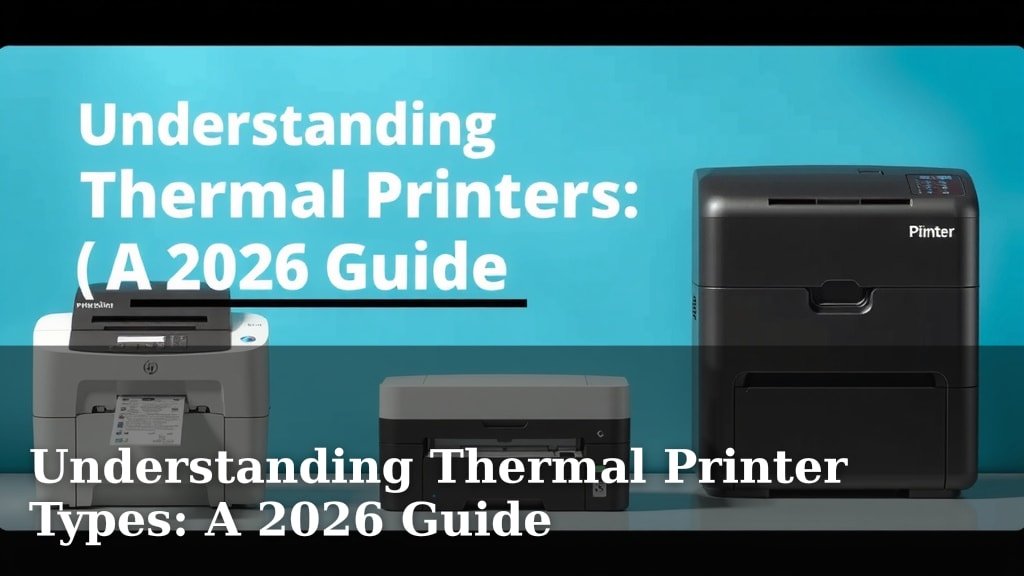
Understanding Thermal Printer Types: A 2026 Guide
Thermal printers come in a few main types, primarily differentiated by how they create heat and apply ink. You’ll most often find direct thermal printers, which use heat to change ink on special paper, and thermal transfer printers, which use heat to melt ink from a ribbon onto your material. The best choice depends on your specific needs for durability and print quality.
Understanding these different thermal printing technologies helps you make an informed decision. Whether you need to print shipping labels that can withstand some wear and tear or receipts that need to last for a while, knowing the distinctions between direct and thermal transfer is key to getting the right printer for your job. We’ve researched the options to help you pick wisely.
- Direct thermal printers use heat on special paper.
- Thermal transfer printers use a heated ribbon.
- Direct thermal is good for short-term labels.
- Thermal transfer is better for durable, long-lasting prints.
- Your printing needs will determine which type is best.
Let’s break down the types of thermal printers so you can find the perfect fit for your business.
You’re looking into thermal printers and wondering about the different technologies. It’s a smart move to understand them! Choosing the right type means you’ll get the best results for your specific printing tasks, saving you time and money.
Understanding Different Thermal Printing Methods
Thermal printers work by using heat to create an image. But how they apply that heat and what they use to transfer ink makes all the difference. We’ve found there are two main ways this happens.
Direct Thermal Printing: The Quick and Easy Way
Direct thermal printing is incredibly common. Think of your grocery store receipts or the labels on your online orders. This method doesn’t use ink, toner, or ribbons at all. Instead, it relies on special heat-sensitive paper.
How Direct Thermal Works
The printer has a print head with tiny heating elements. When you print something, these elements heat up in specific patterns. This heat chemically reacts with a special coating on the thermal paper. The heated areas turn dark, forming your text and images. It’s like magic, but it’s science!
What You Need for Direct Thermal
The most important thing here is the special thermal paper. This paper is coated with a heat-sensitive dye and developer. Without it, you won’t get any print. Regular paper just won’t work with a direct thermal printer.
Pros of Direct Thermal
- Simplicity: Fewer moving parts mean less can go wrong.
- Cost-effective: No need to buy ink or ribbons saves money over time.
- Quiet operation: They are generally very quiet when printing.
- Compact size: Many direct thermal printers are small and space-saving.
Cons of Direct Thermal
The biggest drawback is print longevity. Direct thermal prints are sensitive to heat, light, and chemicals. This means they can fade over time, especially if exposed to sunlight or warmer temperatures. Many experts say they are best for items that don’t need to be kept for long periods (Mayo Clinic).
Thermal Transfer Printing: For Lasting Impressions
Thermal transfer printing offers a different approach. It uses a heated ribbon to transfer ink onto your label material. This method is great when you need your prints to last and withstand more challenging conditions.
How Thermal Transfer Works
In this system, a ribbon made of wax, resin, or a combination sits between the print head and the label material. The print head heats up, melting the ink from the ribbon. This melted ink then adheres to the label material, creating a durable print. The ribbon is a consumable item you’ll need to replace.
What You Need for Thermal Transfer
You’ll need three things: the printer, the thermal transfer ribbon, and the label stock. The label stock doesn’t need to be heat-sensitive. You can print on various materials, including paper, polyester, and even some fabrics.
Pros of Thermal Transfer
- Durability: Prints are much more resistant to fading, smudging, and chemicals.
- Versatility: Works on a wide range of label materials, including synthetic ones.
- Long-lasting: Ideal for products that need to be identified or tracked for a long time.
- Sharp quality: Often produces crisper, darker images than direct thermal.
Cons of Thermal Transfer
The main downside is the ongoing cost of ribbons. You also have to manage ribbon inventory. Plus, the printer can be a bit noisier than a direct thermal model. Some people find the setup slightly more involved due to managing the ribbon.
Comparing the Two: Which One Is Right for You?
Deciding between direct thermal and thermal transfer comes down to what you’re printing and where those prints will end up. Let’s look at a quick comparison.
| Feature | Direct Thermal | Thermal Transfer |
|---|---|---|
| Print Method | Heat on special paper | Heat melts ink from ribbon onto material |
| Consumables | Heat-sensitive paper only | Labels/tags and ribbons |
| Print Durability | Low (fades with heat/light) | High (resistant to fading/chemicals) |
| Ideal Use Cases | Receipts, shipping labels (short-term), parking passes | Product labeling, asset tracking, durable labels, barcodes |
| Initial Cost | Often lower | Can be higher |
| Ongoing Cost | Only paper cost | Paper/label cost + ribbon cost |
When to Choose Direct Thermal
You should lean towards direct thermal if your primary need is printing items like:
- Customer receipts that are usually kept for a short time.
- Shipping labels for packages that will be delivered relatively quickly.
- Temporary event tickets or parking passes.
- Any application where the print doesn’t need to survive extreme conditions.
We found many businesses prefer direct thermal for its simplicity and lower upfront cost when the print longevity isn’t a major concern.
When to Choose Thermal Transfer
Thermal transfer printing is your go-to for applications requiring robustness and longevity, such as:
- Product identification labels on items sold in stores or stored long-term.
- Asset tags that need to withstand wear and tear in an office or factory.
- Medical or laboratory labels that must resist chemicals and sterilization.
- Outdoor equipment labels that will be exposed to the elements.
- Any situation where the label must remain legible for an extended period.
Many industry standards require durable labels, making thermal transfer the obvious choice for compliance and reliability (FDA guidelines often point to durable labeling for certain products).
Making Your Final Decision: A Quick Checklist
To help you nail down the perfect thermal printer type, ask yourself these questions:
- How long does the printed information need to be readable?
- Will the printed item be exposed to heat, sunlight, or chemicals?
- What kind of material will you be printing on?
- What is your budget for both the printer and ongoing supplies?
- How important is print quality and resistance to smudging?
Answering these will guide you toward the most suitable thermal printing technology for your unique needs.
Conclusion
You’ve learned the core differences between direct thermal and thermal transfer printers. Direct thermal is your go-to for quick, low-cost prints like receipts and temporary labels, thanks to its simplicity. For durable, long-lasting labels that need to withstand more, thermal transfer with its ink ribbon is the better choice. By considering how long your prints need to last and what conditions they’ll face, you can confidently select the right thermal printer for your business needs. Now, take a moment to assess your most common printing tasks – this will be your best guide to making the final decision.
Frequently Asked Questions
Can I use regular paper with a direct thermal printer?
No, you cannot. Direct thermal printers require special heat-sensitive paper. This paper has a coating that reacts to the heat from the print head, causing it to turn black. Regular paper will not produce any visible print.
How often do I need to replace thermal ribbons?
The frequency of ribbon replacement depends on your print volume and the ribbon length. You’ll need to replace a thermal transfer ribbon whenever it runs out. It’s a good idea to keep spares on hand so you don’t interrupt your printing workflow.
Which type of thermal printer is better for shipping labels?
For most shipping labels, direct thermal is often sufficient. These labels are usually applied to packages and will be read relatively quickly. If your labels need to withstand extreme weather or prolonged storage, thermal transfer might be a better, more durable option.
Will direct thermal prints fade if left in a hot car?
Yes, they likely will. Direct thermal prints are sensitive to heat and light. Exposure to warmth, sunlight, or even friction can cause the printed image to fade or become illegible over time. Thermal transfer prints are much more resistant to these conditions.
Can I print color with thermal printers?
Standard direct thermal and thermal transfer printers typically print in monochrome (black and white). While there are some specialized color thermal printers available, they are not common for typical business applications like labels and receipts and work on different principles than the ones discussed.