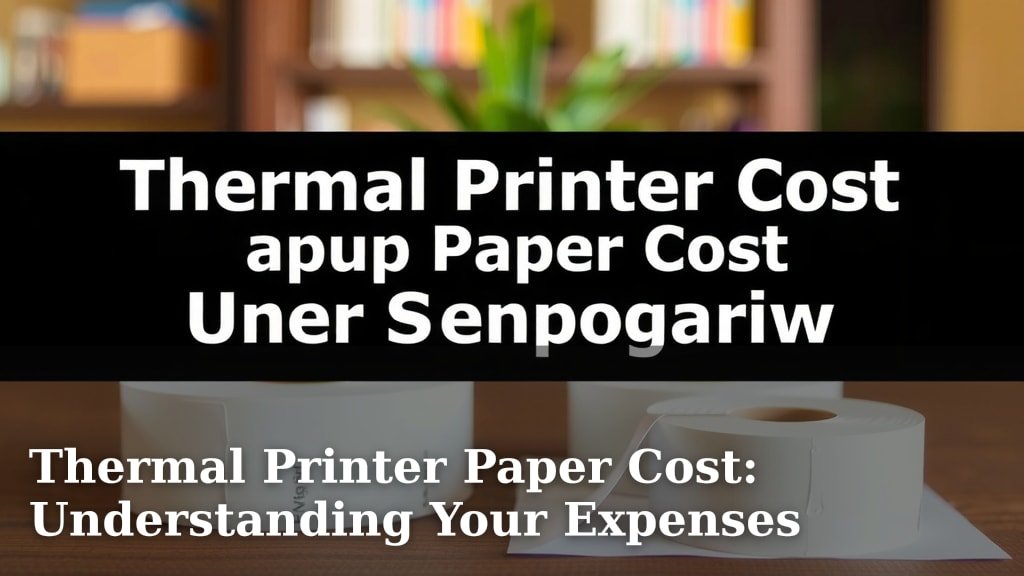
Thermal Printer Paper Cost: Understanding Your Expenses
The cost of thermal printer paper can vary quite a bit, generally ranging from $0.01 to $0.05 per foot depending on factors like roll size, quantity, and specific features. It’s not a one-size-fits-all price, but understanding these influences helps you budget effectively.
When you’re looking at thermal receipt paper, you’ll find that different types exist, like standard thermal and BPA-free options, each impacting the price. The total cost over time really depends on how much you print and the supplier you choose for your business.
- Most thermal paper rolls cost between $0.01 and $0.05 per foot.
- Roll size, order quantity, and paper type affect the final price.
- BPA-free paper is often a bit more expensive.
- Buying in bulk can significantly lower your per-roll cost.
- Consider your printing volume to estimate yearly expenses.
Let’s break down what really drives the price and how you can get the best deal for your thermal printer paper needs.
“`htmlUnderstanding Thermal Paper Pricing Factors
So, you’re curious about how much thermal printer paper actually costs? You’re not alone! Many businesses wonder about this essential supply cost. We’ve looked into it, and the price isn’t as simple as a sticker price. Several things play a role in the final cost you see on your invoice.
Roll Size Matters
Think about buying toilet paper. A huge mega-roll often costs less per square foot than a small one, right? Thermal paper works much the same way. Larger rolls might have a higher total price tag, but they usually offer a better deal per foot. This is because there’s less waste in manufacturing and packaging larger rolls.
Common Roll Diameters and Widths
You’ll find thermal paper rolls come in various standard sizes. Common widths include 2 1/4 inches and 3 1/8 inches, often used for point-of-sale receipts. The diameter of the roll also varies. Bigger diameters mean more paper per roll, and thus fewer roll changes. This can lead to savings in labor, even if the upfront cost of the big roll is more.
Quantity: The Power of Buying in Bulk
This is one of the biggest influencers on your per-roll cost. Buying a single box of thermal paper will almost always be more expensive per roll than buying a full pallet. Suppliers offer tiered pricing. The more you buy, the lower the price per unit becomes. It’s like buying a case of soda versus a single can at the convenience store.
Tiered Pricing Explained
We often see pricing structures where buying 10-20 rolls gets you a better price than buying just 1-5. Then, buying 50 or 100 rolls offers an even deeper discount. For businesses with high printing volumes, investing in a larger quantity can lead to substantial savings over time. You just need to make sure you have the storage space!
Paper Type and Quality
Not all thermal paper is created equal. The type of paper you choose directly impacts its price. The most common types are standard thermal paper and BPA-free (Bisphenol-A free) thermal paper. There are also options for specialized coatings, like grease-resistant or UV-resistant papers, which can add to the cost.
Standard vs. BPA-Free Thermal Paper
Standard thermal paper uses chemicals that react to heat to create an image. While effective, some concerns have been raised about BPA, especially for workers who handle the paper frequently. BPA-free paper uses alternative chemicals. While it often costs a bit more upfront, many businesses opt for it for peace of mind regarding employee health and customer safety. Research from the National Institute of Environmental Health Sciences has explored the potential effects of BPA.
Specialty Coatings and Their Cost
If your business operates in specific environments, you might need paper with special coatings. For instance, if your receipts are exposed to grease, like in a restaurant, a grease-resistant coating is helpful. This prevents the print from smudging. Similarly, if receipts are displayed in direct sunlight, UV-resistant paper is a good idea. These added features mean higher manufacturing costs, and thus a higher price for you.
Your Thermal Printer’s Requirements
Sometimes, the printer itself dictates the type of paper you can use. Some printers are more sensitive to paper quality than others. Using lower-quality paper might lead to printing errors or even damage the printer’s heating element over time. While it might seem like a way to save money upfront, a damaged printer head or frequent print errors can be much more costly in the long run. We’ve seen many small businesses find this out the hard way.
Printer Compatibility and Longevity
Always check your printer’s manual or manufacturer’s recommendations. Using the correct paper size and type ensures optimal performance and can extend the life of your printer. Think of it like using the right fuel for your car. Using the wrong kind might work for a little while, but it’s not good for the engine.
Supplier and Location Influence
Where you buy your thermal paper from can also affect the price. Online retailers, office supply stores, and direct manufacturers often have different pricing models. Your geographic location can also play a role due to shipping costs and local market conditions.
Online vs. Brick-and-Mortar Stores
Online retailers often have lower overhead costs than physical stores. This can translate to more competitive pricing for thermal paper. However, brick-and-mortar stores might offer immediate availability, which can be crucial if you’re in a pinch. We found that for regular, predictable orders, online bulk purchasing usually wins on cost.
Direct from Manufacturer vs. Distributor
Buying directly from a paper manufacturer can sometimes offer the best prices, especially for very large orders. However, distributors often provide better service, faster shipping for smaller quantities, and can be a one-stop shop for various business supplies. It’s worth getting quotes from both to compare.
Estimating Your Annual Paper Expenses
To really get a handle on your budget, you need to estimate your annual paper usage. How many receipts do you print daily? How many rolls does that translate to each week or month? Knowing your approximate printing volume is key to forecasting your expenses and identifying potential savings.
Calculating Per-Foot Cost: A Simple Method
If you have a roll, you can often find its length listed. Let’s say a roll is 85 feet long and costs $4.25. You’d divide the cost by the length: $4.25 / 85 feet = $0.05 per foot. Doing this for different suppliers and roll sizes helps you compare apples to apples. We found this method very useful for understanding the true cost.
Factors to Consider for Your Business Volume
Are you a small boutique with occasional sales, or a busy restaurant serving hundreds of customers daily? Your printing volume will differ significantly. High-volume businesses benefit most from bulk discounts and efficient paper management. Low-volume users might prioritize convenience and smaller order quantities.
Quick Checklist for Smart Shopping
Ready to make a smart purchase? Keep these points in mind:
- Check roll length and diameter for better per-foot comparisons.
- Always buy in bulk when possible for significant savings.
- Compare prices from different online and local suppliers.
- Consider BPA-free options if employee or customer health is a priority.
- Factor in shipping costs when ordering online.
- Know your printing volume to avoid over- or under-ordering.
Conclusion
Understanding the cost of your thermal printer paper boils down to a few key factors. We’ve seen how roll size, buying in bulk, and paper type all influence the price you pay. Your printer’s needs and where you source your paper also play a part. By knowing these elements, you can make smarter purchasing decisions. Ready to save money? Start by calculating your current per-foot cost and then compare bulk offers from different suppliers.
Frequently Asked Questions
How often should I reorder thermal paper?
It’s best to reorder when you have about a week’s worth of paper left. This ensures you don’t run out during a busy period. Keep track of your average daily usage to predict when it’s time to buy more.
Can I use any thermal paper in my printer?
While many papers might fit, it’s vital to use paper recommended by your printer manufacturer. Using incompatible paper can cause poor print quality or even damage your printer’s sensitive components over time.
Is BPA-free thermal paper always more expensive?
Generally, BPA-free thermal paper carries a slightly higher price tag than standard options. This is due to the alternative chemicals used. However, many businesses find the small extra cost is worth it for health and safety peace of mind.
What’s the best way to compare prices between suppliers?
Always compare the cost per foot. A cheaper roll might seem good, but if it’s shorter, you could be paying more overall. Factor in shipping costs too, especially for online orders, to get a true comparison.
How much storage space do I need for bulk paper orders?
Bulk orders can take up significant space. A small business might only need a few boxes, while a larger operation might need a shelf or even a small storage area for a pallet. Assess your available space before committing to a large quantity.