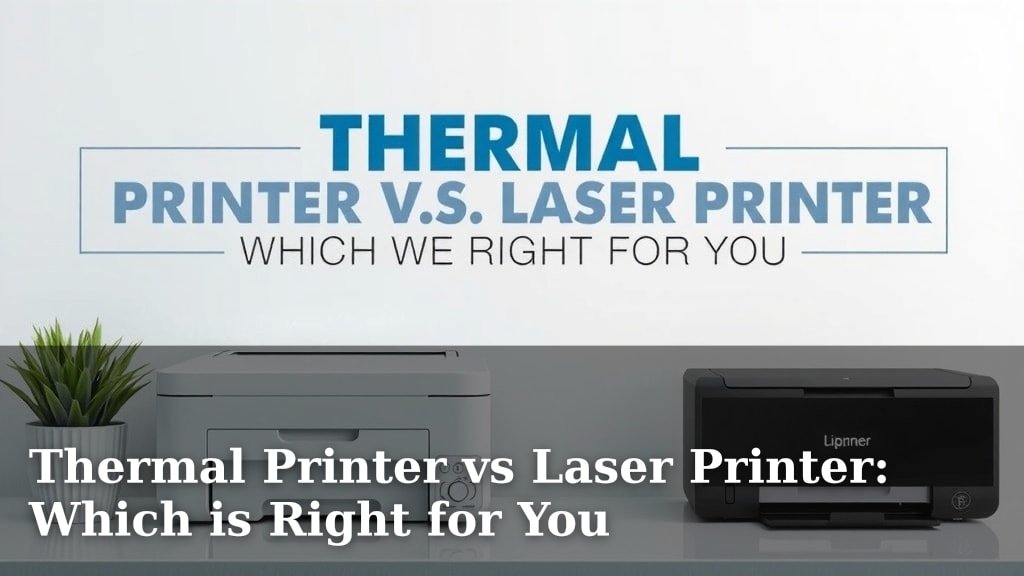
Thermal Printer vs Laser Printer: Which is Right for You
When choosing between a thermal printer and a laser printer, the best choice depends on your primary need: thermal printers excel at quick, low-cost labels and receipts with no ink, while laser printers offer higher quality text and graphics for documents.
Many people wonder which technology is superior for their home or office. We found that understanding their core differences in printing method, cost, and output quality is key. Thermal printers use heat to transfer an image onto special paper, making them ideal for barcode labels and receipts. Laser printers use a laser beam to create an image on a drum, which then transfers toner to the paper for sharp, professional documents.
- Thermal printers are best for labels and receipts without ink.
- Laser printers create high-quality text and graphics for documents.
- Thermal printing is faster for simple, one-color outputs.
- Laser printing offers better longevity and sharpness for detailed prints.
- Consider your budget and printing volume when deciding.
Let’s break down exactly how these two popular printer types differ and which one might be the perfect fit for your needs.
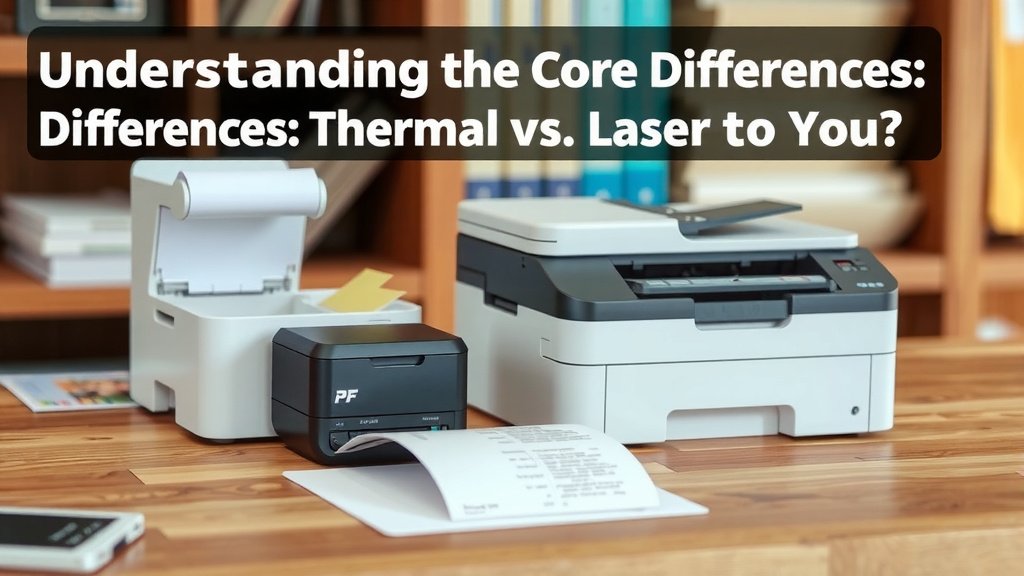
Understanding the Core Differences: Thermal vs. Laser Printing
When you’re looking to buy a printer, you’ll quickly see a lot of options. Two common types stand out for different jobs: thermal printers and laser printers. They work in very different ways and are best suited for unique tasks. We’ve looked into how they operate to help you decide which might be the right tool for your needs. Think of it like choosing between a trusty hammer and a precise screwdriver – both are tools, but you wouldn’t use them for the same job.
How They Work: A Tale of Heat and Light
The fundamental way these printers create an image on paper sets them apart. It’s like the difference between drawing with a hot iron and painting with a projector.
The Magic of Thermal Printing
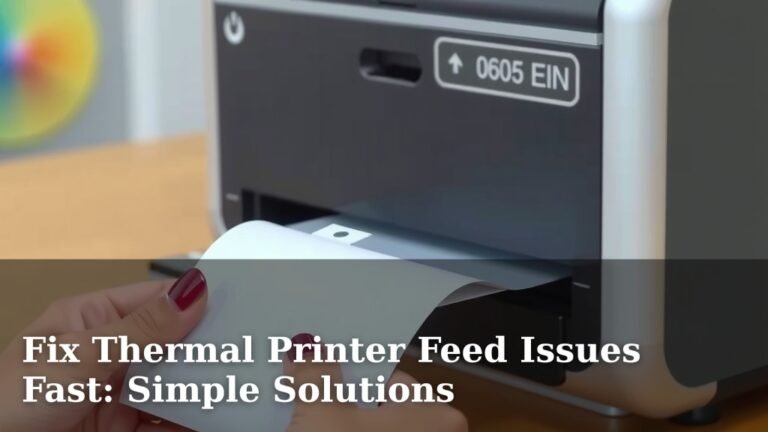
Thermal printers are pretty clever. They don’t use ink or toner at all! Instead, they use a special heat-sensitive paper. A print head, which is like a tiny heated bar, passes over the paper. Where the bar heats up, it turns the paper black. This direct heat transfer creates the text or image you want. It’s a simple, direct process. This method is why they are often called direct thermal printers.
The Precision of Laser Printing
Laser printers take a more involved approach. They use a laser beam. This beam “draws” your text or image onto a rotating drum. This drum picks up a special powdered ink called toner. Then, the toner is transferred from the drum to the paper. Finally, a fuser unit heats and presses the toner onto the paper, making it permanent. It’s a multi-step process that gives you a very crisp result. This is often referred to as electrophotographic printing.
The Big Question: Cost of Ownership
When you buy a printer, the initial price is just the beginning. You also need to think about what it costs to run it over time. This is where thermal and laser printers can differ quite a bit.
Thermal Printer Running Costs
Thermal printers can seem cheap to buy. Their real cost savings come from not needing ink or toner cartridges. That’s a huge advantage for regular printing jobs that don’t require color. However, you must use special thermal paper. This paper costs more than plain paper. Over time, the cost of this specialized paper can add up. We found that for high-volume label printing, the paper expense is the main ongoing cost.
Laser Printer Running Costs
Laser printers often have a higher upfront cost. They also require toner cartridges, which can be pricey. But, toner often lasts for many thousands of pages. For offices printing lots of documents, the cost per page can be surprisingly low. Many experts say that laser printers offer a better long-term value for bulk document printing (PCMag).
Output Quality: What Do You Need to See?
The kind of images and text you need to print is a major factor in your choice. Thermal and laser printers produce very different results.
Thermal Printer Output
Thermal printers are fantastic for simple, one-color text and basic graphics. Think barcodes, shipping labels, and receipts. The print is usually sharp enough for these tasks. However, the image can fade over time, especially when exposed to heat or sunlight. It’s not ideal for photos or detailed graphics. We found that the longevity of the print depends heavily on the quality of the thermal paper used and environmental conditions.
Laser Printer Output
Laser printers shine when it comes to text and graphics quality. They produce extremely sharp, crisp black-and-white text that looks professional. Many also offer good color printing, though it’s a different discussion. The toner is durable and resistant to fading. This makes them perfect for reports, presentations, and important documents. Many studies confirm laser printers offer superior detail and sharpness for text-based documents.
Speed and Volume: How Much Do You Print?
Your printing habits will heavily influence which printer type is best for you. Are you printing one label or hundreds of pages?
Thermal Printer Speed and Volume
Thermal printers are generally very fast for what they do. They can churn out labels and receipts quickly. They are designed for high-volume, repetitive tasks like at a retail checkout or shipping station. However, they are not typically used for large documents or color printing. Their speed is specific to their intended use case.
Laser Printer Speed and Volume
Laser printers are also known for their speed, especially for monochrome (black and white) printing. They can handle large print jobs efficiently. For offices with high printing demands, a laser printer is usually the way to go. We found that laser printers are often measured in pages per minute (PPM), with higher numbers indicating faster output for documents.
Durability and Longevity of Prints
How long do you need your printed information to last? This is a key differentiator.
Thermal Print Durability
As mentioned, thermal prints can fade. They are sensitive to heat, light, and even friction. Think about a receipt left on a car dashboard – it becomes unreadable. So, if you need prints that will last for years, direct thermal printing might not be your best bet for important archival documents. However, for temporary items like shipping labels, their lifespan is usually sufficient.
Laser Print Durability
Laser prints are much more durable. The fused toner adheres strongly to the paper. They resist fading from light and handling much better than thermal prints. For anything that needs to be kept long-term, like contracts or official records, a laser printer is the superior choice. Many archival standards suggest laser printing for long-lasting documents.
Use Cases: Where Do They Shine?
Let’s sum up the most common scenarios where each printer type excels. This can help you visualize them in action.
Ideal Uses for Thermal Printers
You’ll find thermal printers everywhere you need quick, temporary labels or receipts. This includes:
- Retail: For printing receipts at the point of sale.
- Shipping: Creating shipping labels for packages.
- Inventory: Labeling shelves or products with barcodes.
- Food Service: Printing order tickets in kitchens.
- Healthcare: Patient wristbands and medication labels.
They are perfect when you need lots of simple, single-color prints quickly and don’t need them to last forever.
Ideal Uses for Laser Printers
Laser printers are the workhorses for office environments and detailed printing tasks. They are perfect for:
- Office Documents: Reports, letters, invoices.
- Presentations: Crisp text and graphics for slides.
- Contracts and Legal Documents: Where clarity and permanence are key.
- High-Volume Printing: For departments that print many pages daily.
- Sharp Graphics: When the visual quality of text and simple images matters.
If you need professional-looking documents that stand the test of time, a laser printer is your go-to.
A Quick Comparison Table
Here’s a handy table to quickly see the main differences at a glance:
| Feature | Thermal Printer | Laser Printer |
|---|---|---|
| Printing Method | Heat applied to special paper | Laser and toner on drum |
| Ink/Toner | None (uses heat-sensitive paper) | Toner cartridge |
| Print Quality | Good for text/barcodes, can fade | Excellent for text/graphics, sharp, durable |
| Speed | Very fast for labels/receipts | Fast for documents |
| Cost per Page | Higher (due to special paper) | Lower (for high volume) |
| Best For | Labels, receipts, barcodes | Documents, reports, presentations |
Making Your Decision: A Checklist
To help you decide, ask yourself these quick questions. Your answers will point you toward the right printer type.
- Do you primarily print labels or receipts?
- Do you need prints to be archival quality and last for years?
- Is your main need for crisp, high-quality text documents?
- Are you looking to minimize ongoing costs for high-volume printing?
- Does print longevity and resistance to fading matter?
- Is color printing a major requirement for your documents?
By considering these points, you’ll get a much clearer picture of which printer technology will serve you best.
Conclusion
You’ve learned that thermal printers and laser printers are designed for very different jobs. Thermal printers are your go-to for quick, low-cost labels and receipts, excelling where speed and inkless operation are key. Laser printers, on the other hand, deliver superior quality for documents, offering sharpness and durability that stands the test of time. Your printing volume and the need for archival prints should guide your final choice. Now that you understand their unique strengths, you can confidently select the printer that best fits your specific needs!
Frequently Asked Questions
Can a thermal printer print in color?
No, standard direct thermal printers cannot print in color. They work by using heat to change the color of specialized paper, which typically only produces black or dark blue text and images. If you need color prints, you’ll need a different type of printer altogether.
How often do I need to replace toner in a laser printer?
Toner cartridges for laser printers are designed to last a long time, often printing thousands of pages. The exact lifespan depends on the printer model, your printing habits, and the type of toner cartridge you use. We found that for high-volume printing, the cost per page can be quite economical.
What happens if I use regular paper in a thermal printer?
If you try to use regular paper in a direct thermal printer, nothing will print. These printers require special heat-sensitive paper that reacts to the print head’s heat. Using standard paper will result in blank pages.
Are laser printers good for printing photos?
While laser printers can produce sharp graphics, they are generally not the best choice for printing high-quality photos, especially compared to inkjet printers. Color laser printers can handle graphics well, but they may struggle with the subtle gradients and color accuracy needed for professional photo prints.
Which type of printer is cheaper to run for a small home office?
For a small home office that prints a mix of documents and occasional labels, a monochrome laser printer often offers better long-term cost savings due to its lower cost per page and the longevity of toner. However, if your primary need is just simple receipts or shipping labels, a thermal printer could be cheaper to run due to no ink costs, but you’ll need to factor in the special paper.