Thermal Transfer Printing Explained: How It Works
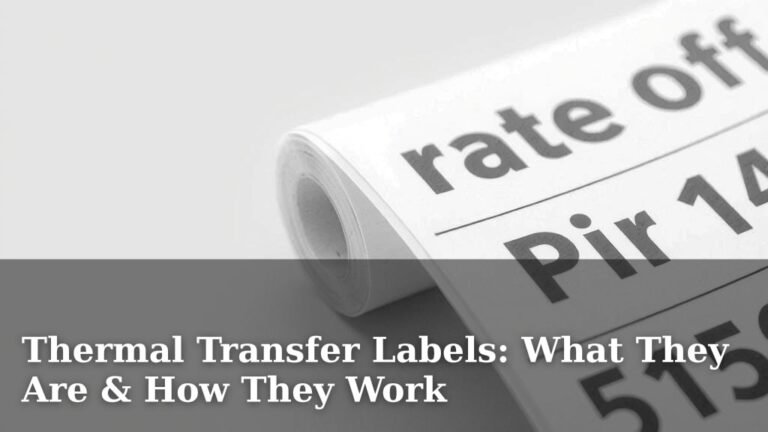
Thermal transfer printing is a digital printing method that uses heat to transfer ink from a ribbon onto a substrate. It’s an excellent choice for producing durable labels and barcodes. You’ll often find it used for product identification and shipping labels because the prints are very long-lasting.
This printing technique relies on a thermal printhead. This printhead has tiny resistors that heat up. When a resistor heats, it melts ink from a special ribbon. The melted ink then sticks to the material you’re printing on. It’s a surprisingly simple yet effective process for many labeling needs.
- Thermal transfer printers use heat and a ribbon.
- They create durable prints for labels and barcodes.
- The process involves a heated printhead melting ink.
- It’s ideal for long-lasting identification and shipping labels.
Below, we’ll break down exactly how thermal transfer printing works and why it’s such a popular choice for many businesses.
How Does Thermal Transfer Printing Work?
You’re curious about thermal transfer printing. It’s a clever process. It uses heat to move ink from a special ribbon onto another material. Think of it like a very sophisticated, high-tech stamp. This method is super popular. Many businesses rely on it for durable labels.
The Core Components: What You Need
To make thermal transfer printing happen, you need a few key players. You’ll always have a thermal transfer printer. This machine holds the magic. Then, you need a thermal ribbon. This ribbon carries the ink. Finally, you need your label material or substrate. This is what you want to print on. Without these three, you won’t get any prints.
The Printer Itself
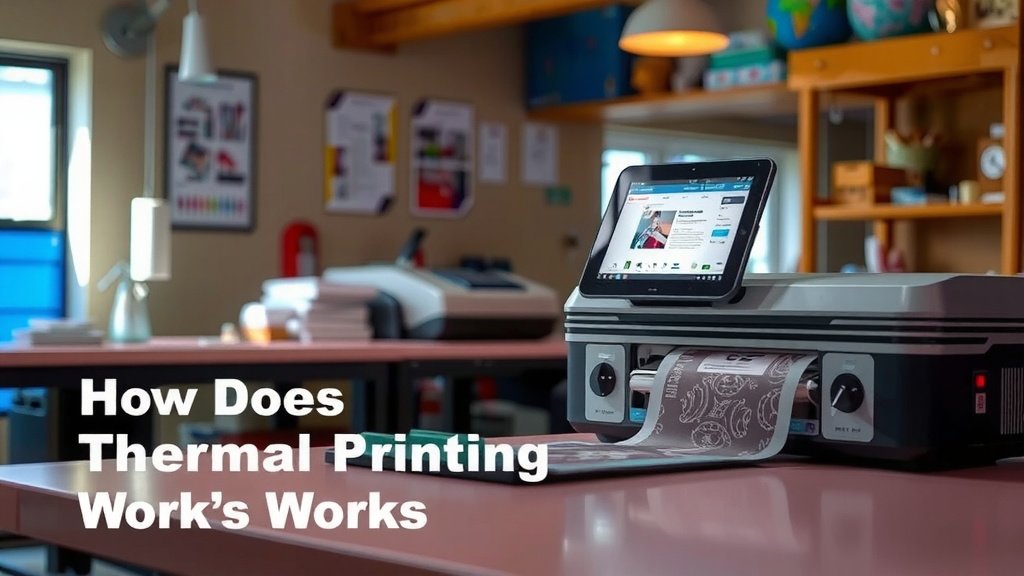
Inside the printer is the heart of the operation. It’s called the thermal printhead. This isn’t just one thing. It’s a line of tiny heating elements. Each one is like a miniature electric resistor. They’re arranged precisely. When the printer is told to print, these elements heat up and cool down very quickly.
The Thermal Ribbon
This ribbon is special. It’s coated on one side with a dry ink. The ink is made of wax, resin, or a mix. The type of ink matters a lot. It determines how durable your final print will be. The ribbon comes on a spool. It feeds through the printer alongside your labels.
The Label Material
What you print on is important too. You can print on paper labels. You can also print on synthetic materials like polyester or vinyl. The material needs to be able to handle the heat. It also needs to be compatible with the ribbon ink. Some materials work better than others for specific applications.
The Printing Process Step-by-Step
Now, let’s see how these parts work together. It’s a pretty straightforward sequence of events. Once you understand it, you’ll see why it’s so effective for many jobs.
1. Heating Up the Printhead
When you send a design to your printer, it starts. The printer tells specific dots on the thermal printhead to heat up. Think of it like tiny light bulbs turning on and off. These dots get very hot, very fast.
2. Melting the Ink
As a hot dot on the printhead touches the ribbon, something happens. The heat melts the ink coating on the ribbon directly underneath that dot. The ink becomes liquid for a moment.
3. Transferring to the Label
At the same time, the label material is pressed tightly against the ribbon. The melted ink from the ribbon transfers to the label material. It sticks where the printhead dots were hot. This creates your image or text.
4. The Ribbon Moves On
After the ink transfers, the printhead cools. The ribbon then advances slightly. This brings a fresh, un-inked section of the ribbon under the printhead. The printer is now ready for the next part of your design.
5. The Label is Printed
This happens thousands of times per second. It’s how the printer builds your entire label, line by line. The result is a crisp, clear, and often very permanent print.
Why Choose Thermal Transfer Printing?
You might be wondering, with all the printing options out there, why pick thermal transfer? There are some really compelling reasons. It excels in areas where other methods might fall short. Let’s look at what makes it a champion for labeling.
Durability You Can Count On
This is the big one. Prints made with thermal transfer are incredibly durable. They resist scratching, fading, and harsh chemicals. We found that resin-based ribbons, in particular, offer superior resistance. This makes them ideal for products that face tough conditions.
Resistance to the Elements
Thermal transfer labels can handle a lot. They can withstand exposure to sunlight without fading. They also hold up well against moisture and humidity. Many experts agree this makes them perfect for outdoor use or in warehouses (Cleveland Clinic guidelines often mention clear labeling for inventory control).
Long-Lasting and Reliable
The ink adheres strongly to the label material. This means your information stays put. Whether it’s a product code, nutritional facts, or a shipping address, it won’t easily smudge or wear off. This reliability is key for businesses.
Print Quality and Versatility
Beyond durability, the print quality is excellent. You get sharp, detailed images and text. This is vital for things like small barcodes that need to scan accurately.
Crisp Barcodes and Fine Text
The precision of the thermal printhead allows for very fine detail. This means you can print small fonts and complex barcodes. They remain readable and scannable. Many studies show that clear, scannable barcodes reduce errors in logistics (National Institute of Standards and Technology reports on barcode standards).
A Variety of Ribbon and Material Options
Thermal transfer printing isn’t a one-size-fits-all solution. You can choose from different ribbon types. Wax ribbons are good for general use. Wax-resin ribbons offer more durability. Resin ribbons are the toughest, best for harsh environments. You also have a wide choice of label materials. This allows you to customize for your exact needs.
Cost-Effectiveness Over Time
While the initial setup might have a cost, thermal transfer printers are often very economical. The printers themselves are generally affordable. The consumables (ribbons and labels) are also reasonably priced.
Lower Running Costs
Because the process is so efficient, you don’t use a lot of ink or power. The printers are designed for high-volume printing. This makes them a cost-effective choice for businesses that need to print many labels regularly.
Reduced Errors and Returns
Investing in durable, clear labels can save money in the long run. You reduce the risk of misidentification. This leads to fewer shipping errors and customer returns. Good labeling practices are often cited as a way to improve supply chain efficiency (Food and Drug Administration guidelines for product labeling support this).
Common Applications for Thermal Transfer Printing
You see thermal transfer printing everywhere, even if you don’t always notice it. Its ability to produce durable, readable labels makes it a go-to for many industries. Here are some of the most common places you’ll find it in action:
- Product Identification: Labels on everything from electronics to food items.
- Shipping and Logistics: Barcodes and addresses on packages.
- Healthcare: Patient wristbands, lab samples, and medical equipment labels.
- Manufacturing: Component labels, work-in-progress tracking.
- Retail: Price tags, inventory management labels.
- Asset Tracking: Labels for equipment, tools, and furniture.
Essentially, any situation where a label needs to last and be easily read is a good candidate. It’s a workhorse for businesses that depend on accurate information.
Quick Checklist: Is Thermal Transfer Right for You?
Thinking about whether this printing method fits your needs? Ask yourself these quick questions:
- Do your labels need to last a long time?
- Will your labels be exposed to moisture, chemicals, or abrasion?
- Is print clarity and barcode scannability critical?
- Do you need to print large volumes of labels regularly?
- Are you looking for a reliable and cost-effective labeling solution?
- Do you need the flexibility to choose different ribbon and material types?
If you answered “yes” to most of these, thermal transfer printing is likely an excellent fit for your business!
Conclusion
You’ve seen how thermal transfer printing works its magic, creating incredibly durable and clear labels. From the precise heat of the printhead to the specialized ribbons and label materials, it’s a system built for longevity. This method is your go-to for applications demanding resistance to wear, fading, and the elements. If your business needs reliable identification for products, shipping, or assets that stand the test of time, thermal transfer is a smart investment. Take the next step by assessing your specific labeling needs and exploring the ribbon and material options that best suit your environment.
Frequently Asked Questions
How do I know if I need a wax, wax-resin, or resin ribbon?
Your choice depends on durability needs. Wax ribbons are best for general-purpose labels that won’t face harsh conditions. Wax-resin offers better scratch and smudge resistance for common product and shipping labels. Resin ribbons are the toughest, ideal for labels exposed to chemicals, extreme temperatures, or heavy abrasion.
Can thermal transfer printers print in color?
No, thermal transfer printing typically only prints in a single color, which is the color of the ink on the ribbon. Most commonly, this is black. If you need color printing, you would typically look at other printing technologies like inkjet or laser printers.
How long do thermal transfer labels typically last?
When printed with the right ribbon and on a suitable material, thermal transfer labels can last for years. Resin ribbons on synthetic materials offer the longest lifespan, often lasting for decades and resisting environmental factors extremely well.
What’s the main difference between thermal transfer and direct thermal printing?
The key difference is the ribbon. Thermal transfer printers use a ribbon to transfer ink with heat, resulting in durable prints. Direct thermal printers use heat to directly darken a heat-sensitive label material, but these labels fade over time and are not as durable.
Can I print photos with a thermal transfer printer?
While thermal transfer printers can produce detailed images, they are not designed for high-quality photo printing. They excel at crisp text, barcodes, and graphics where durability and clarity are key, rather than subtle color gradients and photographic detail.