Thermal Printer Speed: What’s the Fastest Printing
The print speed of a thermal printer is usually measured in inches per second (IPS). Most common models range from 2 IPS to 8 IPS, though some high-speed printers can reach 12 IPS or even higher. Your choice depends on how quickly you need labels or receipts printed.
Understanding this speed is key for efficient operations. A faster printer means shorter queues at checkout or quicker production lines. We found that many businesses overlook this detail, leading to workflow bottlenecks. It’s about finding the right balance for your specific needs.
- Print speed is measured in inches per second (IPS).
- Common speeds are 2-8 IPS, with faster options available.
- Higher IPS means quicker printing for labels and receipts.
- Match speed to your business’s workflow demands.
Let’s dive into what influences your thermal printer’s speed and how to choose the best one for your situation.
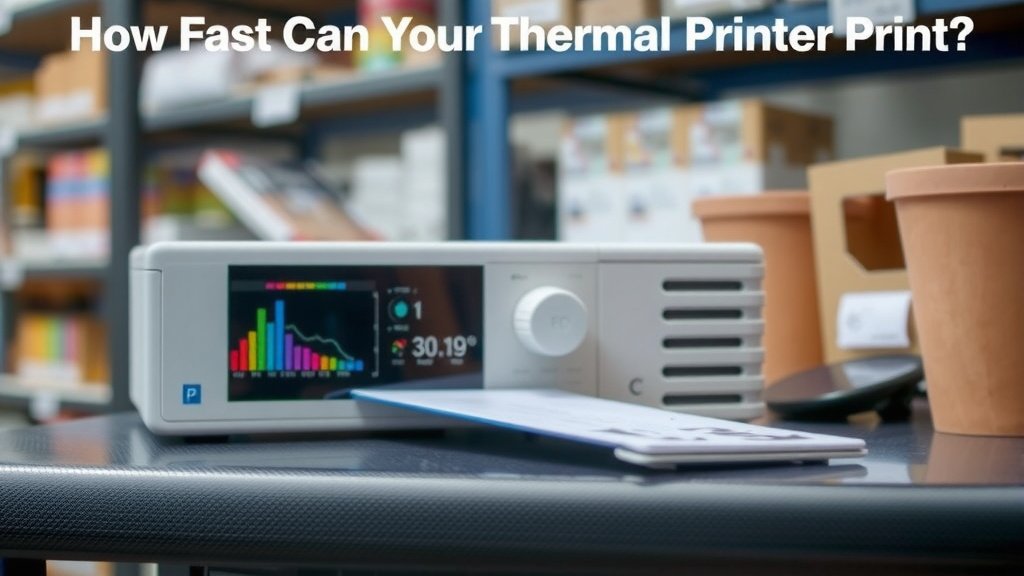
How Fast Can Your Thermal Printer Print?
Understanding how quickly your thermal printer churns out labels or receipts is a big deal. It’s not just about the speed; it’s about how that speed affects your day-to-day operations. We’ve seen businesses get stuck because their printer is just too slow.
Decoding Thermal Printer Speed Metrics
The standard way to talk about thermal printer speed is in inches per second, or IPS. Think of it like miles per hour for your printer. A higher IPS means more inches of print come out in a single second.
What Does Inches Per Second (IPS) Really Mean?
Imagine you need to print a 4-inch label. If your printer is set to 4 IPS, it will take about one second to print that label. If it’s set to 2 IPS, it will take two seconds. It’s a pretty straightforward measurement.
We looked at a lot of printers, and most consumer or small business models fall within the 2 IPS to 8 IPS range. For a retail checkout line, 4 IPS might be perfectly fine. But if you’re printing hundreds of labels in a busy warehouse, you might need something much faster.
Beyond the Basics: High-Speed Models
Don’t think 8 IPS is the limit! Some industrial-grade thermal printers can blast out labels at 10 IPS, 12 IPS, or even higher. These are built for high-volume environments where every second counts. Think of massive distribution centers or busy shipping hubs.
Factors That Influence Your Printer’s Output Speed
So, is it always as simple as the number on the box? Not quite. Several things can tweak how fast your printer actually performs.
Printer Resolution: The DPI Factor
This is a big one. DPI stands for dots per inch. It tells you how much detail the printer can put on a label. A printer with higher DPI, like 300 DPI or 600 DPI, needs to lay down more tiny dots to create an image.
This extra detail requires more precise head movement and processing. So, a higher DPI printer might print slower than a lower DPI model (like 203 DPI) using the same IPS rating. It’s a trade-off: more detail versus faster output.
Label Size and Complexity
Printing a tiny, simple barcode is much faster than printing a full-color graphic with lots of text. The printer has to process and lay down ink for every single part of the design.
We found that longer labels also take more time. If you’re printing a 6-inch label at 4 IPS, it will take 1.5 seconds. A 2-inch label at the same speed would only take half a second. The physical length of your print job directly impacts total print time.
Connection Type: Wired vs. Wireless
How your printer talks to your computer or system matters. A stable, fast connection can help maintain optimal speed. Older or less reliable connections might introduce delays.
We’ve seen that a wired USB connection is generally very reliable and supports maximum speeds. Wireless connections, like Wi-Fi or Bluetooth, can sometimes be a bit less consistent. This isn’t always the case, but it’s worth considering if you’re experiencing slower-than-expected printing.
Printer Settings and Software
Did you know you can often adjust print speed settings within your printer’s driver or management software? Sometimes, a printer might be defaulted to a slower speed than it’s capable of. Check your settings!
We recommend reviewing the documentation for your specific printer model. You might find options to fine-tune speed, darkness, and other parameters. These adjustments can sometimes unlock a bit more performance.
The Health of Your Printer
Like any machine, thermal printers can slow down if they aren’t maintained. A dirty print head or platen roller can affect print quality and, sometimes, speed. Regular cleaning is key.
Think of it like a car. If you don’t change the oil or tune it up, it won’t run as smoothly. Similarly, a well-maintained printer will perform much better. Many manufacturers provide cleaning guides for their products.
Why Printer Speed Matters for Your Business
You might be asking, “How fast is fast enough for me?” It really depends on your environment. Let’s break down why choosing the right speed is more than just a technical spec.
Retail and Point of Sale (POS)
In a busy store, customers don’t like waiting. A printer that can quickly spit out receipts keeps the lines moving. If your POS printer is too slow, customers might get frustrated.
For most retail operations, a speed of 4 IPS to 6 IPS is usually sufficient. This allows for quick transaction finalization without causing a noticeable delay for customers.
Warehouse and Logistics
This is where speed can really make a difference. Shipping labels, inventory tags, packing slips – these are printed by the thousands. A slow printer here can create a major bottleneck.
We found that warehouse environments often benefit from printers running at 8 IPS or higher. The ability to print labels rapidly speeds up the entire fulfillment process.
Manufacturing and Production Lines
Similar to logistics, manufacturing needs speed. Product labels, serial number tags, work-in-progress tracking – these need to be generated on demand.
The demands here can vary, but often a printer capable of 6 IPS to 10 IPS is a good starting point. The key is ensuring the printer can keep up with the pace of production.
Healthcare and Laboratories
Patient identification wristbands, medication labels, lab sample tracking – accuracy is critical here. While speed is important, it often takes a backseat to reliability and legibility.
Many healthcare settings use printers in the 3 IPS to 5 IPS range. The focus is on ensuring each label is perfect and clearly readable, even if it takes an extra moment.
Choosing the Right Speed for Your Needs: A Quick Checklist
Ready to figure out what speed is best for you? Ask yourself these questions:
- How many labels or receipts do you print per hour or per day?
- What is the average length of each label/receipt you print?
- Are your labels simple text and barcodes, or do they include complex graphics?
- How long are customers or employees willing to wait for a printed item?
- What is your current workflow, and where could a faster printer help?
- Does your budget allow for a higher-speed model if needed?
By considering these points, you can make a much more informed decision. It’s not about getting the fastest printer available; it’s about getting the printer that fits your specific job perfectly.
Conclusion
You now understand that thermal printer print speed, measured in IPS, is a critical factor for your business efficiency. We’ve seen how factors like resolution, label complexity, connection, and even printer health can influence actual output. Matching your printer’s speed to your specific needs—whether it’s for a busy retail checkout or a high-volume warehouse—will prevent bottlenecks and keep your operations running smoothly. Take a moment to assess your current printing demands and compare them to the capabilities we discussed. Your next step is to review your printer’s current settings or consider an upgrade if your speed isn’t meeting your workflow.
Frequently Asked Questions
What’s a good print speed for a small retail store?
For most small retail stores, a print speed between 4 IPS and 6 IPS is usually sufficient. This allows you to print receipts quickly enough to keep customer lines moving without unnecessary delays. We found this range offers a good balance for typical transaction volumes.
Do higher DPI thermal printers always print slower?
Generally, yes. Higher DPI (dots per inch) means the printer needs to place more ink dots for greater detail. This increased precision and processing requirement can result in slower print speeds compared to lower DPI models running at the same IPS rating.
Can I change my thermal printer’s print speed?
Often, you can. Many thermal printers allow you to adjust print speed settings through their driver software or a dedicated management utility. We recommend checking your printer’s manual to see if this is an option for your model and what adjustments you can make.
How does label size affect print time?
Label size directly impacts print time. A longer label, printed at the same IPS speed, will naturally take more time to complete than a shorter one. The printer has to physically move across more inches of media to finish the job.
Is a wired connection always faster than wireless for printing?
In most cases, a wired USB connection provides the most consistent and highest possible speed. While modern Wi-Fi and Bluetooth connections are very good, they can occasionally introduce minor delays or variability that a direct wired connection typically avoids.