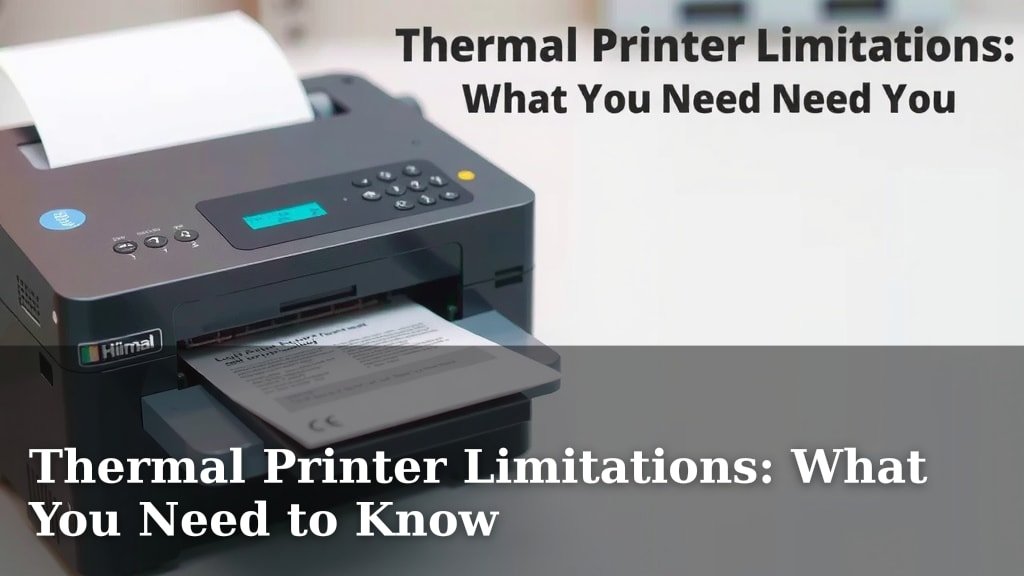
Thermal Printer Limitations: What You Need to Know
Thermal printers are great for quick receipts and labels, but they do have some major limitations you should know about. They aren’t the best choice for documents needing long-term readability or full-color images. This is because the print quality fades over time and they can’t reproduce a wide color spectrum.
While their speed and low cost are appealing, understanding where they fall short is key. You might run into issues with durability on heat-sensitive items or if your printouts need to withstand moisture. They are not designed for applications requiring high-resolution graphics or archival quality.
TL;DR:
- Thermal printers have limited print longevity.
- They can’t print in full color.
- Prints can be damaged by heat and friction.
- Not suitable for archival documents.
Let’s walk through exactly what those limitations are so you can make the best choice for your needs.
Thermal printers are fantastic for certain tasks. They’re fast, quiet, and generally inexpensive to operate. But like any technology, they come with their own set of drawbacks. You might not realize just how limiting they can be until you’ve already invested in them. It’s essential to understand these limitations upfront to avoid headaches down the road.
Understanding the Downsides of Thermal Printing
When you’re choosing a printer, it’s easy to get caught up in the benefits. Thermal printers offer a straightforward printing method. But what happens when your needs outgrow these advantages? Knowing their weaknesses helps you choose the right tool for the job. You’ll want to avoid them for tasks requiring permanence or vibrant color.
Print Longevity: The Fading Truth
One of the biggest limitations is how long thermal prints last. Direct thermal printing, the most common type, uses heat to create an image. This image is created on special heat-sensitive paper. When heat is applied, the paper turns black. This process sounds simple, and it is! However, it also means the prints are inherently **temporary**.
Think of it like writing with a pencil that fades over time. Over weeks or months, the print can become very faint or disappear entirely. This is especially true if the paper is exposed to certain conditions. We found that direct exposure to sunlight or even just ambient light can accelerate fading. This makes direct thermal prints unsuitable for anything you need to keep for a long time.
Factors Affecting Print Fade
Several environmental factors can speed up the fading process. It’s not just about age.
- Heat: As the printing process itself uses heat, further heat exposure can “overcook” the paper. This causes the printed areas to darken and spread, eventually becoming unreadable.
- Light: UV rays from sunlight are particularly damaging. They break down the chemicals in the thermal paper, causing the image to degrade.
- Friction and Abrasion: Rubbing against other surfaces can wear down the printed image. This is a common problem for labels that get handled frequently.
- Chemicals: Exposure to certain solvents, oils, or even some cleaning agents can react with the paper. This can cause the print to smudge or fade quickly.
Many experts recommend that if you need a print to last longer than a few months, you should consider other printing technologies (National Archives and Records Administration).
Color Reproduction: Black and White Only
If you’re hoping for vibrant, full-color prints from a thermal printer, you’re out of luck. Thermal printers, by their very nature, are limited to monochrome output. They print in shades of black or dark blue on white or lighter-colored paper. This isn’t a limitation of one specific model; it’s a fundamental aspect of how thermal printing works.
The printing mechanism involves heating specific points on the print head. These points then react with the thermal paper to create the image. There’s no mechanism for mixing colors or applying different colored inks. So, if your project requires anything beyond simple text or basic graphics in one color, a thermal printer isn’t the right choice.
When Color Matters
Consider these scenarios where color printing is essential:
- Marketing materials: Brochures, flyers, and business cards often rely on branding colors to be effective.
- Photos and graphics: Any application where visual fidelity and detail are important will suffer without color.
- Product labeling with branding: Many consumer products use color in their labels to stand out and convey information.
- Educational materials: Color can be crucial for highlighting key information or making complex diagrams easier to understand.
For these situations, you’ll need an inkjet or laser printer that can handle full-color printing.
Durability and Environmental Concerns
Beyond fading and color limitations, thermal prints have other durability issues. Their sensitivity to heat and physical wear means they aren’t suited for every environment or application.
Heat Sensitivity: A Double-Edged Sword
We touched on heat causing fading, but thermal prints can also be affected by heat in other ways. If a thermal receipt or label is left in a hot car, for instance, the entire surface can turn dark. This isn’t just about the printed image fading; the entire paper can become opaque. This renders it completely unreadable, not just for a portion, but for everything printed on it.
This also means that if you’re printing labels for items that might get warm, like products stored in direct sunlight or near heat sources, you risk losing that information. It’s a practical limitation that can cause real problems for inventory management or customer information.
Moisture and Chemical Vulnerability
Thermal paper is also quite susceptible to moisture. If a thermal receipt gets wet, the ink can run or smudge very easily. The paper itself can also become distorted and weakened. This is a significant issue if your printed materials might encounter any kind of liquid.
We found that common household chemicals can also cause damage. Hand sanitizers, lotions, or even oily fingerprints can react with the thermal coating. This can leave permanent marks or cause the print to fade in those specific spots. Imagine a shipping label smudged by a greasy hand – not ideal for tracking! For durable outdoor labels or items handled frequently with bare hands, thermal printing is often a poor choice.
Friction and Scuffing Issues
The surface of thermal paper is relatively soft and can be easily scratched or scuffed. If a printed item, like a shipping label or a tag, rubs against other surfaces frequently, the print can wear away. This is a particular problem for labels on the outside of packages that might be handled roughly during shipping.
Even the general handling of receipts can cause them to fade over time due to minor abrasions. If your printed item needs to withstand regular contact or rough conditions, you’ll likely need a more robust printing method. Thermal transfer printing, which uses a ribbon, is a more durable option for labels, but it’s a different technology altogether.
Resolution and Detail: Not for Fine Graphics
While thermal printers are great for clear text, they often struggle with fine details and high-resolution graphics. The way the print head works by heating small dots means there are inherent limits to the fineness of the image it can produce.
Limited DPI and Sharpness
Most direct thermal printers operate at a lower resolution, typically between 200 and 300 dots per inch (DPI). While this is perfectly adequate for basic text and barcodes, it’s not enough for complex images or very small fonts. If you try to print intricate designs or very small text, you might find that the edges appear jagged or blurry.
We found that trying to print detailed logos or high-resolution images often results in a loss of clarity. The tiny dots can blend together, making fine lines or subtle shading disappear. This makes them unsuitable for applications where crisp, detailed graphics are important.
Barcode Readability Concerns
While many thermal printers are designed for printing barcodes, their limitations can sometimes affect readability. Barcodes rely on crisp, well-defined lines and spaces. If the thermal paper is of poor quality, or if the printer isn’t properly calibrated, these lines can become smudged or indistinct. This can lead to scanning errors, which can be a major frustration in inventory or retail environments.
Some experts suggest that for mission-critical barcode applications, especially those requiring high scan rates or compatibility with all scanner types, it’s wise to test thoroughly. Ensure your chosen printer and paper combination reliably produces scannable barcodes under various conditions (GS1 standards).
Cost and Maintenance Considerations
While thermal printers are often praised for their low running costs, there are still factors to consider. It’s not just about the printer itself.
Consumables: The Specialty Paper
The main ongoing cost with direct thermal printers is the specialty thermal paper. This paper is coated with chemicals and costs more than standard paper. The price can add up quickly, especially if you print a high volume of receipts or labels. There are different grades of thermal paper, with some offering better longevity or resistance to certain elements, but they also come at a higher price point.
Printer Wear and Tear
The print head is the most critical component of a thermal printer. It’s the part that heats up to create the image. Because it’s constantly in contact with the paper and subjected to heat, it can wear out over time. While generally durable, the print head has a finite lifespan. Replacing a print head can be a significant expense. Regular cleaning and proper handling can extend its life, but it’s still a component that will eventually need attention.
When to Reconsider Thermal Printing: A Quick Checklist
To help you decide if thermal printing is right for your needs, consider this quick checklist:
- Do you need prints to last for more than a year or two?
- Do you need to print in full color or with vibrant graphics?
- Will the printed items be exposed to high heat, direct sunlight, or moisture?
- Do the printed items need to withstand frequent handling, friction, or abrasion?
- Are you printing very detailed images or small, intricate graphics?
- Is guaranteed long-term archival quality a requirement?
If you answered “yes” to any of these questions, you might want to explore other printing technologies. Thermal printers are excellent for their niche applications, but they are not a one-size-fits-all solution.
Conclusion
You’ve learned that thermal printers excel at speed and affordability for specific tasks. However, their limitations in print longevity, color capabilities, and durability are critical. Prints can fade due to heat, light, and friction, making them unsuitable for long-term archiving or harsh environments. If vibrant color or high-resolution graphics are needed, thermal printing won’t meet those demands. Consider these downsides carefully. For important documents or items needing to last, explore other printing technologies. If your needs align with their strengths, you’ll find them a reliable tool.
Frequently Asked Questions
How long will a thermal print actually last?
Direct thermal prints typically last from a few months to a couple of years, depending heavily on environmental conditions. Exposure to heat, light, or abrasion significantly shortens their lifespan. For prints needing to last longer than that, you should consider alternative printing methods.
Can I print photos or graphics with a thermal printer?
No, you cannot print photos or detailed color graphics with a standard thermal printer. They are designed for monochrome output, usually black text or simple shapes on a lighter background. If color or high-resolution images are important, an inkjet or laser printer is a better choice.
What happens if a thermal receipt gets wet?
If a thermal receipt or label gets wet, the print can easily smudge or run. The paper itself may also become distorted and weakened. Moisture exposure poses a significant risk to the readability and integrity of the printed information.
Are thermal printers bad for barcodes?
While thermal printers are commonly used for barcodes, they can sometimes struggle with readability. Barcodes require very crisp lines and spaces. Poor quality paper or printer calibration can lead to smudged lines, causing scanning errors. Testing your barcode print quality is often recommended.
Can thermal prints be damaged by everyday items like hand sanitizer?
Yes, everyday items can damage thermal prints. Chemicals found in hand sanitizers, lotions, or oils from fingerprints can react with the thermal coating. This can cause the print to fade or smudge in specific spots, especially where contact occurs.