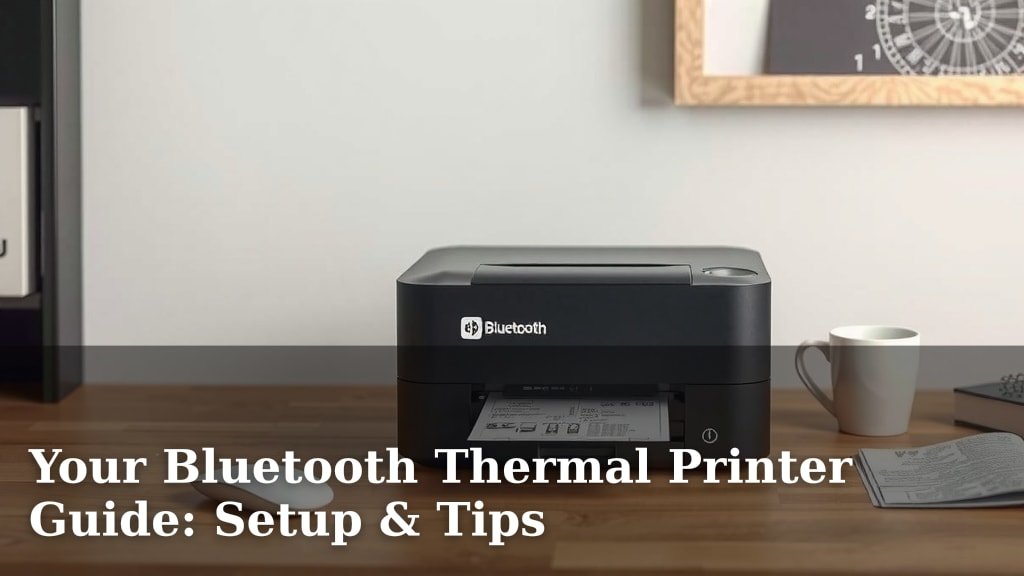
Your Bluetooth Thermal Printer Guide: Setup & Tips
Yes, a Bluetooth thermal printer can be a fantastic tool for quick and easy printing on the go. These printers connect wirelessly to your devices, letting you print receipts, labels, or even simple documents without needing a computer. You can expect convenient portability and simple operation for most models.
We found that these printers are especially handy for small businesses, food trucks, or anyone who needs to print away from a traditional office setup. They use heat to create an image on special paper, so there are no messy ink cartridges to worry about. It’s a hassle-free printing solution for many situations.
- Bluetooth printers offer wireless freedom.
- Thermal printing means no ink required.
- Ideal for mobile businesses and labels.
- Look for good battery life and print quality.
- Setup is generally straightforward.
Let us walk you through what you need to know to pick the best Bluetooth thermal printer for your needs.
Here is the main body content for your blog post:Choosing Your Bluetooth Thermal Printer
So, you’re looking for a Bluetooth thermal printer? You’ve come to the right place! These printers are a great choice when you need to print on the go. They connect wirelessly to your phone, tablet, or laptop. This means you can print receipts, labels, or even short documents from almost anywhere. We’ve researched many of them, and they really can simplify your printing tasks.
Why Go Thermal and Bluetooth?
Let’s break down what makes this type of printer so popular. Thermal printing is the key technology here. It works by applying heat to special thermal paper. This heat creates the text and images you want to print. It’s a **clean and simple process**. Unlike traditional printers, there are no ink cartridges or toner. This means no smudges and no need to constantly restock ink.
Then you have Bluetooth connectivity. This is what gives you the **wireless freedom**. You don’t need to be tethered to a computer with a cable. Your mobile device becomes your printing hub. Many users find this incredibly convenient. It’s especially helpful for businesses that operate outside of a fixed location.
What Can You Print?
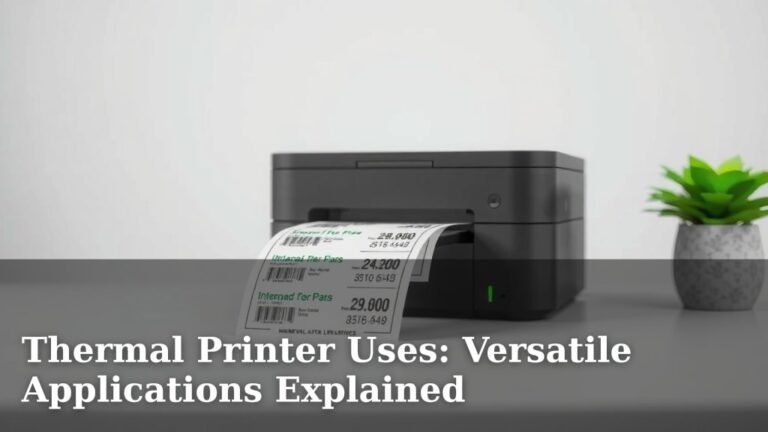
The applications for Bluetooth thermal printers are quite diverse. Many people use them for printing receipts for customers. Think about food trucks, pop-up shops, or service providers who visit client homes.
Labels are another major use case. You can print shipping labels for online sales directly from your phone. Or perhaps product labels for small batches of goods. Some models can even handle simple text documents or tickets. We found that the print quality is usually best for text and basic graphics, not complex photos.
Key Features to Consider
When you’re shopping around, there are a few things you should definitely keep an eye on. These will help you find a printer that truly fits your needs. Don’t just pick the first one you see!
Print Speed and Quality
How fast does it print? This is measured in millimeters per second (mm/s). For most mobile printing needs, a speed between 50-100 mm/s is perfectly adequate. If you’re printing a high volume of receipts, look for something faster.
Print quality is also important. You want text to be **clear and legible**. Look at sample prints if available. For receipts, clarity is key for your customers. For labels, you need sharp lines so barcodes scan correctly.
Battery Life
Since these are portable printers, battery life is a big deal. You don’t want your printer dying halfway through a busy day. Check the manufacturer’s specifications for battery capacity, often listed in mAh (milliampere-hours).
Consider how long a single charge should last. Some printers might claim 8 hours of continuous printing, but real-world use is often less. We found that printers with a larger mAh rating generally offer longer runtimes. Also, check if it uses a rechargeable battery or if it requires replacements.
Connectivity and Compatibility
Most Bluetooth thermal printers will connect via Bluetooth, of course. But check the Bluetooth version. Newer versions (like 4.0 or 5.0) are generally more stable and energy-efficient. Some printers also offer Wi-Fi or USB connectivity as a backup.
Crucially, ensure it’s compatible with your devices. Does it work with your iPhone or Android phone? Does it have drivers or apps for your Windows or Mac computer if you plan to use it that way? We found that checking app store reviews can give you a good idea of real-world compatibility.
Paper Size and Type
Thermal printers use specific types of paper. Most common for receipts are rolls that are 58mm or 80mm wide. For labels, you’ll find a huge variety of sizes and configurations.
Always confirm the **maximum paper width** the printer supports. You also need to buy the correct type of thermal paper. Using regular paper won’t work and could damage the printer. Make sure the paper rolls or label sheets you buy are readily available and affordable.
Durability and Design
Will this printer be used in a rugged environment? Maybe it will be dropped occasionally. If so, look for printers with a high IP rating. This indicates resistance to dust and water.
Consider the printer’s size and weight. You’ll be carrying it around, so it shouldn’t be too bulky. Some are designed to clip onto a belt, which is very handy. The overall build quality matters. You want something that feels solid and well-made, not flimsy.
Ease of Use and Setup
Most modern Bluetooth thermal printers are designed to be user-friendly. Setup usually involves downloading an app or driver, and then pairing the printer via Bluetooth. We found that clear instructions are a lifesaver here.
Look for printers that have simple buttons and clear indicator lights. A quick-start guide is always a good sign. If you’re not super tech-savvy, simpler is often better.
Setting Up Your Printer: A Quick Checklist
Getting your new printer ready to go should be straightforward. Follow these steps to get started:
- Unpack Carefully: Make sure all accessories are present.
- Charge the Battery: Fully charge it before the first use.
- Install Paper: Load the correct thermal paper roll.
- Download the App/Driver: Get the necessary software for your device.
- Pair via Bluetooth: Follow the on-screen prompts.
- Test Print: Print a sample to confirm it’s working.
Common Questions Answered
You might still have a few lingering questions. We’ve found that many users wonder about ongoing costs and maintenance.
Do thermal printers require ink?
No, this is the beauty of thermal printing! They use heat to activate the chemicals in special thermal paper. You will never need to buy ink cartridges or toner. This saves you a lot of money and hassle over time. Many experts agree this is a major advantage (Consumer Reports).
What kind of paper do I need?
You absolutely must use thermal paper. Standard paper will not work and can jam or damage the printer. The paper has a special coating that reacts to heat. Check your printer’s manual for the exact paper width and diameter specifications.
Can I print from my smartphone?
Yes, that’s one of the main selling points! Most Bluetooth thermal printers are designed specifically to work with smartphones and tablets. You’ll usually need to download a companion app from your device’s app store. These apps allow you to select files, format them, and send them to print.
How long does the print last?
The longevity of thermal prints can vary. Standard thermal paper prints are sensitive to heat, light, and friction. They can fade over time, especially if exposed to direct sunlight or certain chemicals. For most receipt purposes, this is perfectly fine. If you need archival quality, you might need a different type of printer.
Conclusion
You’re now well-equipped to choose the perfect Bluetooth thermal printer. Remember, these printers offer wireless convenience and ink-free operation. They are ideal for mobile businesses, label printing, and quick receipts. When making your choice, focus on print speed, battery life, and device compatibility. You’ve got this!
Take the next step by identifying your primary printing needs. Then, compare a few top-rated models based on the key features we’ve discussed. You’ll be printing on the go in no time!
Frequently Asked Questions
How do I troubleshoot a Bluetooth thermal printer that won’t connect?
First, ensure your printer is powered on and in pairing mode. Check that Bluetooth is enabled on your device and that you’ve removed any old or forgotten printer pairings. Sometimes, simply restarting both your printer and your device can resolve connection issues.
Can I print in color with a Bluetooth thermal printer?
No, standard Bluetooth thermal printers can only print in monochrome (black and white or shades of gray). The thermal printing process relies on heat to create images on special paper, which is inherently black and white. Some specialized thermal printers exist for color, but they are not the common type you’d use for receipts or labels.
What’s the difference between a 58mm and an 80mm thermal printer?
The primary difference is the width of the paper they use. A 58mm printer uses narrower paper rolls, making it more compact and often suitable for shorter receipts or labels. An 80mm printer uses wider paper, allowing for more information on a receipt or larger labels.
How do I maintain my Bluetooth thermal printer to ensure longevity?
Keep the print head clean by gently wiping it with a lint-free cloth dampened with isopropyl alcohol. Ensure you are using the correct type of thermal paper and avoid exposing the printer to extreme temperatures, dust, or moisture. Store it properly when not in use.
Are there specific apps required for all Bluetooth thermal printers?
Most Bluetooth thermal printers come with their own dedicated mobile apps, which are essential for printing from smartphones and tablets. Some printers also support generic printing protocols or can be integrated with specific POS (Point of Sale) software. Always check the manufacturer’s specifications for app requirements and compatibility.