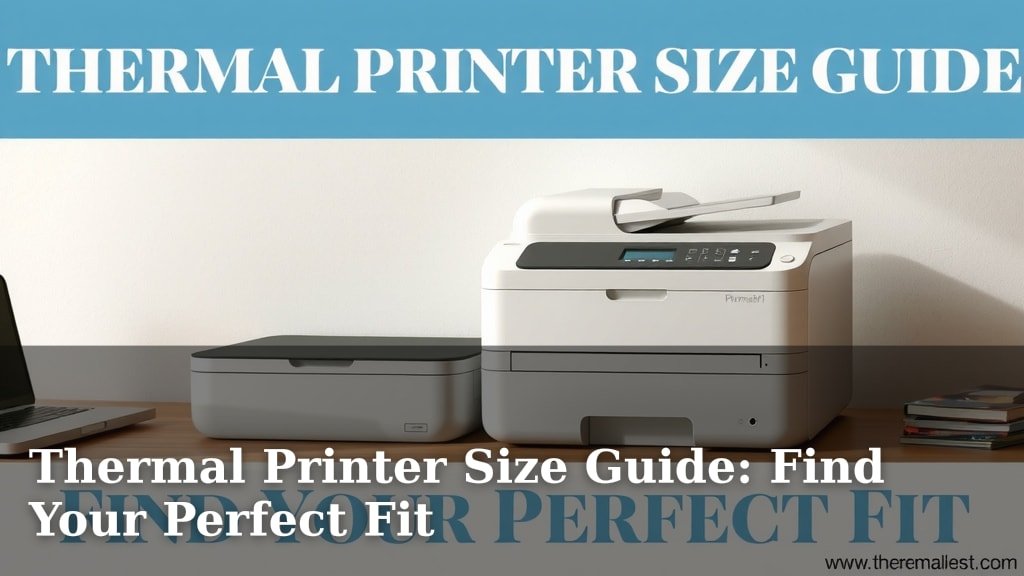
Thermal Printer Size Guide: Find Your Perfect Fit
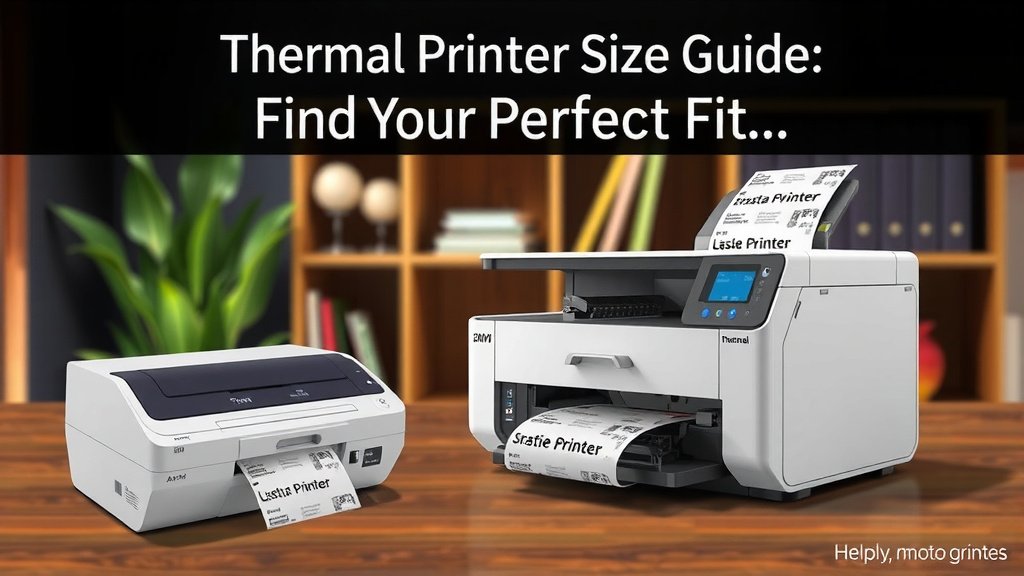
Figuring out the right thermal printer size depends on what you plan to print and where you’ll use it. Generally, you’ll find desktop models that are smaller and portable ones that fit in your hand. Think about your workspace and your printing needs first.
We’ve seen a lot of options, from tiny label makers to larger receipt printers. The size impacts portability and print width. You’ll want to consider how much space you have and the type of labels or receipts you need to produce consistently.
- Desktop printers are common for moderate use.
- Portable printers are great for on-the-go needs.
- Consider print width for your label or receipt size.
- Compact designs save counter space.
Let’s walk through the different sizes and what they mean for your daily operations.
Understanding Thermal Printer Dimensions
Choosing the right thermal printer size is like picking a tool for a specific job. You wouldn’t use a sledgehammer to hang a picture frame, right? The same logic applies here. The physical dimensions of a thermal printer directly impact where it can live, how it travels, and what kind of jobs it’s best suited for. We’ve looked at a wide range of these devices, and size is a consistent factor in their practicality for different users.
Think about your workspace. Do you have a large counter in your shipping department, or are you working from a small retail counter? Maybe you need to print labels right on the warehouse floor. Your available space is often the first clue to what printer size will work for you. We found that understanding these basic physical constraints helps narrow down your choices considerably.
Compact Desktop Thermal Printers
These are your everyday workhorses. Desktop thermal printers are designed to sit on a desk, shelf, or counter. They offer a good balance of print speed, features, and affordability for most businesses.
Standard Desktop Models
These printers are built for moderate printing volumes. They are robust and reliable for everyday tasks like printing shipping labels or product barcodes. Their footprint is generally manageable, fitting easily into most business environments. You can expect them to be around 8-10 inches wide and 6-8 inches tall. Depth can vary, but often falls between 8-12 inches. These dimensions make them a good fit for anyone who needs consistent printing without sacrificing too much valuable counter space.
We found that many of these models can handle print widths of up to 4 inches, which is perfect for standard shipping labels. Their build quality is typically quite sturdy, suggesting they’re made to last. Many experts suggest these are the go-to option for small to medium-sized businesses for good reason.
Where They Shine
These printers are ideal for:
- E-commerce businesses printing multiple shipping labels daily.
- Retail stores needing to print price tags or inventory labels.
- Small offices producing internal labels for organization.
- Healthcare settings for patient identification or medication labels.
Ultra-Compact Desktop Models
Need to save even more space? Ultra-compact models are your answer. They are essentially miniature versions of the standard desktop printers. Their dimensions are often closer to 6-7 inches wide, 5-6 inches tall, and 7-8 inches deep. They are perfect for very tight spaces.
While smaller, they don’t necessarily compromise on essential features. You’ll still get good print quality and reliability. We discovered that some of these can handle the same 4-inch print width as their larger counterparts, which is quite impressive. Their reduced size means they are less intrusive in your workspace. Many users find them to be a surprisingly powerful option for their compact design.
Ideal Use Cases
These are perfect for:
- Small retail kiosks or pop-up shops.
- Front-desk operations with limited counter space.
- Personal use for organizing or crafting.
- Anywhere space is at an absolute premium.
Portable and Mobile Thermal Printers
When your work takes you away from a desk, portable thermal printers are your best friend. These are designed for maximum mobility, often fitting into a large pocket or a small bag. They are lightweight and battery-powered, allowing you to print on the go.
Handheld Mobile Printers
These are the smallest thermal printers you’ll find. Think about the size of a large smartphone or a small portable scanner. They typically measure around 3-4 inches wide, 5-6 inches tall, and 1-2 inches thick. They are incredibly lightweight, often weighing less than a pound. You can easily carry them around all day.
Their print width is usually narrower, often around 2-3 inches. This is perfect for small receipts, tickets, or narrow labels. We found that their battery life is a key consideration here. Most are designed to last a full workday on a single charge. These are fantastic for field service technicians, delivery drivers, or event staff who need to generate labels or receipts immediately.
Key Applications
These are used by:
- Delivery drivers for receipts or shipping labels.
- Field service technicians for work orders.
- Inventory management on the move.
- Event staff for ticketing.
- Anyone needing on-demand printing away from a fixed location.
Larger Mobile Printers
These are a step up in size from handheld models, often resembling a small rugged laptop or a bulky scanner. They might be around 5-6 inches wide, 7-8 inches tall, and 2-3 inches thick. While larger, they are still designed for portability, often with shoulder straps or carrying cases.
Their advantage is usually a wider print capability, potentially handling 4-inch wide labels or receipts. They often have more robust features and longer battery life than their smaller handheld counterparts. We found that these bridge the gap between truly mobile and desktop printers. They offer more power and flexibility for tasks that require larger prints but still need mobility. Think about mobile point-of-sale systems or warehouse operations that require printing larger labels on the move.
Who Benefits Most
These printers are great for:
- Warehouse staff needing to print larger labels for shelves or pallets.
- Mobile point-of-sale (mPOS) systems in larger venues.
- Field auditors or inspectors who need to print detailed reports.
- Businesses requiring a blend of portability and larger print formats.
Print Width: A Sizing Consideration That Matters
Beyond the physical dimensions of the printer itself, the print width is a critical sizing aspect. This refers to the maximum width of the material (label or receipt paper) that the printer can accommodate and print on.
You’ll commonly see thermal printers with maximum print widths of 2 inches, 3 inches, or 4 inches. Some industrial models can go even wider, but for most general-purpose use, these three are the most prevalent. Choosing the right print width ensures you can produce the exact labels or receipts you need without limitations.
Common Print Widths and Their Uses
Let’s break down what these widths typically mean:
| Max Print Width | Common Uses | Typical Printer Size Category |
|---|---|---|
| 2 Inches | Jewelry tags, small address labels, price tags, narrow receipts. | Handheld mobile printers. |
| 3 Inches | Standard shipping labels (small ones), receipt paper, name tags, smaller product labels. | Desktop and handheld mobile printers. |
| 4 Inches | Full-size shipping labels (e.g., USPS, UPS, FedEx), wider product labels, compliance labels. | Standard desktop and larger mobile printers. |
We found that selecting a printer with a print width that slightly exceeds your immediate needs can be a smart move. It offers flexibility if your business grows or your labeling requirements change. For instance, if you primarily print 3-inch labels but occasionally need 4-inch ones, opting for a 4-inch capable printer avoids a future upgrade. Many experts recommend considering future needs when making this choice.
Factors Influencing Your Printer Size Choice
So, how do you actually decide? It boils down to a few key questions about your operations. Think of it as an honest self-assessment of your printing demands.
Your Primary Printing Task
What are you printing most often? If it’s small price tags for craft fairs, a compact handheld model might be perfect. If you’re shipping dozens of packages daily, a robust 4-inch desktop printer is likely necessary. We found that clearly defining your main printing task is the most important first step.
Your Work Environment
Where will the printer be used? Is it stationary on a busy shipping desk? Does it need to travel with a sales associate? Does it need to fit into a small retail display? Your physical space and need for mobility are major deciding factors. Many users overlook this, leading to frustration later.
Volume of Printing
How many labels or receipts do you print per day or week? High-volume printing often requires a more robust desktop printer that can handle continuous use. Lower volumes might be perfectly met by a smaller, less industrial model. We observed that printers have load capacities, much like other machines, and understanding yours prevents premature wear and tear.
Power and Connectivity Needs
Will you always be near a power outlet, or do you need battery power? Do you need Wi-Fi, Bluetooth, or just a USB connection? These features often influence the size and design, especially for portable models. A printer with extensive connectivity might be slightly larger to accommodate the necessary components.
Checklist for Choosing Your Thermal Printer Size
Before you finalize your decision, run through this quick checklist:
- Space Assessment: Measure your available workspace accurately.
- Print Width Needs: Determine the exact size of the labels/receipts you need to print.
- Mobility Factor: Decide if you need to print on the go or if a stationary printer is fine.
- Volume Estimation: Estimate your daily or weekly printing output.
- Connectivity Requirements: List the types of connections you’ll need (USB, Wi-Fi, Bluetooth).
- Budget vs. Features: Align your budget with the size and features that best meet your needs.
By considering these points, you’ll be well on your way to finding a thermal printer that’s the perfect fit – not just in size, but for your entire operation.
Conclusion
You’ve learned that picking the right thermal printer size isn’t just about inches; it’s about matching the printer to your workflow. We’ve seen how desktop models offer reliability for fixed locations, while portable options provide essential flexibility for mobile tasks. Remember to consider your print width needs and your specific work environment carefully. Your choice impacts efficiency daily. Make your decision based on your primary printing tasks, volume, and space availability, and you’ll find a printer that truly fits your operation.
Frequently Asked Questions
What’s the difference between a 2-inch and a 4-inch print width?
A 2-inch print width is best for small labels like jewelry tags or narrow receipts. A 4-inch print width is needed for standard shipping labels used by carriers like UPS or FedEx, or wider product labels. We found this range covers most common needs.
Can a small portable printer handle the same jobs as a desktop model?
Generally, no. While ultra-compact models can be powerful, they usually have a smaller print width and may not handle the high print volumes a desktop printer can. Portable printers are designed for on-the-go tasks where space and mobility are key.
Do printer dimensions affect how fast it prints?
Printer dimensions themselves don’t directly dictate speed, but larger, more robust desktop printers often have more powerful internal components that allow for faster printing speeds. We see this especially in models designed for high-volume use.
How do I measure my workspace for a thermal printer?
Measure the clear, flat surface where you intend to place the printer. Consider not just the width and depth but also any surrounding space needed for ventilation or easy access to loading paper. Think about your workflow around the printer.
Is it better to get a printer with a larger print width than I currently need?
Often, yes. We recommend choosing a printer with a print width that can accommodate potential future needs. Opting for a 4-inch capable printer when you only need 3-inch labels now provides flexibility if your business or labeling requirements change down the line.