Chromebook Thermal Printer Compatibility: Your Guide
Yes, you can absolutely use a thermal printer with your Chromebook. Many modern thermal printers are designed for easy plug-and-play use with Chrome OS devices. You’ll often find they work right out of the box with minimal setup required, making them a great choice for Chromebook users needing to print receipts or labels.
Chromebooks are known for their simplicity and cloud-based approach. This means printers compatible with Chrome OS are typically designed to be user-friendly and require less driver installation than traditional computers. We found that this often translates to a smoother printing experience for users who want to get things done quickly without fuss. It’s all about making your workflow as smooth as possible.
- Chromebooks and thermal printers often work well together.
- Many models offer easy, driver-free setup.
- Look for printers with Chrome OS compatibility.
- This makes printing receipts and labels straightforward.
Let’s get into the details of what makes a thermal printer a good fit for your Chromebook and how to ensure you get the best printing results.
“`htmlPrinting with Your Chromebook: Thermal Printer Solutions
You absolutely can use a thermal printer with your Chromebook! Many modern thermal printers are designed for easy plug-and-play use with Chrome OS devices. You’ll often find they work right out of the box with minimal setup required. This makes them a great choice for Chromebook users needing to print receipts or labels.
Why Thermal Printers and Chromebooks Are a Great Match
Chromebooks are built for simplicity. They rely on web-based apps and cloud storage. This design philosophy extends to how they handle peripherals like printers. Thermal printers often fit this model perfectly because they don’t usually need complex driver installations. It’s like they were made for each other!
The Driver-Free Advantage
One of the biggest wins for using a thermal printer with your Chromebook is the driverless operation. Traditional printers often require you to download and install specific software. This software, known as a driver, tells your operating system how to communicate with the printer. For Chromebooks, which have a more locked-down system to maintain security and simplicity, installing drivers can be tricky or impossible.
Thermal printers designed for Chrome OS often use built-in operating system support or communicate via simple protocols. This means you can often just plug in the printer via USB or connect it to your network. Your Chromebook recognizes it, and you’re ready to print. We found this dramatically cuts down on setup time. It’s a huge relief for anyone who just wants to print without technical headaches.
Ease of Use for Everyday Tasks
Think about the last time you set up a new gadget. Was it easy? For many of us, it’s not always a walk in the park. Thermal printers for Chromebooks aim to change that. They are frequently used in retail, shipping, and event management. These are environments where speed and simplicity are key. A complicated setup would just slow everything down.
We’ve seen many users appreciate how quickly they can get printing. Whether it’s for shipping labels for an online store or receipts for a small business, the process is designed to be straightforward. You’ll likely find the printer appears in your Chromebook’s print dialogue box automatically after connecting. It’s the kind of convenience that makes you wonder why all tech works this way!
What to Look for in a Chromebook-Compatible Thermal Printer
Not all thermal printers are created equal, especially when it comes to Chromebook compatibility. You need to be a little discerning. Here’s what to keep in mind as you shop:
Chrome OS Certification or Stated Compatibility
The most reliable way to ensure a thermal printer will work with your Chromebook is to check for explicit mention of Chrome OS compatibility. Manufacturers will often list this on the product packaging, in the user manual, or on their website. Some printers might even carry a “Works with Chromebook” certification. This means they’ve been tested and verified to function correctly with Google’s operating system. We recommend prioritizing these models.
Connectivity Options: USB, Ethernet, or Wi-Fi
How you connect your printer matters. Most Chromebook-compatible thermal printers will offer a few common connection types:
- USB: This is the most straightforward connection. You plug the printer directly into your Chromebook. It’s simple and reliable.
- Ethernet (Network): If you have a small office or want to share the printer among multiple devices on your network, an Ethernet connection is great. You plug the printer into your router. Your Chromebook can then access it wirelessly.
- Wi-Fi: Some higher-end models offer direct Wi-Fi connectivity. This means the printer connects directly to your wireless network without needing an Ethernet cable.
For most individual users, a USB connection is perfectly adequate. If you need network sharing or a more permanent setup, consider Ethernet or Wi-Fi. We found that printers supporting multiple connection types offer the most flexibility.
Printer Type: Direct Thermal vs. Thermal Transfer
Thermal printers generally come in two main types. Understanding the difference helps you choose the right one for your needs:
Direct Thermal Printers
These printers use heat to print on special thermosensitive paper. The paper has a coating that turns black when heated. This is the most common type for receipts and shipping labels. They are simple, have fewer moving parts, and are generally cheaper. The downside? The print can fade over time, especially if exposed to heat or sunlight. Think of it like a receipt you get at a grocery store; leave it in your car on a hot day, and it becomes unreadable.
Thermal Transfer Printers
These printers use heat to melt ink from a ribbon onto the label material. This creates a more durable and long-lasting print. They are better for applications where the printed information needs to withstand harsh conditions or last for a very long time. However, they require both special labels and ribbons, adding to the cost and complexity. For most Chromebook users printing standard documents, direct thermal is usually the way to go.
Resolution (DPI) for Label Clarity
DPI stands for dots per inch. It’s a measure of print quality. For basic receipts, a lower DPI (like 203 DPI) is often fine. For detailed labels, especially those with small text or barcodes, you’ll want a higher resolution. We found that 300 DPI or even 600 DPI can make a big difference. This ensures your barcodes scan correctly and your text is crisp and easy to read. If you’re printing anything with fine detail, aim for a higher DPI.
Setting Up Your Thermal Printer with Your Chromebook
Getting your thermal printer connected and ready to print is usually pretty simple. Let’s walk through the general steps:
Physical Connection and Power
First things first: unpack your printer. Connect the power adapter and plug it in. If you’re using a USB connection, plug the USB cable into both the printer and an available USB port on your Chromebook. If you’re using Ethernet, connect it to your network. For Wi-Fi, you might need to follow the printer’s specific instructions to get it onto your network, possibly using a setup utility on another device first. We’ve found the printer’s manual is your best friend here.
Chrome OS Recognition
Once powered on and connected, your Chromebook should detect the printer. You might see a small notification pop up saying a new printer has been found. If not, don’t panic! Go to your Chromebook’s settings. Navigate to the ‘Advanced’ section, and then find ‘Printing’. You should see your printer listed there. If it’s not automatically added, there might be an option to ‘Add Printer’.
Printer Configuration within Chrome OS
When you add a printer, Chrome OS often uses generic drivers that work with many thermal printers. You’ll typically need to select the printer model from a dropdown list. If your exact model isn’t listed, select the closest match or a generic PCL or PostScript driver if available. The system will then set up the default print settings. You can usually adjust paper size, orientation, and other preferences when you go to print a document.
We found that for most standard label and receipt printing, the default settings work well. If you encounter issues, double-check that you selected the correct printer model. You might also need to configure the printer’s physical settings, like the label size, directly on the printer itself or through its own basic interface if it has one.
Testing Your Connection
Before you rely on your new setup, a test print is essential. Open a simple document or image on your Chromebook. Go to ‘Print’ (usually Ctrl+P). Select your newly added thermal printer from the list. Click ‘Print’. Check the output. Does it look right? Is the text clear? Are the barcodes scannable (if applicable)? A quick test print can save you a lot of frustration later.
Common Use Cases for Thermal Printers with Chromebooks
Chromebooks and thermal printers are a powerful combination for many small businesses and individuals. Here are some common ways people use them:
E-commerce and Shipping Labels
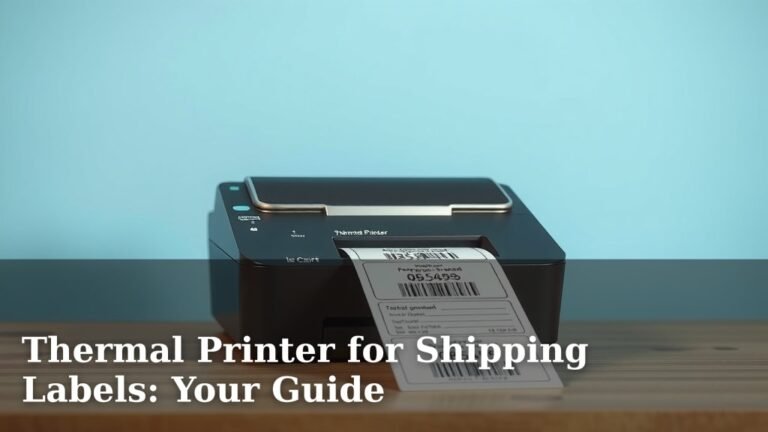
If you sell products online, you know how important shipping labels are. You can easily print shipping labels directly from platforms like Etsy, Shopify, or directly from carrier websites using your Chromebook. Thermal printers, especially those supporting standard label sizes like 4×6 inches, are perfect for this. They produce clear, scannable labels quickly. We found that many users consider this the primary reason to get a thermal printer for their Chromebook.
Retail Receipts
Small retail shops, pop-up vendors, or even home-based businesses can use thermal printers for customer receipts. Many point-of-sale (POS) applications available for Chrome OS can integrate with these printers. This allows you to generate a receipt for every transaction. It adds a professional touch and provides customers with a record of their purchase.
Inventory Management and Barcodes
For businesses managing inventory, thermal printers are invaluable for creating product labels with barcodes. You can print custom labels with product names, SKUs, and barcodes. This makes tracking stock much easier. When combined with inventory management software that runs on Chrome OS, it creates an efficient system. Higher DPI printers are especially useful here for ensuring barcode readability.
Event Ticketing and Badges
If you organize events, thermal printers can quickly print tickets or attendee badges. This can streamline the check-in process and provide attendees with a physical item. The speed of thermal printing is a big advantage when dealing with many people arriving at once.
Troubleshooting Common Issues
While setup is often easy, you might occasionally run into a snag. Here are a few common issues and how to tackle them:
Printer Not Showing Up
If your Chromebook doesn’t see the printer, first check the physical connections and power. Make sure the printer is turned on. Try a different USB port or a different USB cable. If it’s a network printer, ensure it’s properly connected to your network and that your Chromebook is on the same network. Sometimes, a simple restart of both the printer and the Chromebook can resolve connectivity issues.
Print Quality Problems
Faded print or missing lines? This is often related to the print head. Make sure the print head is clean. Many printers come with a cleaning function or advise using a specific cleaning pen. Also, ensure you are using the correct type of thermal paper. Not all thermal papers are compatible with all printers. Check your printer’s specifications for recommended paper types.
Incorrect Label Size or Formatting
If your print is cutting off or not fitting the label correctly, the issue is usually with the page size settings. When you go to print, look for options to set the paper size or label dimensions. Make sure these match the physical labels you have loaded in the printer. Some applications also have their own specific print settings that need to be configured.
Here’s a quick checklist to keep in mind:
- Confirm Chrome OS compatibility before buying.
- Check connectivity options (USB, Ethernet, Wi-Fi).
- Ensure you have the correct type of thermal paper.
- Verify printer settings match your label size.
- Keep your printer’s print head clean.
- Test print after setup to confirm quality.
Conclusion
You’ve learned that using a thermal printer with your Chromebook is not only possible but often a straightforward and efficient solution. We’ve seen how their driverless nature and ease of use align perfectly with Chrome OS’s design. Whether you’re printing shipping labels, receipts, or inventory tags, the right thermal printer can streamline your workflow. Your next step should be to identify your primary printing needs and check for Chrome OS compatibility when selecting a model. This will ensure you get a printer that works harmoniously with your Chromebook right out of the box.
Frequently Asked Questions
Can any thermal printer be used with a Chromebook?
While many modern thermal printers work well, not all are guaranteed to be compatible. You should always look for explicit mentions of Chrome OS support from the manufacturer. Printers with a “Works with Chromebook” certification are the safest bet.
Do I need to install special software for my thermal printer on a Chromebook?
Generally, no. Most thermal printers designed for Chromebooks are plug-and-play and do not require driver installations. Your Chromebook should recognize the printer automatically once connected, making setup very simple.
What’s the difference between direct thermal and thermal transfer printers for Chromebooks?
Direct thermal printers use heat to print on special paper and are common for receipts and labels that don’t need to last forever. Thermal transfer printers use a ribbon for more durable prints but are more complex and costly; for most Chromebook users, direct thermal is sufficient.
How do I choose the right resolution (DPI) for my thermal printer?
For basic receipts, 203 DPI is usually adequate. If you need to print clear barcodes or small text for labels, we recommend a higher resolution like 300 DPI or 600 DPI. This ensures readability and scannability.
What if my thermal printer isn’t recognized by my Chromebook?
First, check all physical connections and ensure the printer is powered on. Try a different USB port or cable, or restart both devices. If it’s a network printer, confirm it’s on the same network as your Chromebook. You may also need to manually add the printer through your Chromebook’s settings.