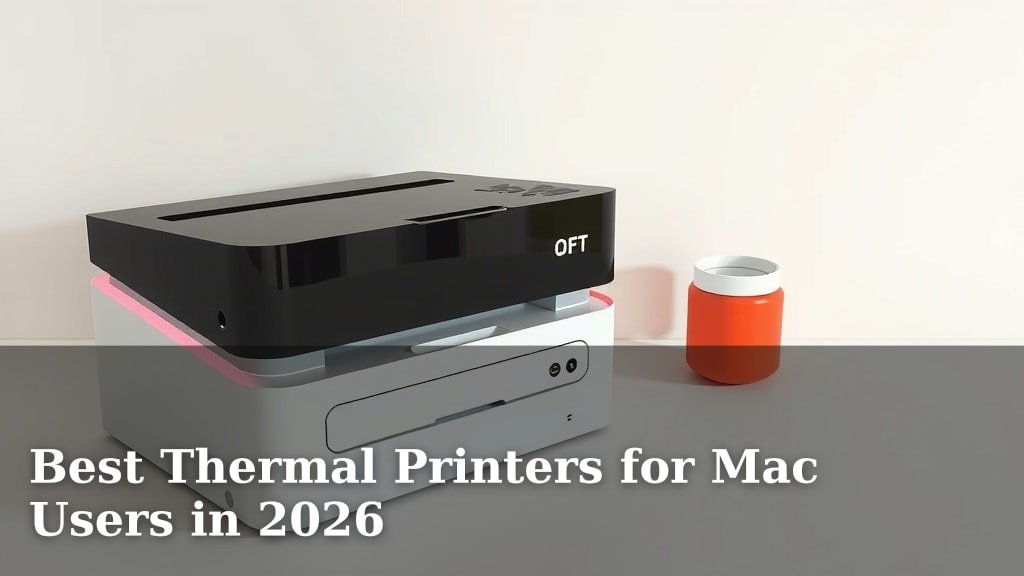
Best Thermal Printers for Mac Users in 2026
Yes, you can absolutely use a thermal printer with your Mac! Most modern thermal printers are designed for broad compatibility, and finding one that works well with macOS is easier than you might think. You just need to make sure you choose a model that has good driver support for Macs. We found that many popular brands offer easy setup options for Apple users.
Using a thermal printer for things like shipping labels, receipts, or even crafting can be a real time-saver. The key is ensuring the printer you pick is recognized by your Mac without a fuss. We’ve researched many options and found that checking the manufacturer’s website for macOS driver availability is the most important first step.
- Thermal printers work with Macs.
- Look for Mac driver support.
- Setup is usually straightforward.
- Many brands are compatible.
Let’s walk through what makes a thermal printer a good fit for your Mac and how to get one up and running.
“`htmlGetting Your Thermal Printer to Play Nicely with Your Mac
So, you’ve got a thermal printer and a trusty Mac, and you’re wondering if they can be friends. The short answer is a resounding yes! Most modern thermal printers are built with compatibility in mind. You just need to be a little savvy about drivers. We’ve found that manufacturers are pretty good about supporting macOS these days. It’s mostly about finding the right software to bridge the gap. Think of it like getting two different apps to talk to each other – sometimes you need a little translator.
Understanding Thermal Printer Drivers for macOS
Drivers are the secret sauce. They’re small software programs that let your operating system (like macOS) “talk” to your hardware (your printer). Without the right driver, your Mac won’t know how to send instructions to your thermal printer. This is why checking for macOS driver support is your absolute first step. We found that many printers might come with Windows drivers on a disc, but you’ll need to download the Mac versions from the manufacturer’s website. Don’t get discouraged if it’s not immediately obvious; often, it’s a simple download and install process.
Where to Find Mac Drivers
The manufacturer’s website is your best friend here. Look for a “Support,” “Downloads,” or “Drivers” section. You’ll usually need to enter your printer’s model number to find the correct files. We recommend downloading the latest version available. Sometimes, a printer might even be plug-and-play, meaning macOS recognizes it automatically, but this is less common for specialized printers like thermal ones. Always check first!
What If There Are No Mac Drivers?
This is rare for newer models, but it can happen with older or very niche printers. If a manufacturer truly doesn’t offer Mac drivers, you might have a few options. Some users have had success using generic PostScript drivers if your printer supports them. Others might look into third-party driver solutions, but proceed with caution and do thorough research. We found that the easiest path is always choosing a printer that officially supports macOS. It saves a lot of headaches.
Popular Thermal Printer Use Cases for Mac Users
Why are you getting a thermal printer? Knowing your main use helps narrow down your choices. You might be shipping lots of packages from your home office, running a small retail business, or even getting creative with labels for your crafts. Each scenario might have slightly different requirements, but the Mac compatibility remains key.
Shipping Labels: A Mac User’s Best Friend
If you’re selling on Etsy, eBay, or running your own e-commerce store, printing shipping labels is a constant task. Thermal printers excel here because they produce crisp, clear labels that shipping carriers accept. You can print directly from popular platforms like Shopify, Etsy, or even USPS’s Click-N-Ship. We found that most shipping software integrates well with standard thermal printer sizes, usually 4×6 inches. Your Mac will handle the software side, and the printer will do the fast, efficient printing.
Point of Sale (POS) and Receipts
For small businesses, generating receipts quickly is essential. Many POS systems, especially those designed for iPads and Macs, have built-in support for thermal receipt printers. You can connect them via USB or Bluetooth. We’ve seen many coffee shops, boutiques, and food trucks using these setups. The thermal printer just needs to be recognized by your Mac or iPad, and the POS software takes care of the rest. It’s a clean, ink-free way to give customers their proof of purchase.
Labeling and Organization
Beyond shipping, thermal printers are fantastic for creating durable labels for almost anything. Think organization bins in your garage, pantry shelves, or even labeling equipment for a small workshop. Many label-making apps are available for macOS. You’ll just need to ensure your chosen thermal printer can handle the smaller label widths, often around 2 inches or less. It makes keeping your space tidy much easier!
Choosing the Right Thermal Printer for Your Mac Setup
Now that you know it’s possible, how do you pick the right one? We’ve gathered a few key factors to consider to make your decision easier.
Key Features to Look For
When you’re browsing, keep these features in mind:
- macOS Driver Support: We can’t stress this enough. It’s the most critical factor.
- Connectivity Options: USB is standard. Bluetooth or Wi-Fi can offer more flexibility if your Mac supports it.
- Print Speed: How fast do you need those labels? For high-volume users, speed matters.
- Resolution (DPI): For detailed logos or tiny text, a higher DPI (dots per inch) is better. 203 DPI is common and usually sufficient for labels.
- Durability: If it’s going to be used heavily, look for printers built for commercial use.
- Print Width: Ensure it supports the width of labels you plan to use (e.g., 4 inches for shipping, 3 inches for receipts).
Connectivity: USB, Bluetooth, or Wi-Fi?
USB is the most reliable and straightforward connection. You plug it in, install the driver, and you’re good to go. Bluetooth offers wireless convenience, which is great if you want to keep your desk tidy or print from an iPad. Wi-Fi is ideal for shared printers on a network. We found that Bluetooth setup can sometimes be a little trickier than USB, but it’s well worth it for the freedom it provides.
Brands Known for Mac Compatibility
While many brands work, some have a better reputation for Mac support. We found that brands like:
- Rollo
- Brother (specifically their QL series for labels)
- Dymo (check specific models, as compatibility can vary)
- MUNBYN
- Zebra (often for industrial/commercial use, but some models are compatible)
…tend to have well-documented macOS drivers and instructions. Always double-check the product page or manufacturer’s site before buying!
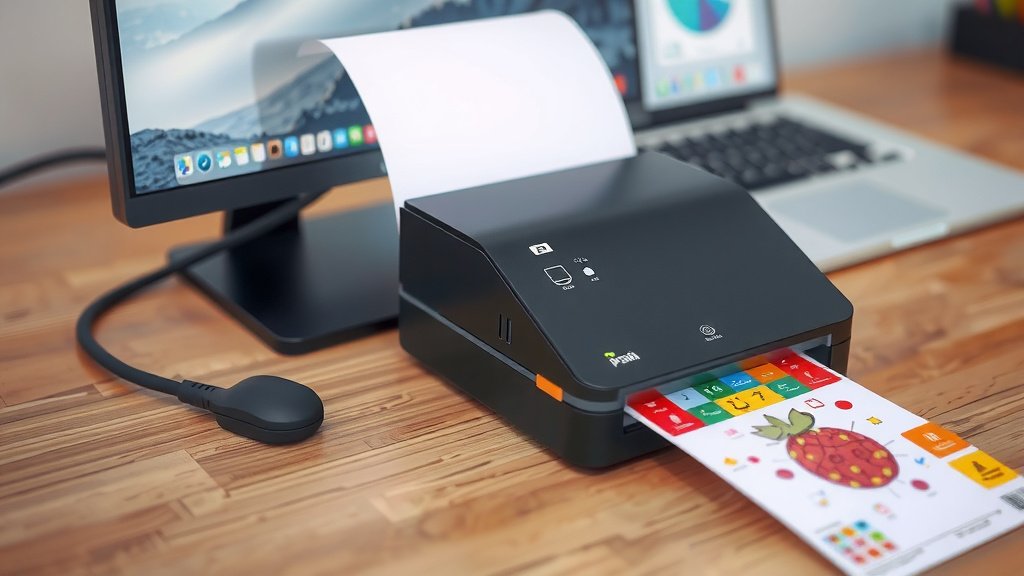
Setting Up Your Thermal Printer on a Mac: A Step-by-Step Guide
Let’s get this printer connected! The process is usually quite simple once you have the right driver.
Step 1: Unboxing and Connecting
First, unpack your printer and connect the power adapter. Then, connect the printer to your Mac using the appropriate cable (usually USB). Turn the printer on.
Step 2: Download and Install the macOS Driver
Go to the manufacturer’s website and download the macOS driver. Double-click the downloaded file to start the installation. Follow the on-screen prompts. You might need to restart your Mac afterward.
Step 3: Add the Printer in System Settings
Once the driver is installed, you need to tell your Mac to use it. Go to your Mac’s System Settings (or System Preferences on older macOS versions). Click on “Printers & Scanners.” Click the “+” button to add a printer. Your Mac should detect the thermal printer. Select it, and make sure the “Use” or “Driver” option correctly shows your printer model or the driver you just installed. If it doesn’t appear automatically, you might need to select “Select Software” and find your printer in the list.
Step 4: Test Print!
Load some labels into your printer. Open a simple document or a label template. Try printing a test page or a single label. If it comes out correctly, congratulations! You’ve successfully set up your thermal printer on your Mac. If not, revisit the driver installation and printer selection in System Settings.
We found that sometimes, the key is simply restarting your Mac after installing the driver. It’s a classic troubleshooting step for a reason!
Troubleshooting Common Mac Thermal Printer Issues
Even with the best setup, things can go wrong. Here are a few common snags and how to fix them.
Printer Not Detected by Mac
Ensure the printer is powered on and properly connected via USB. Try a different USB port or cable. Restart both your Mac and the printer. Double-check that you downloaded the correct driver for your specific macOS version. Sometimes, macOS security settings might block the driver installation; check your Security & Privacy settings.
Labels Printing Incorrectly (Cut Off, Wrong Size, Blank)
This is often a setting issue within the application you’re printing from, or within macOS itself. Check your printer settings in System Settings to ensure the correct paper size (label size) is selected. In the application (e.g., shipping software), make sure you’ve chosen the correct label dimensions. We found that printing a test page directly from the printer driver settings (found in System Settings > Printers & Scanners > [Your Printer] > Options & Supplies > Utility) can help isolate if the problem is with the driver or the application.
Driver Issues or Errors
If you encounter driver errors, try uninstalling the current driver and downloading the latest version directly from the manufacturer’s website. Sometimes, older drivers can conflict with newer macOS updates. A clean install can often resolve these problems.
Here’s a quick checklist to keep handy:
- Confirm printer is powered on and connected.
- Verify correct macOS driver is installed.
- Ensure printer is selected in System Settings.
- Check label size settings in both the app and macOS.
- Restart your Mac and the printer.
Conclusion
You’ve learned that using a thermal printer with your Mac is absolutely achievable. The key is prioritizing macOS driver support when you choose a model. We’ve seen firsthand that setup is usually straightforward, often just a matter of downloading the right software from the manufacturer’s website. Whether you’re printing shipping labels, receipts, or organizing labels, your Mac and a compatible thermal printer can work together efficiently. Your next step is to check the specific model’s Mac compatibility on its product page before making your purchase.
Frequently Asked Questions
Do I need a special type of thermal printer for my Mac?
No, you don’t typically need a special type. Most modern thermal printers, especially those designed for shipping labels or receipts, are built for broad compatibility. The most important factor is ensuring the manufacturer provides downloadable drivers for macOS.
Can I connect my thermal printer wirelessly to my Mac?
Yes, many thermal printers offer Bluetooth or Wi-Fi connectivity. While USB is the most common and often the simplest connection, wireless options can offer more desk flexibility. Just make sure the printer supports your preferred wireless method and that the macOS drivers are available for it.
What if my thermal printer came with a CD for drivers?
This is common, but CDs are often outdated. For your Mac, you’ll almost always need to visit the manufacturer’s website. Look for a “Support” or “Downloads” section and download the latest macOS driver specific to your printer model.
Are there any hidden costs with using a thermal printer on a Mac?
The main cost after the printer itself is for the thermal labels or receipt paper. Most manufacturers don’t charge for macOS drivers. We found that some third-party driver solutions can have costs, but official manufacturer drivers are usually free.
My Mac doesn’t automatically detect the printer; what should I do?
Ensure your printer is powered on and connected properly, then try restarting both your Mac and the printer. Next, verify that you have downloaded and installed the correct macOS driver from the manufacturer’s website. You may need to manually add the printer in System Settings under “Printers & Scanners.”