Direct Thermal Paper Explained: How It Works July 2026
Direct thermal paper is a special kind of paper that turns black when heat is applied. You’ve probably seen it on your receipts from stores or at the shipping label printer. It’s a clever way to print without ink, making it super handy for quick jobs.
This paper uses a chemical coating that reacts to heat, which is why it’s often called “heat-sensitive paper.” Think of it like a tiny science experiment happening right on the paper! Many businesses rely on direct thermal labels for their everyday printing needs.
- It’s a heat-activated paper.
- You’ll find it on receipts and shipping labels.
- No ink cartridges are needed.
- It’s great for quick, simple printing.
Let’s dive into how this ink-free printing magic actually works, and why you see it everywhere!
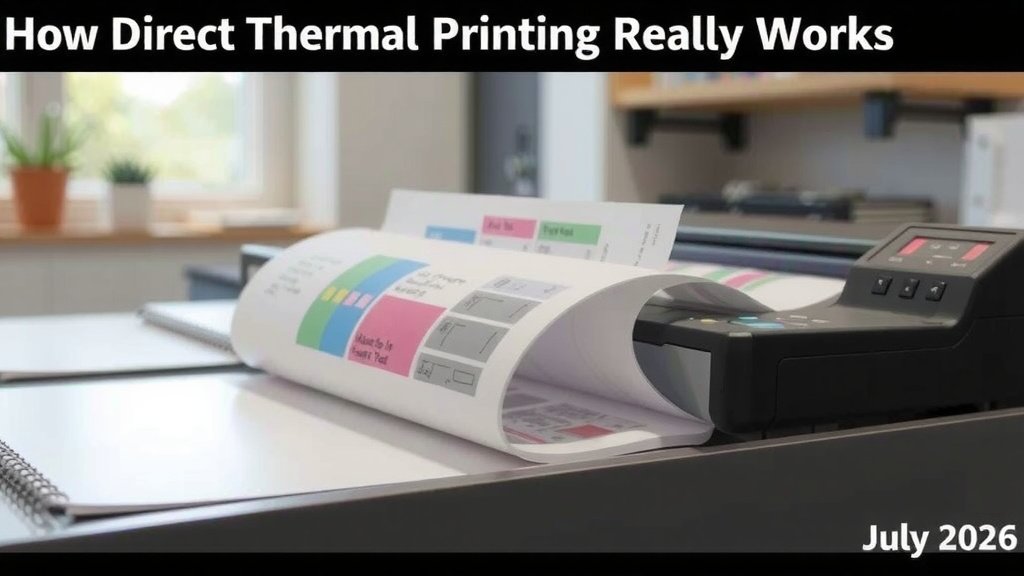
How Direct Thermal Printing Really Works
You’ve likely used direct thermal paper without even thinking about it. It’s the magic behind those quick receipts from your favorite coffee shop or the shipping labels that get your online orders to your door. But how does this ink-free printing actually happen? It all comes down to a clever chemical reaction activated by heat.
The Science Behind the Black Print
Direct thermal paper isn’t like regular paper. It has a special coating on its surface. This coating is made up of several layers. The key ingredients are a dye and a sensitizer. These chemicals are solid at room temperature. They stay that way until they meet heat.
The Heat-Sensitive Coating
Think of the coating like a delicate balance. When the thermal printer’s print head heats up, it melts this coating. This melting process allows the dye and the sensitizer to mix. When they mix, a chemical reaction occurs. This reaction changes the color of the mixture, turning it black. It’s a pretty neat trick of chemistry!
The Role of the Printer
The printer itself is designed for this type of paper. It has a heating element, often called a thermal print head. This head has tiny dots that can heat up very quickly and precisely. As the paper moves under the print head, specific dots heat up. This targeted heat creates the letters, barcodes, or images you see printed. It’s all about controlled temperature application.
What’s Inside Direct Thermal Paper?
Understanding the layers helps explain why it works. The structure is quite specific. It ensures a clear and lasting image. We found that the composition is key to its function.
Layer by Layer Breakdown
Most direct thermal papers have at least four layers. The first is the paper backing, which gives the paper its structure. On top of that is a protective coating. This layer shields the sensitive materials below from scratches and UV light. Then comes the very important thermal layer. This contains the dye and sensitizer we talked about.
Finally, there’s often a topcoat. This helps protect the thermal layer. It also helps with print quality. This layer can improve fade resistance. It can also help prevent damage from things like humidity. The right combination ensures your prints are readable.
Comparing Direct Thermal to Other Printing Methods
It’s helpful to see how direct thermal printing stacks up. This way, you can understand why it’s chosen for certain jobs. It’s different from methods that use ink or toner.
Direct Thermal vs. Inkjet/Laser
The biggest difference is the absence of ink. Inkjet and laser printers use liquid ink or powdered toner. They transfer this onto the paper. Direct thermal printers create images by heating the paper itself. This means no ink cartridges to replace. You also don’t have to worry about smudging from wet ink. This makes direct thermal ideal for many applications where speed and simplicity are important.
Direct Thermal vs. Thermal Transfer
Another common thermal printing method is thermal transfer. While both use heat and a thermal print head, the process is different. Thermal transfer printing uses a ribbon. This ribbon has a wax or resin ink. The heat from the print head melts this ink from the ribbon onto the label. Direct thermal, on the other hand, uses the heat to activate the coating on the paper itself. Thermal transfer labels are generally more durable and fade-resistant than direct thermal labels. However, they require purchasing ribbons. Many experts suggest thermal transfer for long-term archival or harsh environments (Zebra Technologies).
| Feature | Direct Thermal | Thermal Transfer |
|---|---|---|
| Ink Source | Heat-activated paper coating | Wax/resin ribbon |
| Consumables | Paper/labels only | Paper/labels AND ribbons |
| Durability | Less durable; fades over time, sensitive to heat/light | More durable; resistant to fading, water, and abrasion |
| Cost | Lower initial setup and running costs | Higher initial setup and ongoing ribbon costs |
| Print Quality | Good for standard use; can degrade | Excellent, consistent print quality |
Why Choose Direct Thermal? The Advantages
There are many reasons why direct thermal printing is so popular. Its simplicity is a huge selling point. You can get started printing quickly. This makes it incredibly user-friendly. Businesses appreciate its low maintenance.
Simplicity and Speed
Setting up a direct thermal printer is usually straightforward. You just load the paper. There are no complex ink systems to manage. Printing is also very fast. The print head can quickly heat up and cool down. This allows for rapid label production. This speed is a big deal for busy environments.
Cost-Effectiveness
When you consider the total cost of ownership, direct thermal can be very economical. The paper itself might cost a bit more per sheet than plain paper. However, you save money by not buying ink or toner cartridges. Ribbons for thermal transfer also add to ongoing expenses. For many businesses, this ink-free operation is a significant cost saving over time.
Compact and Quiet Operation
Many direct thermal printers are designed to be small. They don’t take up much desk space. They also tend to operate very quietly. This is a nice feature if you work in an office setting. You won’t be bothered by constant noise. It’s a subtle but appreciated benefit.
When Direct Thermal Might Not Be the Best Fit
While direct thermal is great for many things, it’s not perfect for every job. Understanding its limitations is just as important as knowing its strengths. This helps you make the right choice for your needs.
Durability Concerns
The biggest drawback is durability. The special coating on direct thermal paper is sensitive. Exposure to heat, sunlight, or even certain chemicals can cause the print to fade. We found that receipts left in a hot car can become unreadable. For items that need to last a long time or withstand harsh conditions, direct thermal might not be suitable. Think about items that require long-term archival or are exposed to the elements.
Environmental Factors
Extreme temperatures and humidity can affect print quality. Even prolonged contact with plasticizers found in some packaging materials can cause fading. This is why thermal transfer is often preferred for outdoor applications or products stored in challenging environments. Always consider where your printed items will end up.
A Quick Checklist for Direct Thermal Use
Considering direct thermal paper? Ask yourself these quick questions:
- Do you need to print quickly and often?
- Is low running cost a priority?
- Are your printed items for short-term use (like receipts or shipping labels)?
- Will the printed items be stored in stable conditions (away from direct sun and heat)?
- Do you want to avoid buying ink or toner?
- Is simplicity in operation important to you?
If you answered “yes” to most of these, direct thermal paper is likely a great option for you. It offers a simple, cost-effective solution for many everyday printing tasks.
Conclusion
You’ve learned how direct thermal paper works using heat-activated coatings and why it’s a top choice for receipts and shipping labels. Its simplicity, speed, and low running costs make it incredibly practical. Just remember its main limitation: durability. For items needing to withstand tough conditions or last for years, you might need a different approach. If speed, cost, and ease are your priorities for short-term prints, direct thermal is your go-to. Ready to find the right printer? Look for models designed for direct thermal media.
Frequently Asked Questions
How long do direct thermal prints last?
Direct thermal prints are best for short-term use. They can start to fade within months if exposed to sunlight or heat. We found that storing them in stable, cool, dark places helps extend their readability. For anything needing long-term archival, consider thermal transfer printing.
Can I use direct thermal paper in any printer?
No, you cannot. Direct thermal paper requires a specific type of printer, known as a direct thermal printer. These printers have a heated print head that activates the paper’s coating. Standard inkjet or laser printers will not work and could even be damaged.
Is direct thermal paper safe for food packaging?
For direct food contact, direct thermal paper is generally not recommended. The chemicals in the coating could potentially transfer. Many regulations require special food-grade labels. It’s best to research specific food packaging requirements or use thermal transfer labels approved for such use.
What happens if direct thermal paper gets wet?
Getting direct thermal paper wet can cause the print to smudge or disappear entirely. The heat-activated coating is also sensitive to moisture. For labels that might get wet, like those on outdoor equipment or in humid environments, direct thermal is not the best choice. Thermal transfer labels offer better water resistance.
Can direct thermal paper be recycled?
Yes, the paper itself can often be recycled. However, the chemical coating on direct thermal paper can sometimes complicate the recycling process. Check with your local recycling facility for their specific guidelines. Removing the label before recycling the package is often recommended.