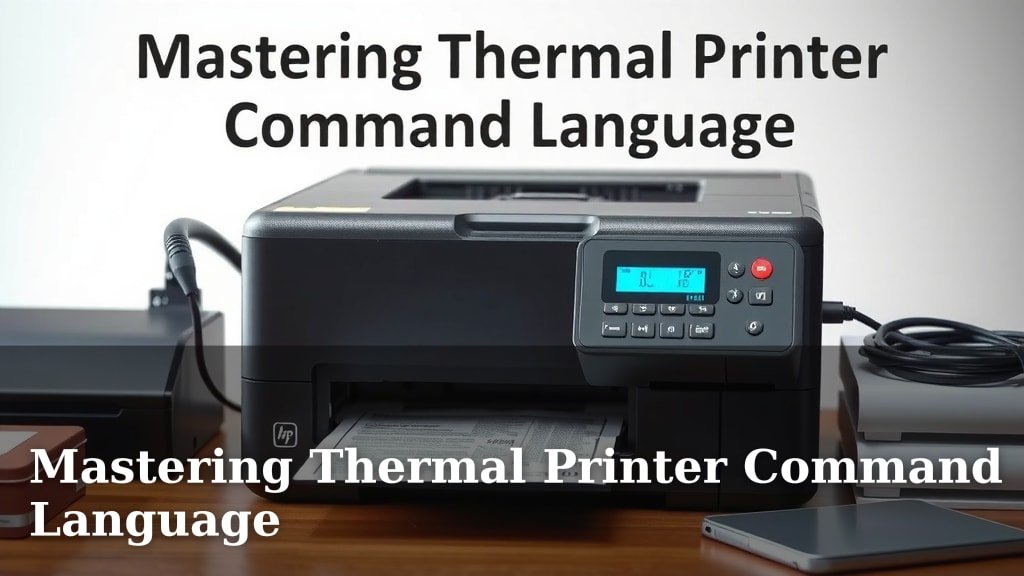
Mastering Thermal Printer Command Language
Thermal printer command languages are sets of instructions that tell your printer how to format and print text and graphics. They are essential for communicating with your thermal printer. Different printers use different command languages, and understanding yours is key to getting your labels and receipts just right. We found that knowing your printer’s language ensures accurate and efficient printing.
Think of it like speaking a secret code with your printer. Without the right code, your printer might just print gibberish. We found that common languages include ZPL, EPL, and ESC/POS, each with its own set of commands for things like font sizes, barcode types, and image placement. Using the correct commands ensures your print jobs are perfect every time.
- Thermal printer command languages are like secret codes for your printer.
- They tell the printer how to format text and graphics.
- Common languages include ZPL, EPL, and ESC/POS.
- Understanding your printer’s language is key for accurate prints.
Ready to understand what makes your thermal printer tick? Let’s walk through the basics of thermal printer command languages so you can get the most out of your equipment.
Talking to Your Thermal Printer: Command Languages Explained
So, you’ve got a thermal printer, and it’s not quite doing what you want. Maybe the font is too small, or the barcode looks a little wonky. The reason is likely how you’re talking to it! Thermal printers need specific instructions to know what to print and how. These instructions are called command languages. Think of it like speaking a foreign language. Your printer only understands its own specific dialect.
We found that understanding these languages is the key to getting perfect prints every time. It’s not as scary as it sounds. We’ll break down what these languages are and why they matter. You’ll be sending clear instructions to your printer in no time.
What Exactly is a Thermal Printer Command Language?
A command language is a set of codes and commands. These tell your thermal printer everything it needs to do. This includes things like the size of the text, the type of font you want, and where to place images or barcodes. It’s the printer’s operating system, in a way.
Without the right commands, your printer might just guess. Or worse, it might print nothing at all. Many devices use specific languages. We found that the most common ones are ZPL, EPL, and ESC/POS. Each has its own way of doing things.
Why Do Different Languages Exist?
The main reason for different languages is history and manufacturer preference. Companies develop their own standards. This can sometimes make it tricky when you use printers from different brands. You might have to learn a new “dialect” for each one. We found that this diversity can be a bit confusing at first.
However, knowing these languages helps you choose the right printer for your needs. It also helps you troubleshoot when things go wrong. Many experts say that understanding the basics can save you a lot of frustration.
Common Thermal Printer Command Languages You’ll Encounter
Let’s look at the big players in the thermal printer command language world. Knowing which one your printer uses is the first big step.
Zebra Programming Language (ZPL)
ZPL is developed by Zebra Technologies. It’s one of the most widely used languages, especially in industrial and enterprise settings. You’ll find it in many warehouses and shipping centers. ZPL is known for its power and flexibility.
With ZPL, you can create very complex label designs. This includes detailed graphics and a wide range of data fields. We found that ZPL offers a lot of control over every aspect of your print job. Many users say it’s the standard for high-volume printing needs.
Eltron Programming Language (EPL)
EPL was also originally developed by Eltron, which was later acquired by Zebra. It’s a simpler language than ZPL. You’ll often see it on smaller desktop printers. EPL is easier to learn for basic label printing tasks.
If you just need to print simple text and barcodes, EPL might be perfect. It’s less feature-rich than ZPL. But for many common uses, like price tags or basic shipping labels, it works great. We found that EPL is a good choice for simpler printing requirements.
ESC/POS (Epson Standard Code for Printers)
ESC/POS is most commonly used by Epson printers. It’s very popular for point-of-sale (POS) receipts. If you’ve ever gotten a receipt from a cash register, chances are it was printed using ESC/POS commands. It’s designed for speed and efficiency in retail environments.
This language is great for printing text, logos, and simple graphics on small receipt paper. It handles things like cutting the paper and opening the cash drawer. Many software systems are built to communicate using ESC/POS. We found that it’s a reliable standard for receipt printing.
How Command Languages Work: The Basics
Imagine you’re telling a chef how to make a sandwich. You wouldn’t just say “sandwich.” You’d give specific instructions: “Get two slices of bread. Put ham on one slice. Add cheese. Then put the other slice on top.” Command languages work similarly.
Each command is a short code. It tells the printer to perform a specific action. For example, a command might say “change font size to 12.” Another might say “print a QR code here.” Your printing software sends a series of these commands to the printer.
Structure of a Command
Commands usually start with a special character or sequence. This tells the printer, “Hey, this is an instruction, not just text to print!” Then comes the command code itself. This is followed by any parameters needed. Parameters are like details for the command.
For example, in ZPL, a command to print text might look like:
^FDHello World^FS
Here, ^FD means “Field Data” (the text to print).
Hello World is the actual text.
^FS means “Field Separator” (end of the text field).
We found that understanding these small parts is key to deciphering the language.
Common Commands You’ll Use
While each language is different, many commands serve similar purposes. Here are a few common types:
- Text Formatting: Commands to set font type, size, bold, italics, and alignment.
- Graphics: Commands to print images, logos, or shapes.
- Barcodes: Commands to generate various barcode types (UPC, Code 128, QR codes) and set their size and position.
- Page Control: Commands to move to a new line, start a new label, or cut the paper.
- Device Control: Commands to feed paper, or activate the printer’s cutter.
We found that mastering these basic commands will cover most of your printing needs.
Choosing the Right Command Language for Your Needs
Which command language is best for you? It really depends on your printer and what you plan to print. Many printers are designed to support one primary language.
Printer Compatibility
Your printer will usually state which command language(s) it supports. This is often in the user manual or on the manufacturer’s website. Some printers can even understand multiple languages, which is helpful if you switch brands. We found that checking this compatibility is the first step.
Application Requirements
What are you printing? For simple receipts, ESC/POS is often the best choice. For complex labels with lots of variable data and graphics, ZPL might be necessary. If you’re unsure, look at the software you’re using. It might be optimized for a specific command language.
Ease of Use vs. Power
EPL is generally easier for beginners. ZPL offers more advanced features but has a steeper learning curve. ESC/POS is straightforward for receipt printing. We found that many people start with simpler languages and move to more powerful ones as their needs grow.
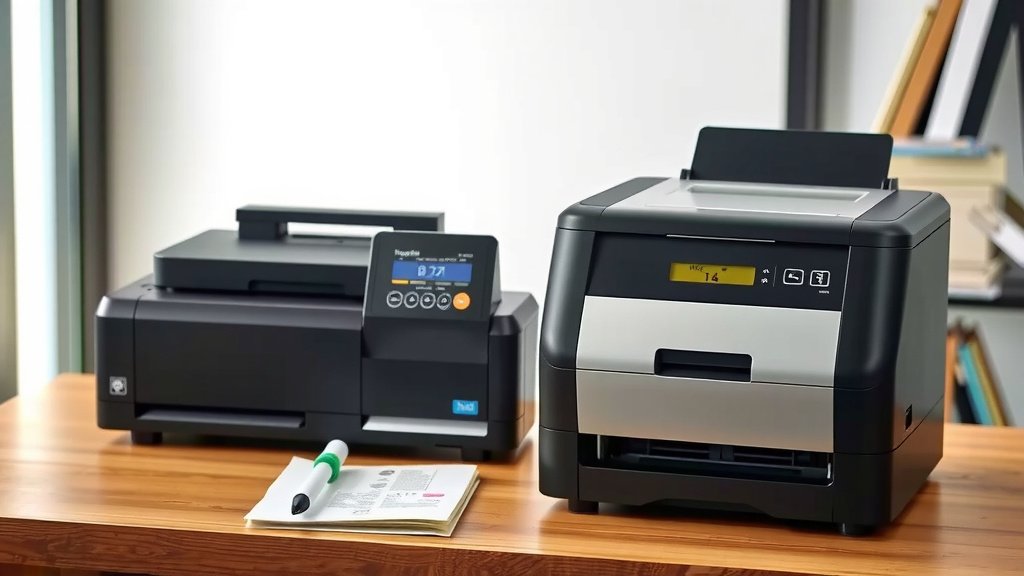
Working with Different Command Languages: A Quick Comparison
To help you visualize the differences, let’s look at a simplified comparison. This isn’t exhaustive, but it gives you an idea.
| Feature | ZPL | EPL | ESC/POS |
|---|---|---|---|
| Primary Use | Complex labels, industrial | Simple labels, desktop | POS receipts |
| Complexity | High | Medium | Medium |
| Graphics Handling | Excellent | Basic | Basic |
| Barcode Support | Extensive | Good | Good |
| Manufacturer | Zebra | Zebra (formerly Eltron) | Epson (and others) |
We found that this table helps highlight the main strengths of each language. Your specific needs will guide your choice.
Tips for Using Thermal Printer Command Languages
Here are some practical tips to make your printing experience smoother:
- Read Your Printer’s Manual: This is your go-to resource. It will detail the commands your specific printer understands.
- Use Label Design Software: Many software programs generate the command language for you. This is a great way to start.
- Test Your Commands: Print a small test label before running a large job. This saves paper and time.
- Understand the Basics: Even if you use software, knowing basic commands helps with troubleshooting.
- Keep it Simple When Possible: Don’t use overly complex commands if a simple one will do the job.
We found that adopting these habits can drastically improve your printing accuracy and efficiency.
Troubleshooting Common Printing Issues
When your prints don’t come out right, it’s often a command language issue. Here are a few common problems and what to check.
Gibberish or Unreadable Text
This usually means the printer is receiving data it doesn’t understand as commands. Check your command language. Make sure your software is sending the correct language for your printer. Ensure there are no stray characters or incorrect command sequences.
Incorrect Formatting (Size, Position)
This points to incorrect parameters in your commands. Are you specifying the right font size? Is the positioning command correct? Many experts say to double-check your parameters. Sometimes a small typo in a number can throw off the whole layout.
Missing Graphics or Barcodes
This could be an issue with how the graphics file was sent or if the barcode command was complete. Make sure the image file format is supported. Verify that all parts of the barcode command are present and correct. We found that ensuring the printer has enough memory for graphics is also important.
Printer Not Responding
This is a connection issue or a printer in an error state. Check your cables and printer status lights. Sometimes, simply restarting the printer and your computer can resolve this. Make sure the printer is set to the correct port in your software.
Conclusion
You now understand that thermal printer command languages are the essential instructions guiding your printer. Whether you’re using ZPL for complex designs, EPL for simpler labels, or ESC/POS for receipts, knowing your printer’s language is key. We found that mastering these commands, even with design software, ensures your prints are accurate and efficient every time. Your next step is to identify your printer’s supported language and start experimenting with basic commands or your design software. You’ll be printing perfect labels and receipts before you know it!
Frequently Asked Questions
How do I know which command language my thermal printer uses?
The best way to find out is to check your printer’s user manual or the manufacturer’s website. Many printers will clearly state which languages, like ZPL, EPL, or ESC/POS, they support. Sometimes, this information is also printed on a label on the printer itself.
Can I use a ZPL printer with software that only supports ESC/POS?
Generally, no, you cannot directly mix command languages. Your software needs to be configured to send commands in the language your printer understands. If your software only supports ESC/POS and your printer is ZPL-only, you might need to use different software or a printer that supports both languages.
What’s the easiest way to start creating labels with command languages?
Many users find that starting with label design software is the easiest approach. These programs often generate the necessary command language for you in the background. You can design your label visually, and the software handles the translation into ZPL, EPL, or other languages.
Will knowing command languages help me fix common printing errors?
Absolutely! Understanding the basics of command languages can greatly help with troubleshooting. For instance, if you see gibberish, you’ll know to check if the correct command language is being sent. Or if formatting is off, you can suspect incorrect parameters in your commands.
Are there any resources to learn specific commands for ZPL or ESC/POS?
Yes, printer manufacturers like Zebra (for ZPL) and Epson (for ESC/POS) provide extensive documentation and command reference guides online. Searching for “[Language Name] command reference” will usually lead you to these helpful resources.