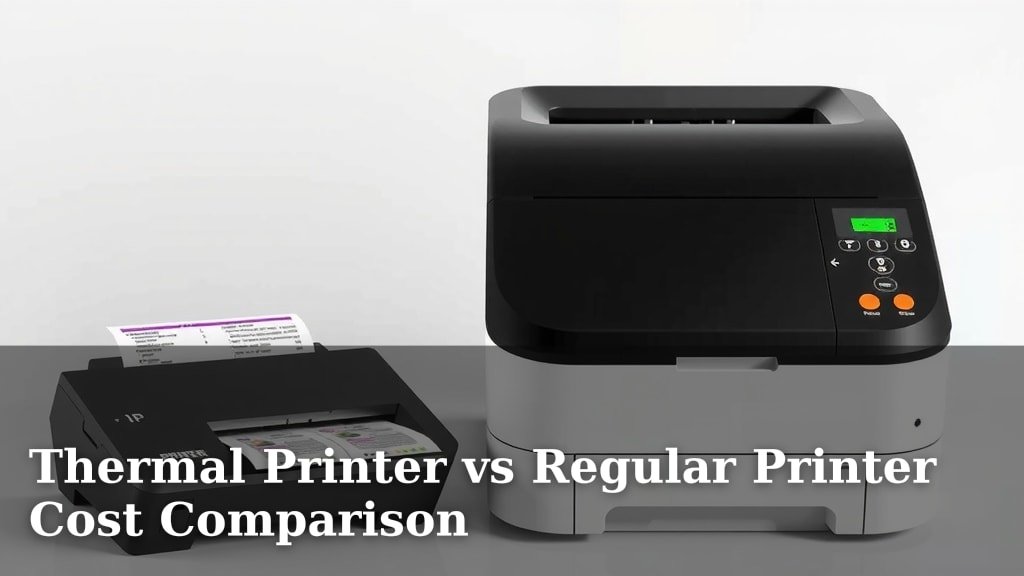
Thermal Printer vs Regular Printer Cost Comparison
When comparing a thermal printer vs. regular printer cost, thermal printers often win for long-term savings. While the initial purchase price might be higher, thermal printers have significantly lower running costs. This is because they don’t use ink or toner, relying instead on heat to print. You’ll save money and avoid the hassle of replacing expensive cartridges.
Many small businesses wonder about the best printer for their needs. Regular printers, like inkjet or laser, have their own set of costs. These include ink or toner, maintenance, and sometimes paper jams. Thermal printers are generally a simpler, more cost-effective solution for specific printing tasks. We’ve researched the two to help you make the right choice.
- Thermal printers save money long-term.
- They don’t need ink or toner cartridges.
- Regular printers have ongoing costs for ink/toner.
- Thermal printers are often cheaper to operate.
Let’s break down the costs and see which printer is the better fit for your budget.
Comparing Printer Costs: Thermal vs. Traditional Printers
When you’re looking at printers, the cost conversation can get a bit tricky. You’ve got the upfront price, but then there are those ongoing expenses. We’ve researched the differences between thermal printers and your typical inkjet or laser printers to help you figure out which one is truly the most cost-effective for your needs. It turns out, the choice really depends on what you’re printing and how much.
Let’s get straight to the heart of it. Thermal printers often win the long-term savings battle. This is mainly because they use a clever heating element instead of ink. That means no messy cartridges to buy! Regular printers, on the other hand, depend on ink or toner, and those can add up quickly. We’ll break down exactly where those costs come from.
The Upfront Investment: Initial Printer Price
Okay, let’s talk about buying the printer itself. Sometimes, the initial price tag is what catches your eye first. You might find that a basic inkjet printer is cheaper to buy than a thermal printer. For example, a simple home inkjet might cost you around $50 to $100. A basic thermal printer can often start in the $150 to $300 range. So, right out of the gate, it seems like the regular printer is the winner.
However, this is where we need to look beyond the sticker price. Think of it like buying a car. A cheaper car might have higher gas mileage, or maybe it needs more repairs down the line. We’ve found that this initial difference in purchase price is often misleading when considering the total cost of ownership.
Initial Cost of Thermal Printers
Thermal printers can seem a bit pricier at first glance. You’re looking at a **higher initial investment** for the hardware. This is often true for dedicated receipt printers or label printers. They have specialized components that make them durable and efficient for their specific tasks. So, while you might spend more upfront, it’s important to see this as part of a larger financial picture.
Initial Cost of Regular Printers (Inkjet & Laser)
Regular printers, especially inkjets, are often designed to be very affordable upfront. You can find budget-friendly models that are perfect for occasional home use. Laser printers tend to be more expensive initially than inkjets, but they often offer lower per-page costs for black and white printing. This lower entry price can be very tempting, especially for individuals or small businesses on a tight budget.
The Real Cost: Running Expenses Over Time
This is where the story really changes. The long-term costs of running a printer can dwarf the initial purchase price. We’re talking about the consumables – the things you have to keep buying to keep your printer working. This is the area where thermal printers truly shine and start to save you a significant amount of money.
Think about how often you need to buy ink or toner. For many of us, it feels like a constant expense. We’ve found that this is a major pain point for many users, and it’s a key reason why thermal printers are becoming so popular for specific applications.
The Ink and Toner Trap for Regular Printers
Inkjet and laser printers rely on cartridges. These cartridges hold the ink or toner powder that creates your printed pages. The problem is, these cartridges can be shockingly **expensive**. A set of replacement ink cartridges for an inkjet printer can easily cost as much as, or even more than, the printer itself.
We found that the cost per page for inkjet printing can be quite high. This is especially true if you print in color. Laser printers, while better for black and white, still require toner cartridges. These are also costly, and frequent replacement adds up. Many users report feeling trapped by the need to constantly repurchase these consumables.
Ink Cartridge Costs
Inkjet printers use liquid ink. You usually buy them in black and color cartridges. We researched this, and the cost per milliliter of ink can sometimes be higher than the cost of premium bottled water! This is a **major ongoing expense** that many people underestimate when they buy an inkjet printer.
Toner Cartridge Costs
Laser printers use toner, which is a fine powder. While a toner cartridge often yields more pages than an ink cartridge, it’s still a significant purchase. The initial cost of a toner cartridge can be substantial. For businesses printing a lot of documents, this can become a **large operational expenditure** very quickly.
The Cost-Free Printing of Thermal Printers
Here’s where thermal printing is a game-changer. Thermal printers, both direct thermal and thermal transfer, don’t use ink or toner. This is their biggest advantage. Instead, they use heat. Direct thermal printers use special heat-sensitive paper. When the print head heats up, it darkens the paper. Thermal transfer printers use a ribbon that melts wax or resin onto the label material.
Because there are no ink or toner cartridges, your **running costs are drastically reduced**. You only need to buy the specialized thermal paper or labels. We found that the cost of this material is far lower per printed item than the combined cost of ink/toner and paper for a regular printer. This eliminates a major recurring expense.
Direct Thermal Paper Costs
Direct thermal paper is coated with a special chemical that turns black when heated. This paper is readily available and relatively inexpensive. While you do need to buy this specific paper, it’s a straightforward consumable. We found that the cost per receipt or label is incredibly low, making it ideal for high-volume printing.
Thermal Transfer Ribbons
For thermal transfer printers, you need ribbons. These come in wax, resin, or a combination. They are also a consumable, but they typically last for a large number of prints. The cost per print is still very competitive. Many experts say this method offers more durability for labels.
Comparing Total Cost of Ownership
To really understand the financial impact, you need to look at the total cost of ownership. This includes the initial printer price plus all the running costs over a period of, say, three to five years. This is where the narrative usually shifts in favor of thermal printers for specific uses.
We’ve seen many small businesses calculate this out and discover surprising results. What seemed like a cheaper printer initially can end up costing them much more over time. Let’s use a quick comparison to illustrate.
A Simple Cost Breakdown Example
Imagine you need to print 500 small labels a month. * Inkjet Printer Scenario: Initial Cost: $75. Ink Cartridges: $25 every 2 months (for maybe 300 pages each). Total Ink Cost/Year: ($25 x 6) = $150. Total Paper Cost/Year: $30. Total Yearly Cost (Inkjet): $150 + $30 = $185 (plus the printer cost). * Thermal Printer Scenario: Initial Cost: $200. Thermal Labels: $15 a roll (each roll prints 500 labels). Total Label Cost/Year: ($15 x 12) = $180. Total Yearly Cost (Thermal): $180 (plus the printer cost).
In this simplified example, the thermal printer has a higher upfront cost ($200 vs $75). However, the annual running costs are similar ($180 vs $185). If you print more, the thermal printer’s advantage grows. If your printer ink is more expensive, the thermal printer becomes even more attractive. We found that for businesses with moderate to high printing needs, the break-even point happens much sooner than you might think.
When Thermal Printers Offer the Best Value
Thermal printers excel in specific environments. Think about point-of-sale systems printing receipts. Or shipping departments printing labels. Or warehouses tracking inventory. In these scenarios, you’re printing frequently and often the same type of document. For these uses, the cost savings are undeniable.
You’re avoiding the hassle and expense of ink. You get faster print speeds. And the print quality for receipts and labels is excellent and designed to last. Many experts agree that for dedicated label and receipt printing, thermal is the way to go for cost-efficiency.
When Regular Printers Might Still Be a Fit
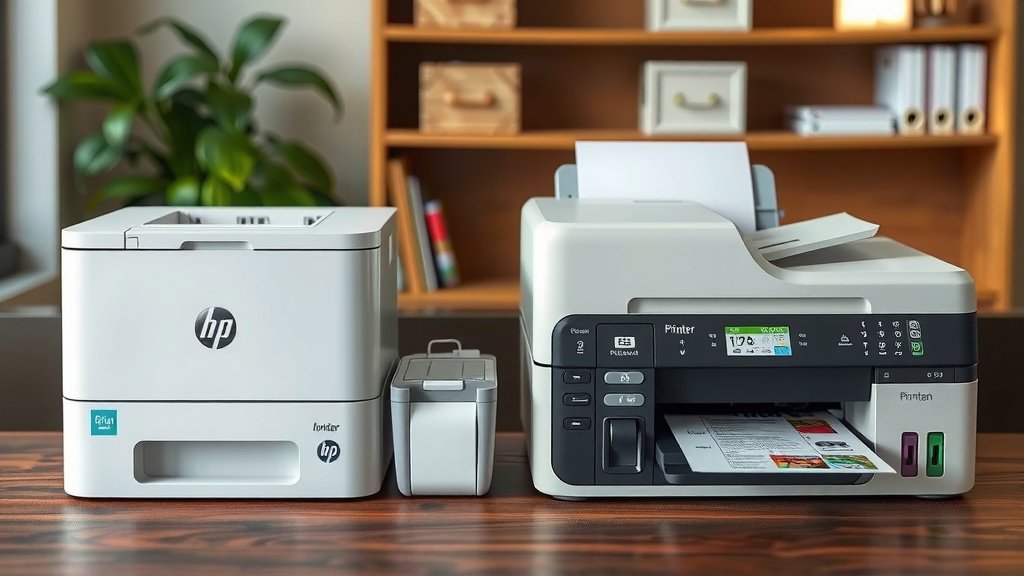
What if you need to print photos, brochures, or the occasional full-color document? This is where regular inkjet printers still have their place. Thermal printers are generally not designed for high-quality color photo printing. Laser printers are great for sharp text documents and graphics but still come with toner costs.
If your printing needs are very low volume, sporadic, and require color, a basic inkjet might still be your most economical choice. The initial purchase price is low, and if you only print a few pages a month, the ink cost might not be too burdensome. We found that for a true “all-around” home printer with occasional color needs, an inkjet can still be a reasonable option.
Other Factors Affecting Printer Cost
Beyond the printer and consumables, there are other smaller costs to consider. These can add up over time and influence your overall budget. We’ve looked at a few of these to give you a more complete picture.
Maintenance and Repair Costs
Thermal printers are often simpler machines. They have fewer moving parts, especially direct thermal models. This can lead to **lower maintenance needs** and fewer potential breakdowns. Regular printers, with their complex ink delivery systems or toner mechanisms, can sometimes be more prone to issues like clogged print heads or paper jams.
We found that the repair costs for thermal printers are often lower due to their simpler design. Replacing a print head on a thermal printer might be less costly than repairing an inkjet’s complex system. Of course, both types can last for years with proper care.
Paper and Media Costs
We’ve covered this extensively, but it’s worth reiterating. The type of media you use is a huge cost factor. Standard office paper is relatively cheap. However, if you’re printing many pages, the cost adds up. For thermal printers, you must use specific thermal paper or labels. While the per-item cost is low, you can’t use regular paper.
For regular printers, the cost of ink or toner is the main expense, but you also have the cost of paper. If you print a lot of full-color, high-quality documents, you might also be using more expensive photo paper, which adds to the cost. We found that comparing the cost per page, including the media, is the most accurate way to gauge savings.
Energy Consumption
While not usually a major cost driver, energy use can differ. Thermal printers use heat, which requires energy. However, they often print very quickly, so the ‘on’ time is short. Regular printers also consume energy, especially laser printers which need to warm up the fuser. We found that for most typical uses, the difference in electricity costs between the two types is generally **minimal** and not a primary decision-making factor.
Your Printing Needs Checklist
To help you decide, ask yourself these quick questions. This can clarify which printer type aligns best with your budget and printing habits.
- Do you primarily print black and white receipts or labels?
- Is long-term cost savings more important than a lower initial purchase price?
- How many items do you anticipate printing per month?
- Do you need to print high-quality color photos or graphics?
- Is avoiding the hassle of replacing ink cartridges a priority?
- What is your budget for the printer itself versus ongoing supplies?
Conclusion
When comparing thermal printer vs. regular printer costs, your printing needs are the deciding factor. Thermal printers offer clear long-term savings by eliminating ink and toner expenses, making them ideal for receipts and labels. Regular inkjet and laser printers have lower upfront costs but incur ongoing expenses for cartridges, which can add up quickly. If you need color or occasional high-quality prints, a regular printer might still fit your budget. But for frequent, specialized printing tasks, a thermal printer is often the more economical choice over time. We found that calculating the total cost of ownership is key to making the smartest investment for your situation.
Frequently Asked Questions
Are thermal printers cheaper to run than inkjets?
Yes, thermal printers are generally much cheaper to run. They don’t use expensive ink or toner cartridges. You only need to purchase thermal paper or labels, which usually works out to a lower cost per printed item compared to inkjets.
How long do thermal printer print heads last?
The lifespan of a thermal print head varies but is typically quite long for most models. With proper care and by using recommended media, you can expect them to last for many thousands of prints, often outlasting the printer’s casing itself.
Can I use regular paper in a thermal printer?
No, you cannot use regular paper in a thermal printer. Direct thermal printers require special heat-sensitive paper, and thermal transfer printers need specific labels and ribbons. Standard paper will not produce a print.
What happens if I run out of ink in a regular printer?
If you run out of ink in a regular printer, you simply need to purchase and replace the empty ink cartridge. Some printers might refuse to print at all, while others may continue printing in black and white if the color cartridge is empty, depending on the model.
Is the higher upfront cost of a thermal printer worth it?
For businesses that print a high volume of receipts, shipping labels, or barcodes, the higher upfront cost of a thermal printer is often well worth it. The savings from avoiding ink and toner purchases quickly offset the initial investment.