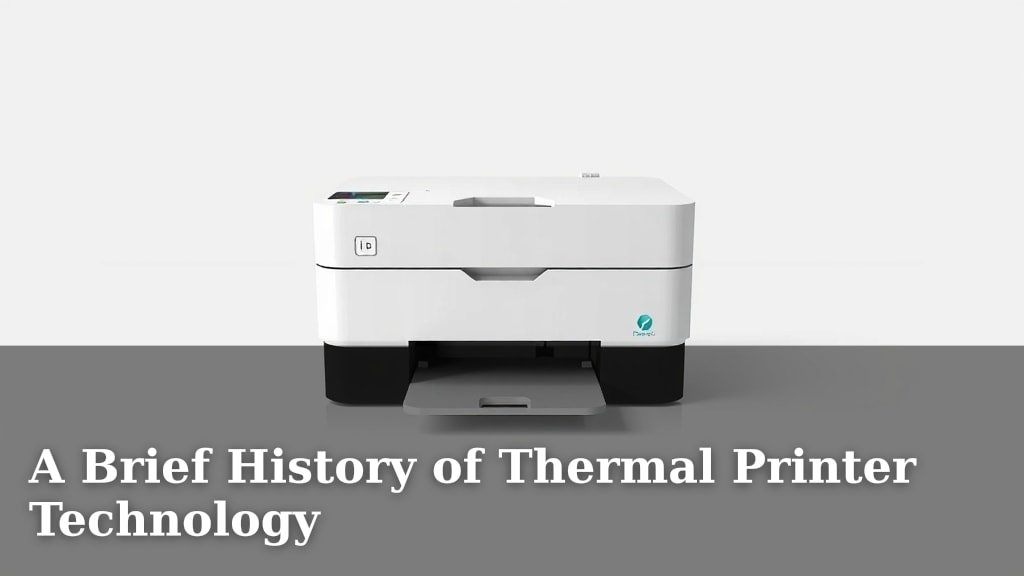
A Brief History of Thermal Printer Technology
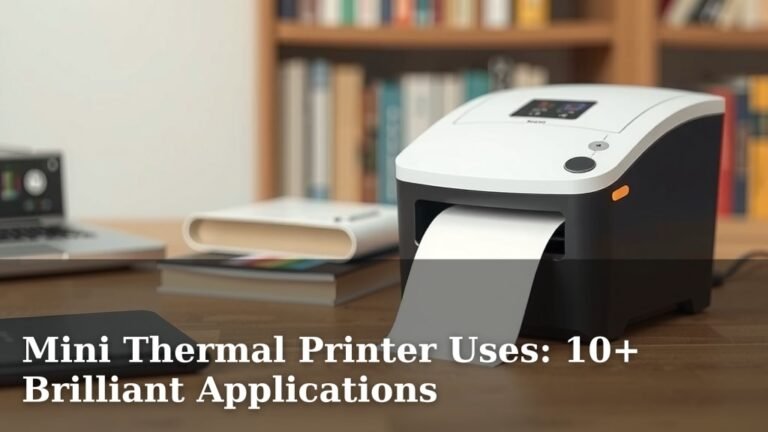
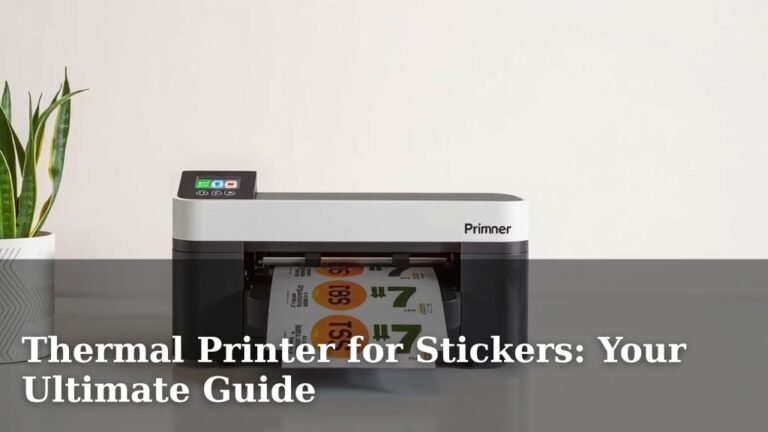
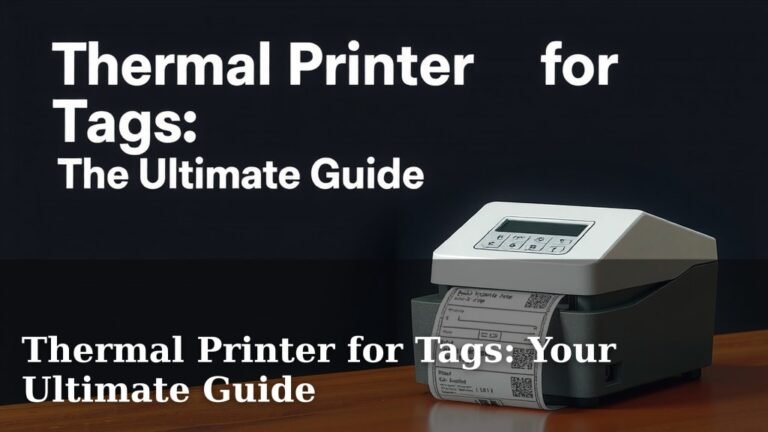
The history of thermal printers is a fascinating journey from early inventions to the handy devices we use today. Essentially, thermal printing uses heat to create an image on special paper. This technology has a surprisingly long past, starting its development in the 1960s and really taking off in the 1980s.
When we think of thermal printers, we often picture receipt printers or label makers. But the core idea of using heat for printing has been around for ages. Early versions were quite different from today’s sleek machines. We found that the evolution of thermal printing involved many small improvements over decades.
- Thermal printers use heat to make marks on special paper.
- The first thermal printing methods date back to the 1960s.
- Commercial use became more common in the 1980s.
- Key advancements made them faster and more reliable.
- They are now a staple in many industries.
Ready to dive into the details? Below, we’ll walk you through the key moments and inventions that shaped the thermal printer history we know today.
You might be wondering, “Where did this thermal printing thing even come from?” It’s a great question! While they seem pretty modern, their roots go back further than you might think.
A Look Back at How Thermal Printing Began
The journey of thermal printing technology really kicked off in the 1960s. It wasn’t about printing your shopping list back then. Early inventors were exploring ways to use heat to create markings on special materials. The goal was to find faster and more efficient ways to record information.
The Dawn of Thermal Recording
One of the very first significant developments came from a company called Thermo-Electron Corporation. In 1961, they patented a device called the Record-O-Vue. This machine wasn’t quite a printer as we know it. Instead, it used a heated stylus to burn dots onto a special heat-sensitive paper. Think of it like a very early, very basic fax machine, but for recording data.
This early technology proved that using heat to create permanent marks was possible. It was a foundational concept. Researchers continued to refine the idea, looking for ways to make it more practical for everyday use. The core principle of heat-activated marks was established.
Early Applications and Challenges
The Record-O-Vue wasn’t exactly a commercial hit. The paper was expensive, and the technology was bulky. But it laid the groundwork for future innovations. Scientists and engineers saw the potential for simpler, more reliable printing methods. The idea of using heat to avoid messy ink was appealing.
Many early attempts focused on using heat to transfer a color dye from a ribbon to paper. This is known as thermal transfer printing. It’s a different process than direct thermal printing, but it also relies on heat. These early experiments helped understand how different materials reacted to heat. Finding the right paper and the right heat levels was key.
The Direct Thermal Revolution Takes Hold
The 1970s saw more focused research into what we now know as direct thermal printing. This is the technology most common in receipt printers and label makers today. The magic happens because the paper itself is coated with a special material that changes color when heated.
Inventing the Direct Thermal Printer
A major leap forward occurred in 1972. Bell Labs developed a device that used a thermal printhead with a grid of tiny resistors. Each resistor could be heated individually. When the paper passed over the heated resistors, the coating would darken, forming dots. These dots then formed characters and images. This was a major technological breakthrough.
This new method was simpler than previous attempts. It eliminated the need for ink ribbons or toner. All you needed was the special thermal paper. This made the printers potentially smaller, lighter, and more affordable to operate. The potential for widespread use was becoming clear.
The Rise of Commercial Thermal Printing
The 1980s were when thermal printers really started to enter the commercial market. Companies began to see the advantages for point-of-sale systems, ticketing, and even early fax machines. The speed and simplicity of direct thermal printing were highly attractive.
One of the earliest commercial successes was the Brother Electronic Calculator, released in 1979. It used a type of thermal printing to produce a paper tape output. While not a standalone printer, it showed the practical application of the technology in consumer electronics. This was a clear sign of things to come.
By the mid-1980s, dedicated thermal printers for businesses were becoming more common. They offered a quiet alternative to impact printers. Impact printers used little hammers to strike an ink ribbon, making a lot of noise. Thermal printers were nearly silent. This was a big deal in office environments.
Key Advancements and Innovations
Over the decades, several key improvements made thermal printers more practical and popular. These weren’t all invented at once, but rather developed through continuous refinement.
Improving Print Quality and Speed
Early thermal printers could be a bit fuzzy. The dots might bleed, or the print might fade quickly. Engineers worked on improving the thermal printhead technology. They developed more precise heating elements and better control over temperature and duration.
They also figured out how to make the printheads more durable. This meant they could withstand millions of lines of print without failing. Advancements in paper coatings also played a role. Newer coatings offered better image stability and contrast. This led to sharper, more readable prints.
The Evolution of Thermal Paper
You can’t talk about thermal printers without mentioning the paper. The development of stable, affordable thermal paper was just as important as the printer itself. Early papers faded easily when exposed to heat or sunlight. They could also turn brown with age.
Researchers found ways to create more robust coatings. These coatings were less sensitive to ambient conditions. They could maintain a clear image for longer periods. This made thermal printing suitable for applications where longevity was important, like shipping labels.
The Growing Market and Applications
As the technology improved, so did its applications. What started as a niche technology quickly became essential in many industries.
Let’s look at a few key areas where thermal printing made a big impact:
- Retail: Point-of-sale receipts became standard.
- Shipping and Logistics: Shipping labels are almost universally printed using thermal technology.
- Healthcare: Patient identification wristbands and medical labels use thermal printing for its speed and durability.
- Food Service: Kitchen order tickets and food packaging labels rely on it.
- Event Ticketing: Event tickets are often thermal printed for quick scanning.
This expansion shows how versatile thermal printing became. It offered a reliable way to print on demand, wherever it was needed.
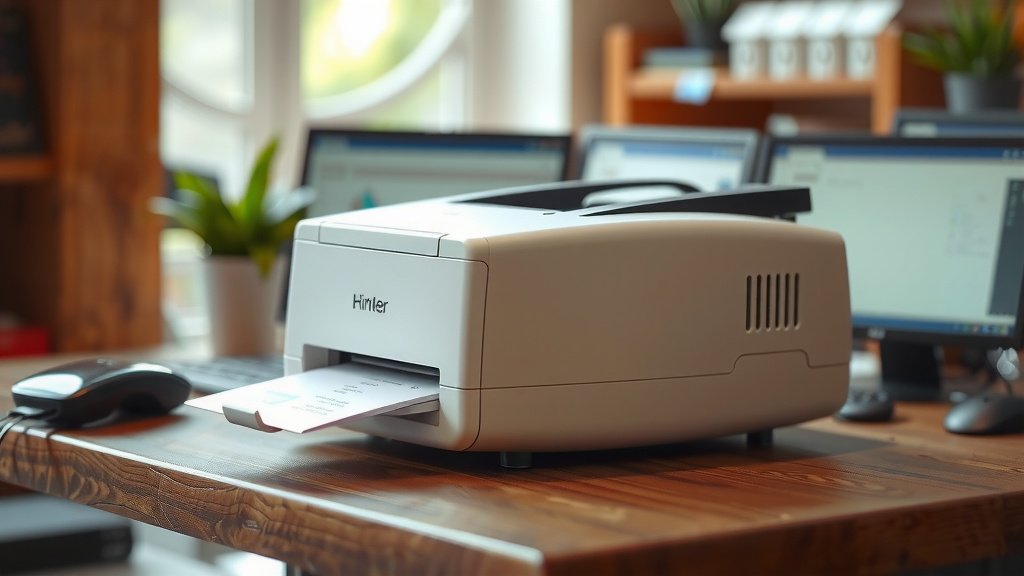
Thermal vs. Thermal Transfer: Understanding the Differences
It’s helpful to know there are two main types of thermal printing. You’ve likely encountered both without realizing it.
Direct Thermal Printing Explained
This is the type we’ve focused on. It uses heat directly on special paper. The paper has a heat-sensitive coating. When the printhead heats a spot, the coating turns black. No ink, no ribbon, just heat and special paper.
Pros: Simple, no consumables besides paper, quiet, compact printers.
Cons: Prints can fade with heat, light, or age; paper is more expensive than plain paper.
Thermal Transfer Printing Explained
This method uses a heated printhead to melt ink from a ribbon onto the label or paper. The ribbon is a thin film coated with a wax or resin-based ink. The heat from the printhead transfers this ink onto the surface. This creates a more durable, long-lasting print.
Pros: Prints are very durable, resistant to fading and abrasion, can print on various materials (not just special paper).
Cons: Requires both paper/labels and ink ribbons (consumables), can be slightly more complex than direct thermal.
Many modern label printers can actually do both! This flexibility makes them suitable for an even wider range of tasks.
What Does the Future Hold for Thermal Printing?
Thermal printing has come a long way since the 1960s. It’s a proven technology that continues to be relevant. You can expect to see it used in many of the same ways, especially for receipts and labels.
Researchers are always looking for ways to improve efficiency and reduce environmental impact. This might mean developing more eco-friendly paper coatings or more energy-efficient printheads. The technology is likely to remain a reliable workhorse for many years to come.
Here’s a quick recap of the journey:
- Early experiments in the 1960s explored heat-based recording.
- Direct thermal printing, using heat-sensitive paper, emerged in the 1970s.
- The 1980s saw commercial adoption in retail and other industries.
- Continuous advancements improved print quality, speed, and paper durability.
- Both direct thermal and thermal transfer methods are widely used today.
- The technology remains essential for many everyday applications.
Conclusion
You’ve journeyed through the surprising history of thermal printing, from early heat-based experiments in the 1960s to today’s ubiquitous receipt and label printers. We’ve seen how key innovations like direct thermal printing and the development of special papers transformed this technology. It’s clear that thermal printing’s journey from the Record-O-Vue to modern point-of-sale systems showcases incredible progress. Now that you understand its past, take a moment to appreciate the technology behind every label and receipt you encounter. Consider how these printers have shaped modern commerce and communication in your own daily life.
Frequently Asked Questions
When was the first thermal printer invented?
The first significant development in thermal recording was the Record-O-Vue, patented in 1961. This early device used a heated stylus to make marks on special paper, laying the foundation for later thermal printing technologies.
What made direct thermal printing so revolutionary?
Direct thermal printing, developed around 1972, was revolutionary because it eliminated the need for ink ribbons or toner. It used heat-sensitive paper, making printers simpler, quieter, and more affordable to operate.
Why did thermal printers become popular in the 1980s?
In the 1980s, thermal printers gained popularity due to their speed, quiet operation compared to impact printers, and lower running costs. They became ideal for point-of-sale systems and early fax machines.
What is the main difference between direct thermal and thermal transfer printing?
Direct thermal printing uses heat on special paper that changes color, while thermal transfer printing uses a heated printhead to melt ink from a ribbon onto a label. Thermal transfer prints are more durable.
Are thermal printers still relevant today?
Yes, thermal printers remain highly relevant. They are essential for applications like retail receipts, shipping labels, and event tickets due to their speed, reliability, and cost-effectiveness for high-volume printing needs.